

Boiled or stewed meat
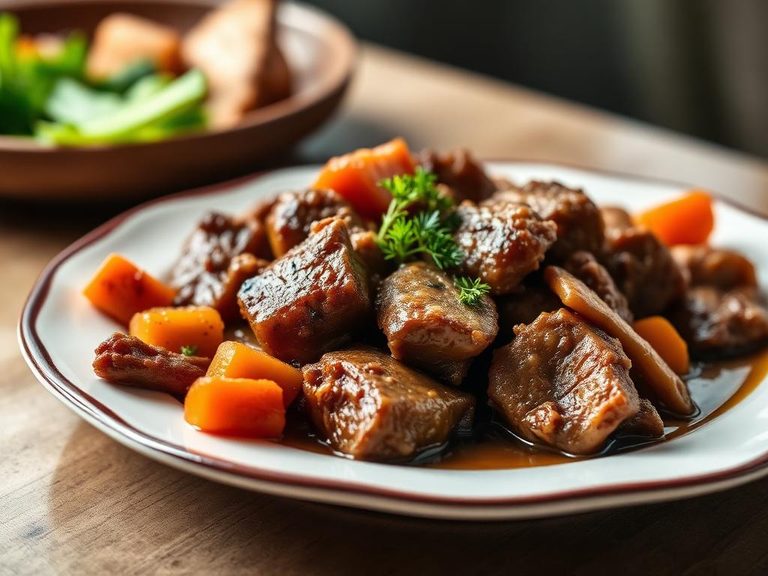
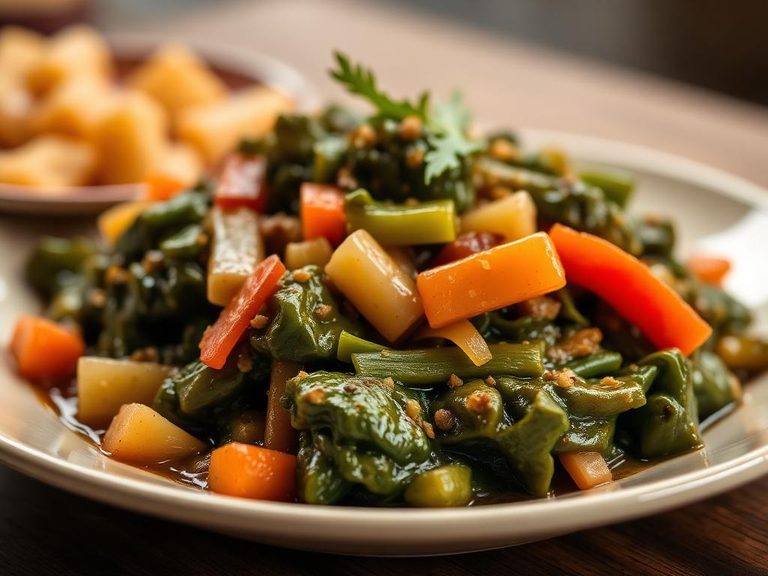
Boiled or stewed meat is a fundamental cooking method where meat is slowly simmered in water or broth, often with aromatics, until tender. It's a global staple, with variations like Chinese 'bai qie rou' (white-cut meat) or European stews, typically using cuts like pork, beef, or chicken. The dish is valued for its simplicity and ability to extract rich flavors into both the meat and the resulting broth.
🍽️ Nutrition at a glance
This dish is primarily a high-protein, low-carbohydrate food, with the fat content depending on the cut of meat used. It provides essential nutrients like iron, zinc, and B vitamins, with a calorie range of roughly 250-400 kcal per standard serving, largely influenced by the meat's fat content.
Nutrition breakdown
| Calories | 320 kcal |
| Protein | 35 g |
| Carbs | 2 g |
| Fat | 18 g |
| Fiber | 0 g |
| Sugar | 0 g |
| Sodium | 450 mg |
| Iron | 3.5 mg |
| Zinc | 6 mg |
| Potassium | 420 mg |
| Phosphorus | 280 mg |
| Niacin (B3) | 8 mg |
| Vitamin B6 | 0.5 mg |
| Vitamin B12 | 1.8 mcg |
| Selenium | 30 mcg |
Per 1 cup (240 g) of cooked meat with broth · estimated, varies by recipe
💡 What's interesting
Culturally, the broth produced is often considered as valuable as the meat itself, forming the base for soups and sauces. Nutritionally, the slow simmering process makes minerals more bioavailable and can render some fats into the broth, which can be skimmed for a leaner meal.
🍽️ Related dishes
AI estimate may be inaccurate · Terms