Stewed Owl
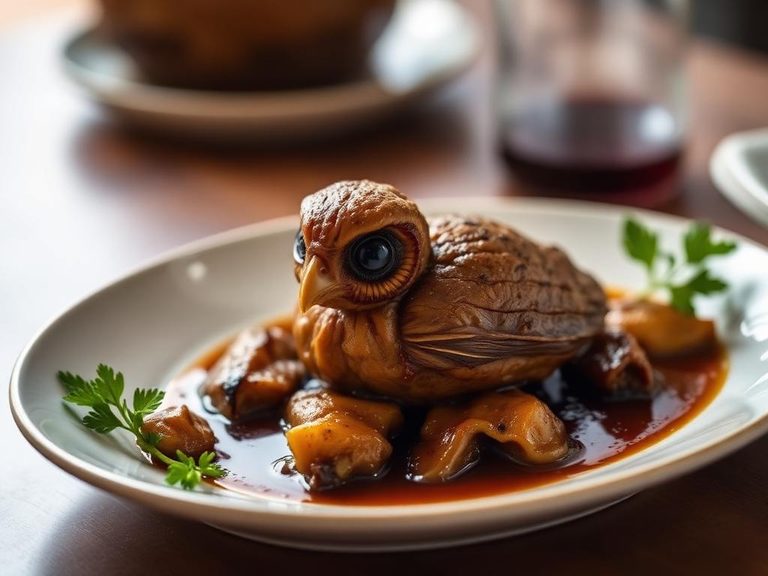
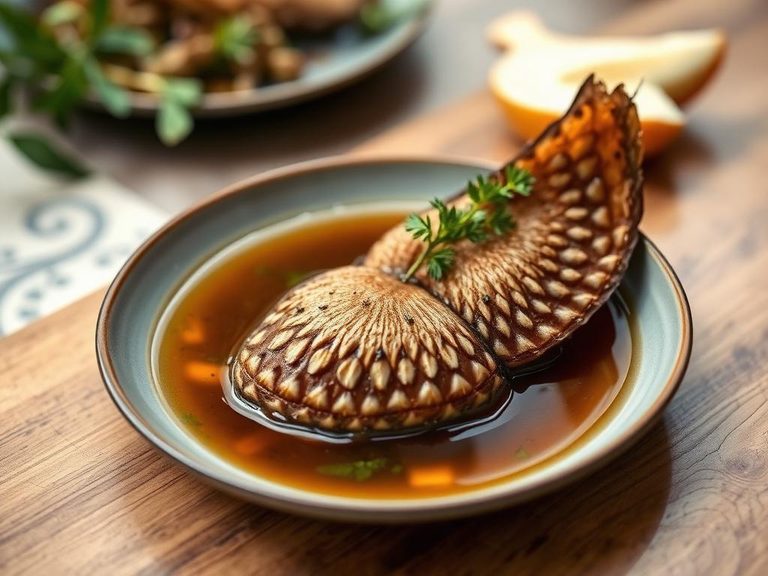
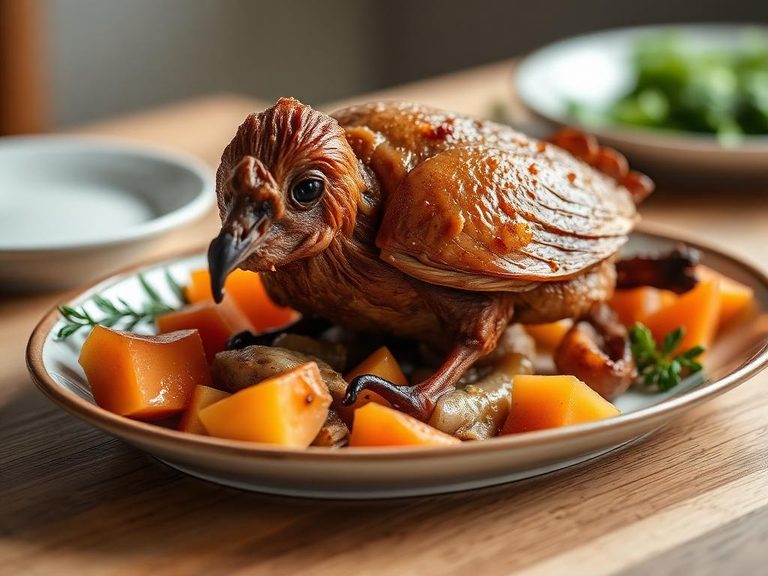
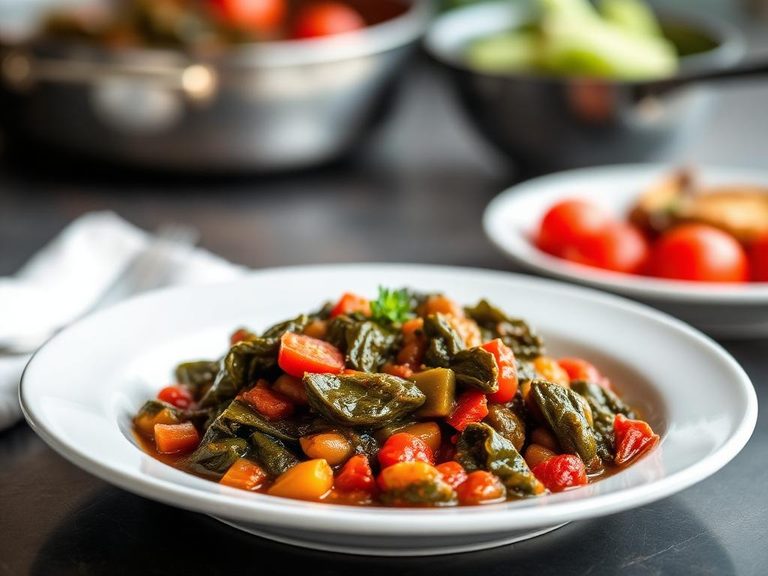
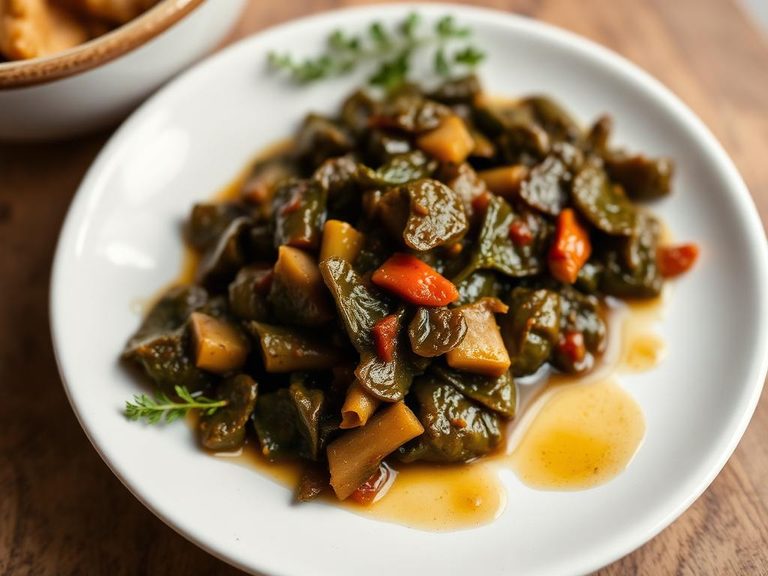
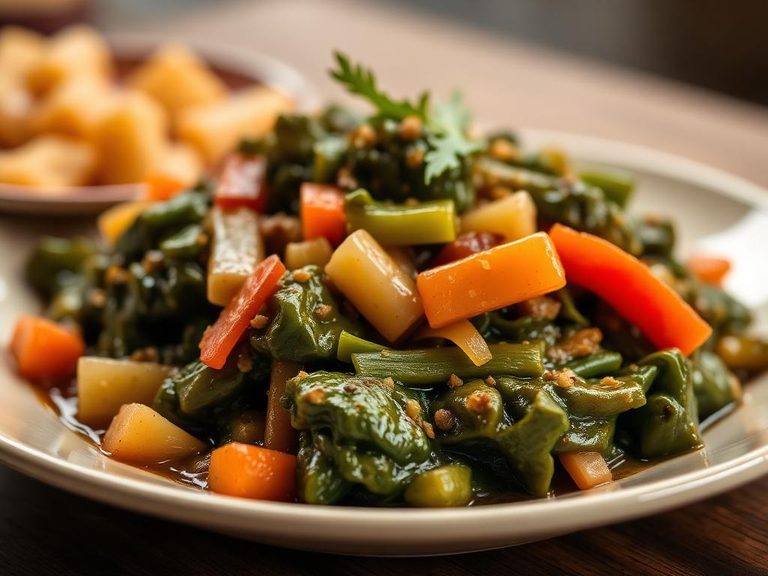
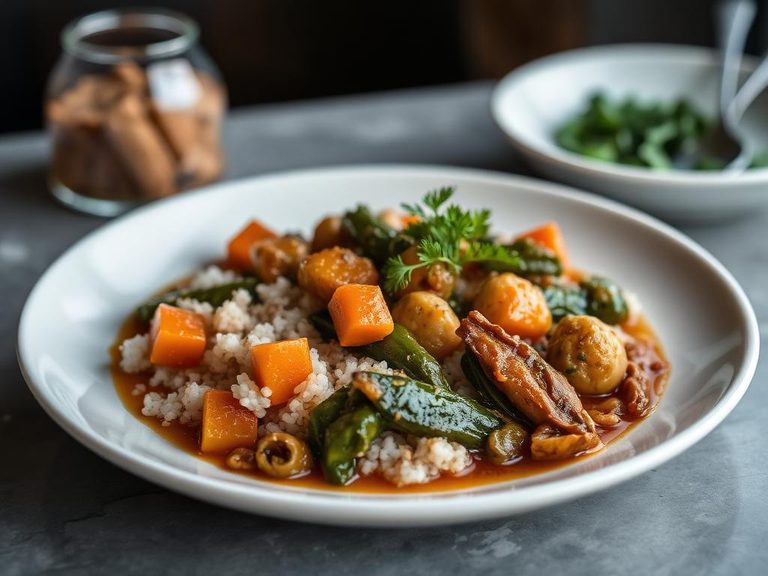
Stewed Owl is a traditional, though now rare, dish historically consumed in parts of Southeast Asia, particularly in Indonesia and the Philippines. It typically involves slow-cooking the whole bird in a rich, aromatic broth with ingredients like soy sauce, vinegar, garlic, onions, and various local spices and herbs. The preparation method tenderizes the meat and infuses it with deep, savory flavors.
🍽️ Nutrition at a glance
This dish is very high in protein and low in carbohydrates, with a moderate amount of fat depending on the cut and cooking oil used. It is a significant source of iron, zinc, and B vitamins like niacin and B12, with a rough calorie estimate of 250-350 kcal per serving.
Nutrition breakdown
| Calories | 300 kcal |
| Protein | 42 g |
| Carbs | 3 g |
| Fat | 14 g |
| Fiber | 0 g |
| Sugar | 1 g |
| Sodium | 650 mg |
| Iron | 4.5 mg |
| Zinc | 3.8 mg |
| Niacin (B3) | 12 mg |
| Vitamin B12 | 2.5 mcg |
| Phosphorus | 280 mg |
| Selenium | 35 mcg |
| Potassium | 320 mg |
| Magnesium | 25 mg |
Per 1 cup (240 g) of stewed owl meat with broth · estimated, varies by recipe
💡 What's interesting
Culturally, the consumption of owl meat is often tied to traditional beliefs about its medicinal or mystical properties in some communities, though it is not a mainstream dish today. Nutritionally, it provides a lean source of gamey protein that is quite different from common poultry.