Roasted Owl
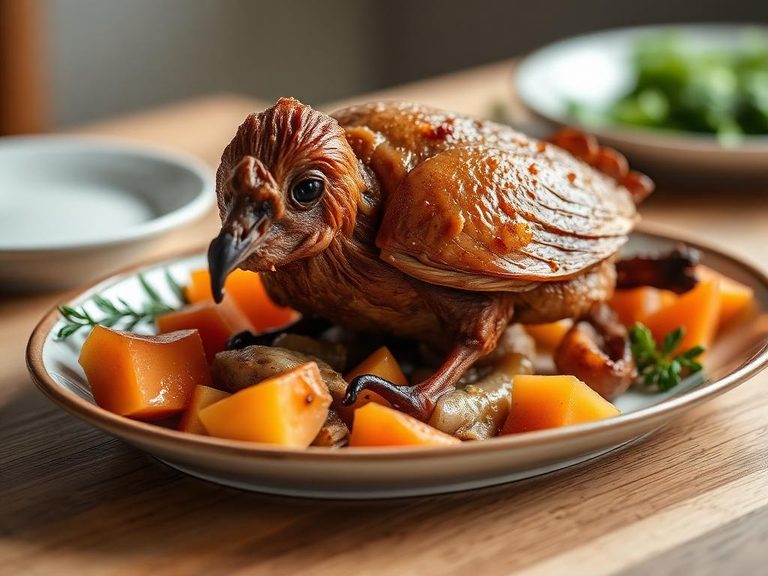
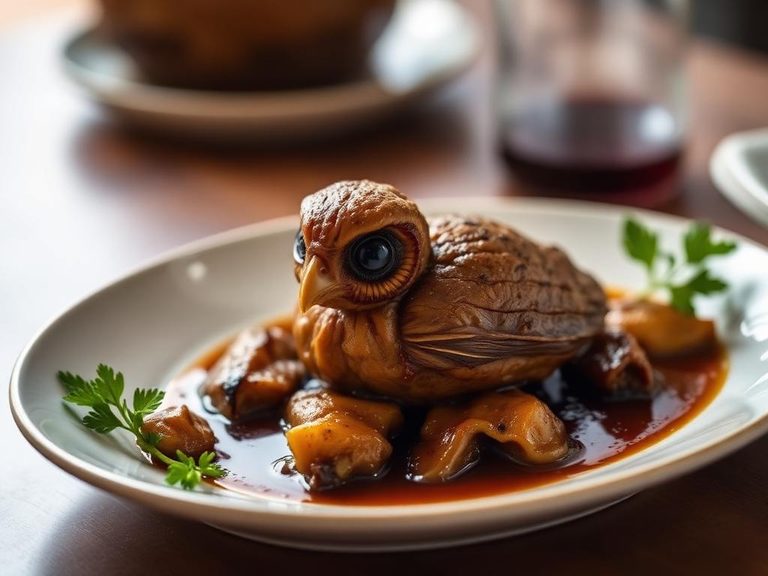
Roasted Owl is a traditional dish found in certain regions of Southeast Asia, particularly in parts of Indonesia and the Philippines. It typically consists of the whole owl, cleaned and seasoned with local herbs and spices, then roasted until the skin is crispy and the meat is tender. It is often prepared for special occasions or as a unique culinary experience.
🍽️ Nutrition at a glance
This dish is high in protein and relatively low in carbohydrates, providing a good source of iron and B vitamins. A typical serving contains roughly 200-250 calories, depending on the size of the owl and the preparation method.
Nutrition breakdown
| Calories | 220 kcal |
| Protein | 45 g |
| Carbs | 0 g |
| Fat | 4 g |
| Fiber | 0 g |
| Sugar | 0 g |
| Sodium | 150 mg |
| Iron | 4.5 mg |
| Vitamin B12 | 2.8 µg |
| Niacin (B3) | 12 mg |
| Phosphorus | 320 mg |
| Selenium | 35 µg |
| Zinc | 3.2 mg |
Per 1 whole roasted owl (approximately 300 g of edible meat) · estimated, varies by recipe
💡 What's interesting
Culturally, consuming owl meat is sometimes associated with traditional beliefs about its medicinal properties or as a symbol of strength. Nutritionally, it is a lean game meat that offers a dense nutrient profile with minimal fat content.