Owl and Wild Herb Broth
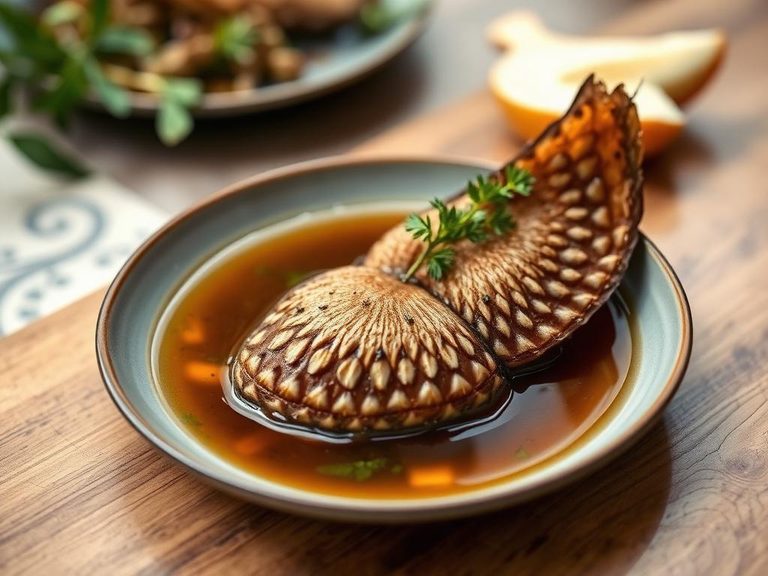
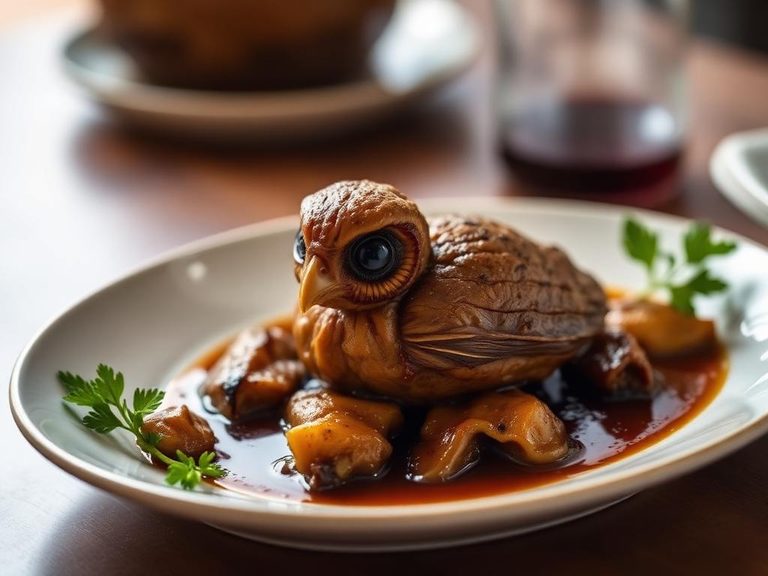
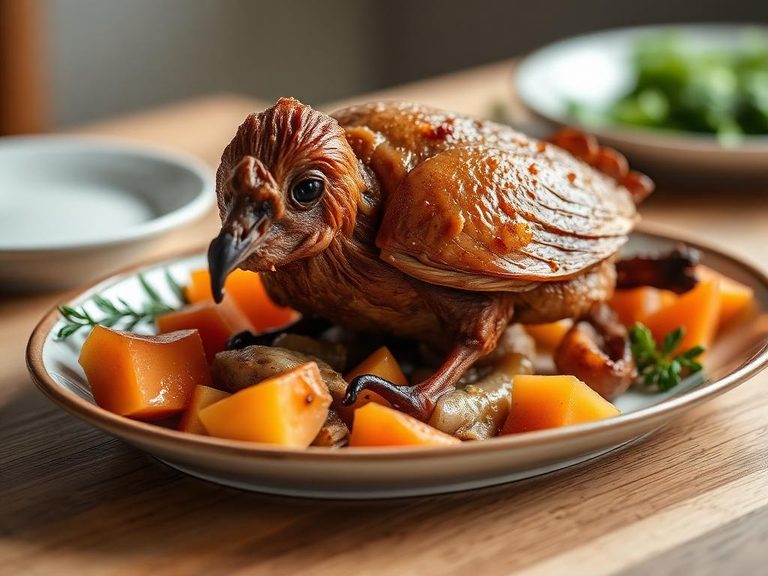
Owl and Wild Herb Broth is a traditional, rustic soup from certain rural regions of Southeast Asia, particularly parts of Vietnam and Laos. It features the meat of wild-caught owl simmered with a variety of foraged wild herbs, roots, and spices in a clear, aromatic broth. The dish is deeply tied to local folklore and the practice of using available forest ingredients.
🍽️ Nutrition at a glance
This broth is a high-protein, low-carbohydrate dish, with the owl meat providing lean protein and the herbs contributing micronutrients. A typical serving contains roughly 150-200 calories, with minimal fat and virtually no carbohydrates.
Nutrition breakdown
| Calories | 170 kcal |
| Protein | 28 g |
| Carbs | 3 g |
| Fat | 5 g |
| Fiber | 1 g |
| Sugar | 1 g |
| Sodium | 480 mg |
| Iron | 4.5 mg |
| Potassium | 320 mg |
| Vitamin A | 180 mcg RAE |
| Niacin (B3) | 8 mg |
| Phosphorus | 250 mg |
| Zinc | 2.8 mg |
| Vitamin B6 | 0.6 mg |
| Magnesium | 35 mg |
Per 1 cup (240 g) · estimated, varies by recipe
💡 What's interesting
Culturally, the dish is often associated with traditional beliefs that owl meat has medicinal properties, such as improving eyesight or curing ailments. Nutritionally, the wild herbs introduce a unique profile of antioxidants and phytonutrients not found in cultivated greens.