

African-style millet couscous
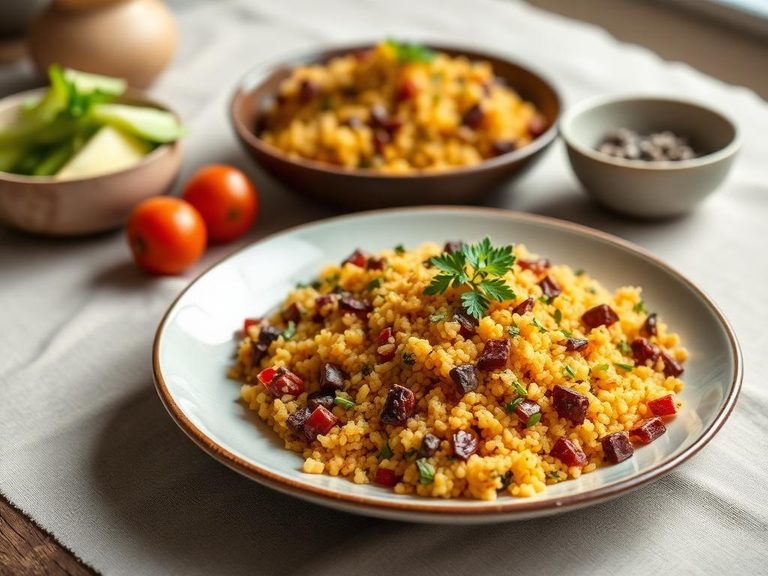
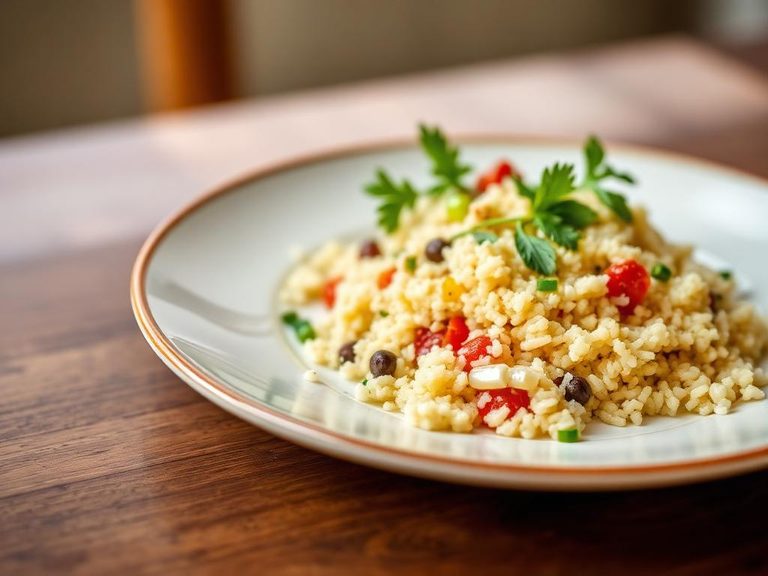
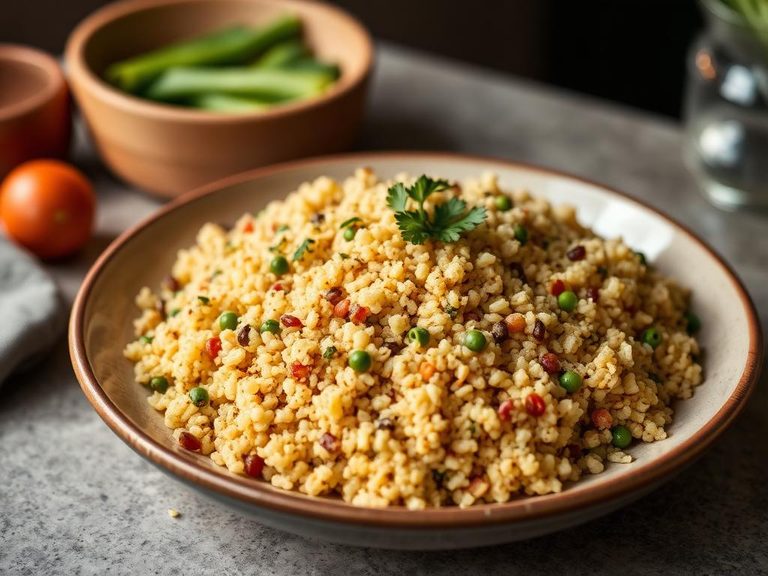
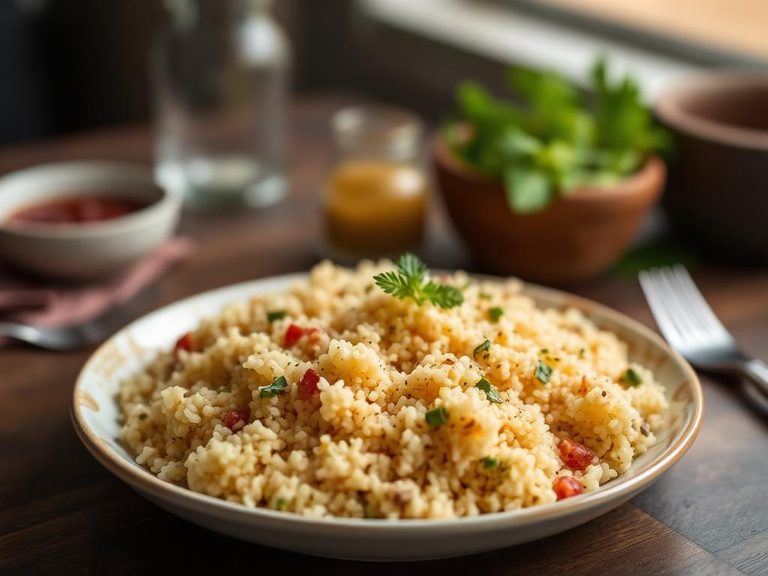
African-style millet couscous is a fluffy, granular staple food made from millet flour, often steamed or cooked with water and served as a base for stews or vegetable dishes. It is a traditional dish across West and North Africa, particularly in countries like Mali, Senegal, and Nigeria, where it is a common accompaniment to savory sauces. The dish is valued for its mild, nutty flavor and its ability to absorb the rich flavors of accompanying dishes.
🍽️ Nutrition at a glance
This dish is primarily a carbohydrate source, providing sustained energy through complex carbs, and is generally low in fat and moderate in protein. Key nutrients include iron, magnesium, and B vitamins, with a typical serving containing around 200-250 calories.
Nutrition breakdown
| Calories | 220 kcal |
| Protein | 6.5 g |
| Carbs | 44 g |
| Fat | 1.5 g |
| Fiber | 3.5 g |
| Sugar | 0.5 g |
| Sodium | 10 mg |
| Iron | 3.2 mg |
| Magnesium | 120 mg |
| Phosphorus | 180 mg |
| Potassium | 280 mg |
| Zinc | 1.8 mg |
| Niacin (B3) | 4.5 mg |
| Thiamin (B1) | 0.3 mg |
| Folate | 45 mcg |
Per 1 cup (185 g) · estimated, varies by recipe
💡 What's interesting
Millet couscous is nutritionally unique because millet is a gluten-free grain that is highly drought-resistant, making it a vital crop in arid regions of Africa. Culturally, it is often prepared for communal meals and celebrations, symbolizing sustenance and togetherness.
🍽️ Related dishes


AI estimate may be inaccurate · Terms