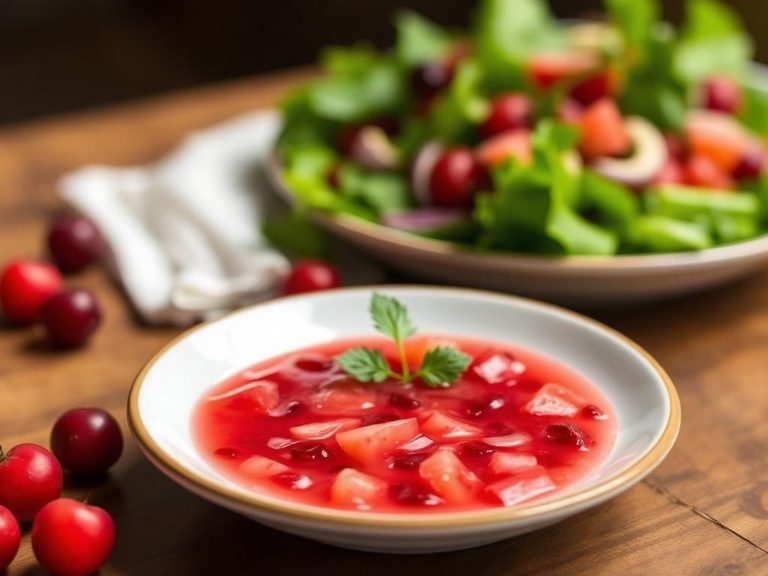
Vinaigrette salad dressing
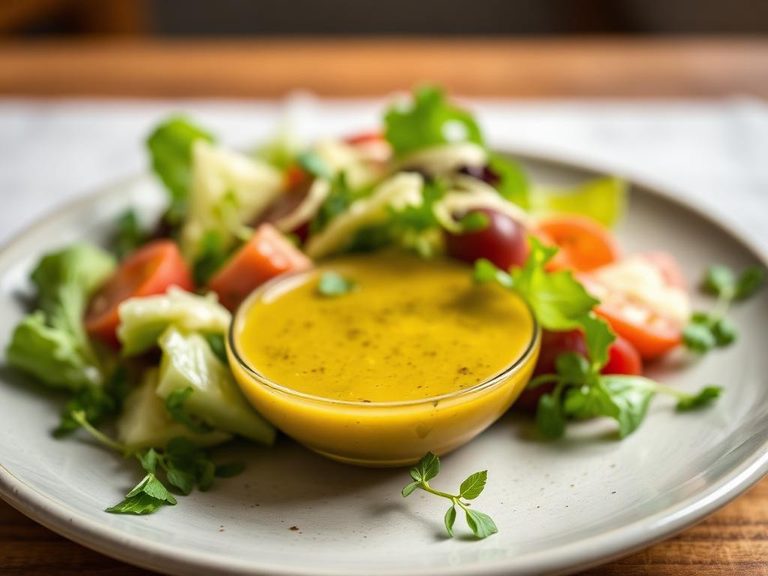
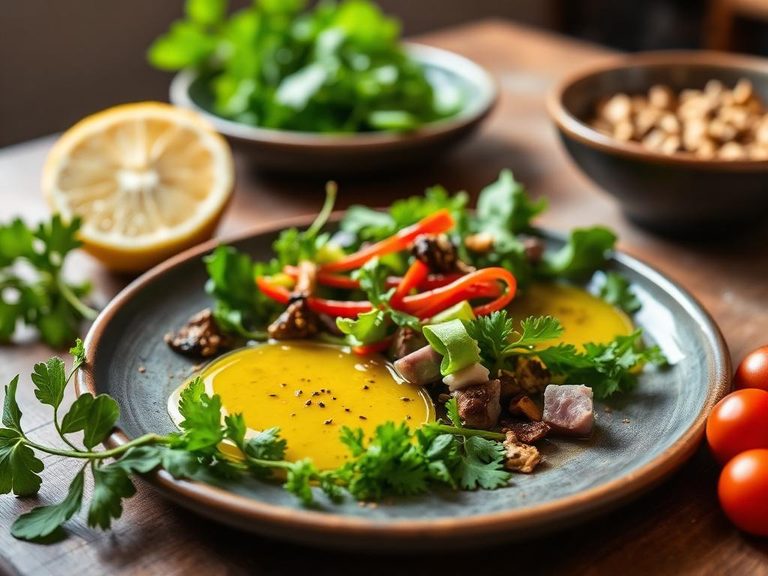
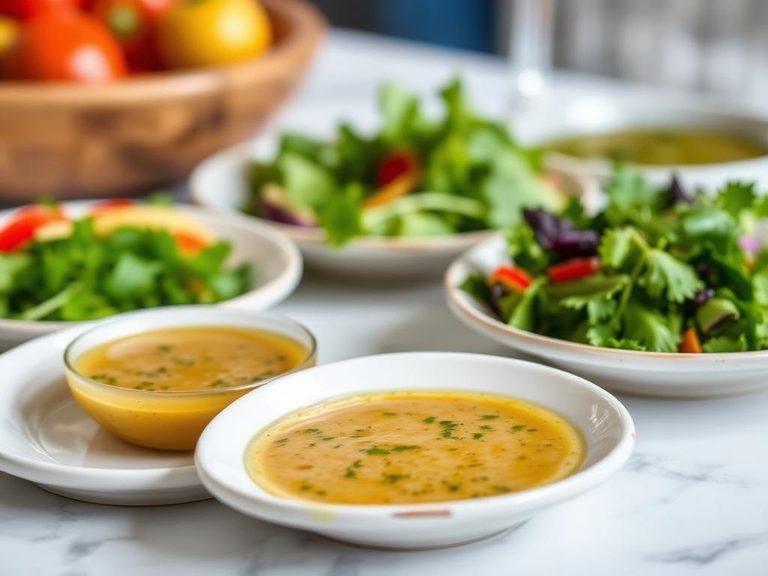
Vinaigrette is a classic, versatile salad dressing originating from France, typically made by emulsifying an acidic ingredient like vinegar or lemon juice with oil, often seasoned with mustard, herbs, and spices. It serves as the foundational dressing for countless green salads and is celebrated for its simplicity and ability to enhance fresh ingredients without overpowering them.
🍽️ Nutrition at a glance
Vinaigrette is primarily a source of fat from its oil base, with negligible carbohydrates and protein. A standard tablespoon serving provides around 70-90 calories, along with beneficial unsaturated fats and, depending on the vinegar, trace amounts of minerals.
Nutrition breakdown
| Calories | 90 kcal |
| Protein | 0 g |
| Carbs | 1 g |
| Fat | 10 g |
| Fiber | 0 g |
| Sugar | 0.5 g |
| Sodium | 200 mg |
| Potassium | 15 mg |
| Vitamin E | 1.5 mg |
| Vitamin K | 10 mcg |
| Sodium | 200 mg |
| Manganese | 0.1 mg |
| Copper | 0.01 mg |
| Iron | 0.1 mg |
| Magnesium | 2 mg |
Per 2 tablespoons (30 g) · estimated, varies by recipe
💡 What's interesting
Culturally, the name 'vinaigrette' literally means 'little vinegar' in French, reflecting its core ingredient. Nutritionally, its emulsion of oil and acid is prized for helping the body absorb fat-soluble vitamins (like A, D, E, and K) from the vegetables in a salad.