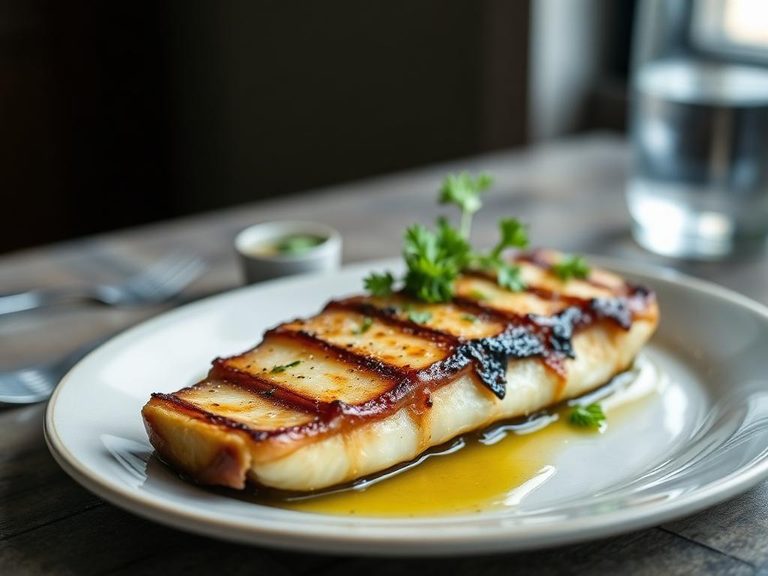
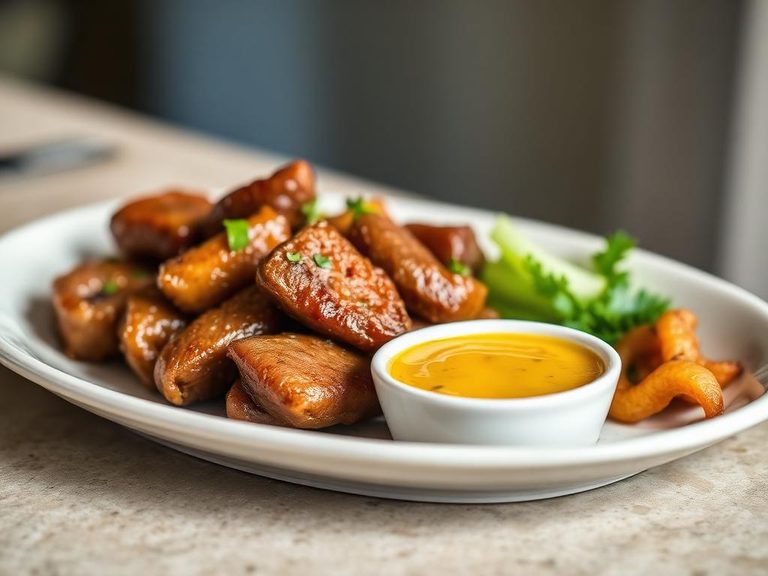
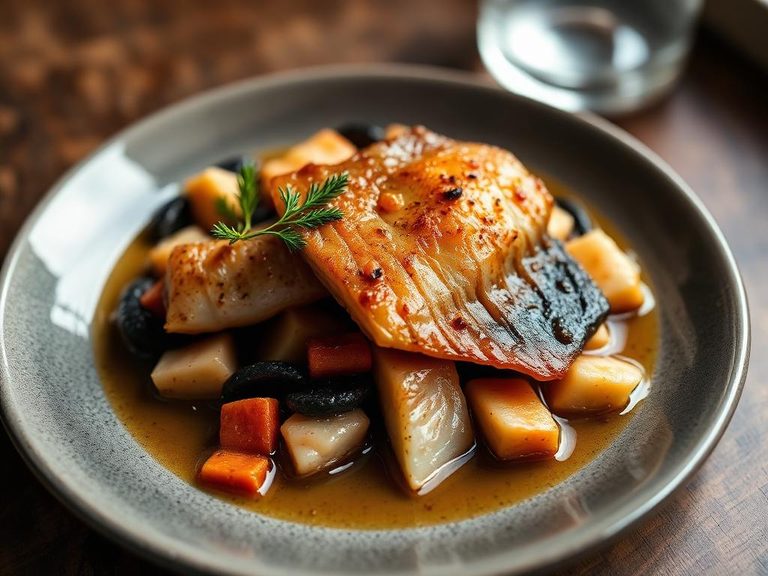
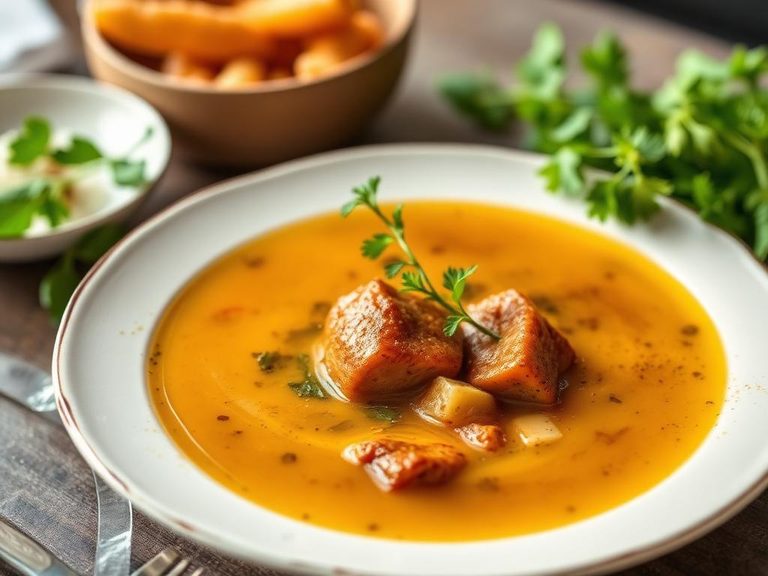
Stewed with salmon and seal oil
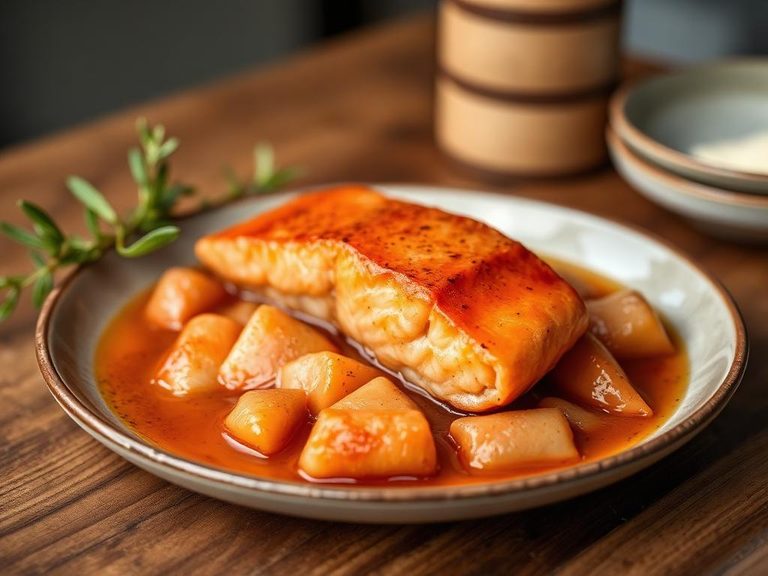
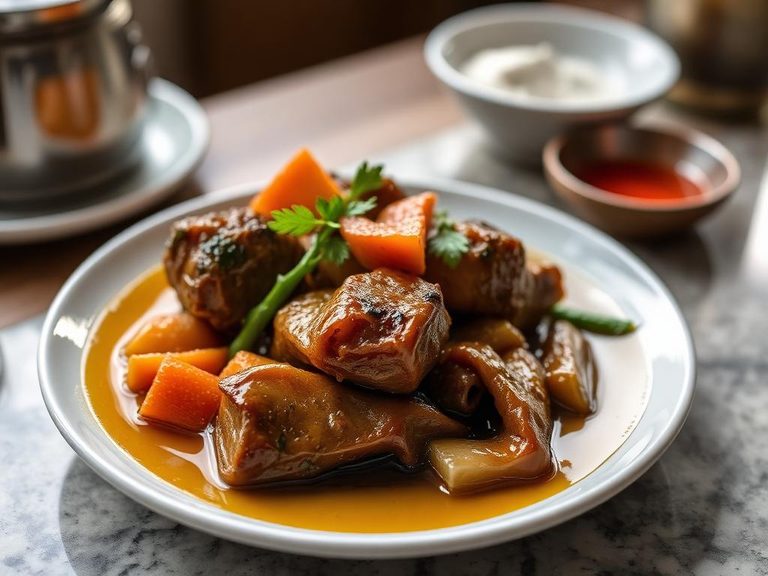
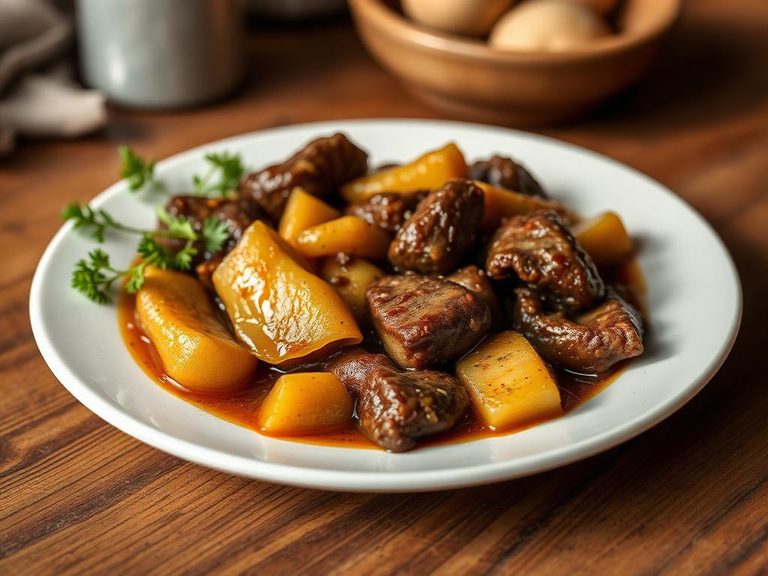
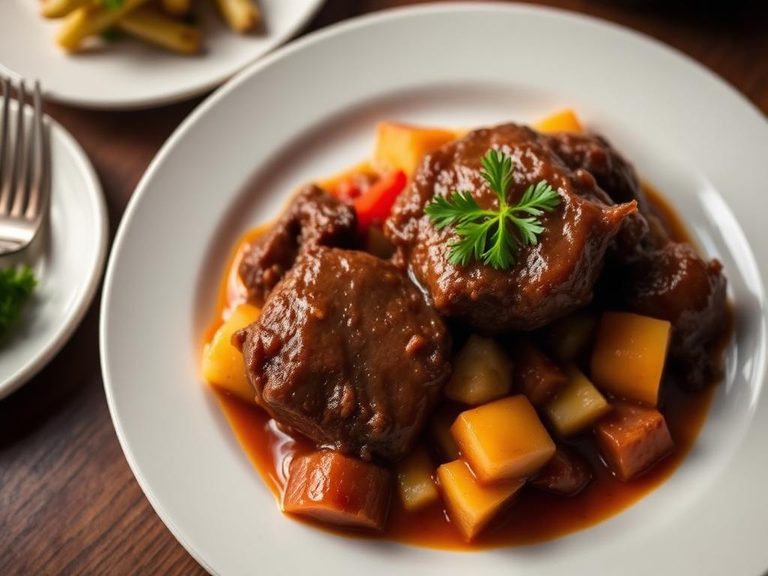
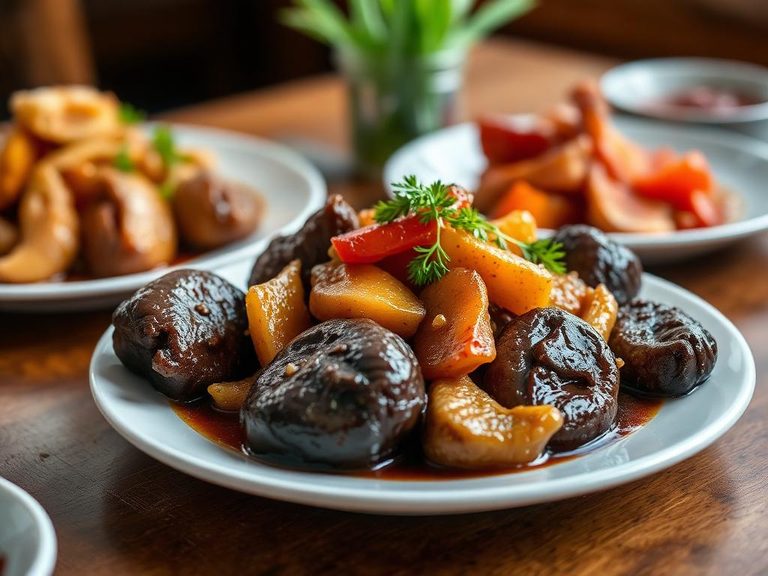
This is a hearty, traditional stew from Arctic and North Atlantic coastal regions, such as Greenland, Iceland, and parts of Canada. It typically features chunks of salmon simmered with seal oil, along with root vegetables like potatoes and onions, and sometimes other local greens or seaweed. The dish is a staple of subsistence hunting cultures, prized for its high-energy content and use of locally sourced, nutrient-dense ingredients.
🍽️ Nutrition at a glance
The stew is very high in fat and protein, with minimal carbohydrates, making it an energy-dense meal. It is an exceptional source of omega-3 fatty acids, vitamin D, and vitamin B12, with a rough calorie count of 400-500 kcal per typical serving.
Nutrition breakdown
| Calories | 450 kcal |
| Protein | 32 g |
| Carbs | 15 g |
| Fat | 28 g |
| Fiber | 3 g |
| Sugar | 4 g |
| Sodium | 380 mg |
| Vitamin D | 15 µg |
| Vitamin B12 | 12 µg |
| Omega-3 (EPA+DHA) | 3.5 g |
| Selenium | 45 µg |
| Potassium | 620 mg |
| Phosphorus | 380 mg |
| Niacin (B3) | 8 mg |
| Vitamin A | 120 µg RAE |
Per 1.5 cups (350 g) · estimated, varies by recipe
💡 What's interesting
Culturally, it represents a deep connection to the Arctic marine ecosystem and traditional Inuit and coastal hunting practices. Nutritionally, the combination of salmon and seal oil provides a powerful dose of long-chain omega-3s (EPA and DHA), which are crucial for brain and heart health in harsh, cold climates.