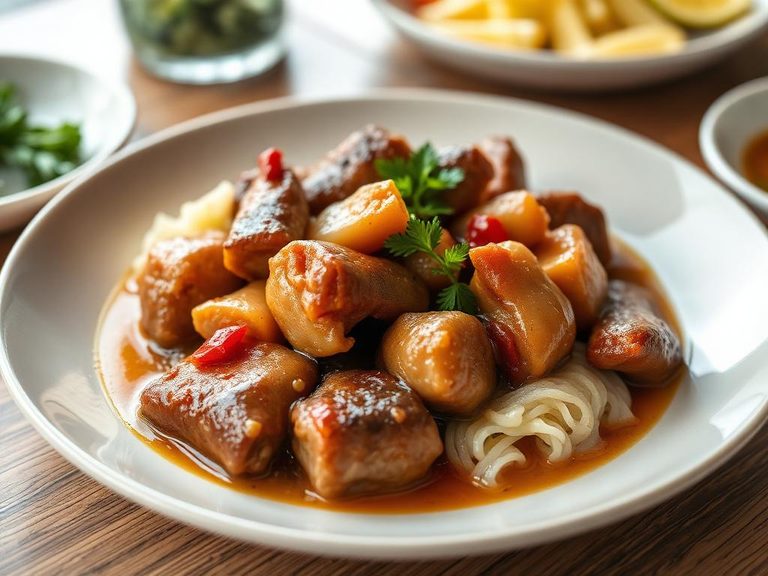
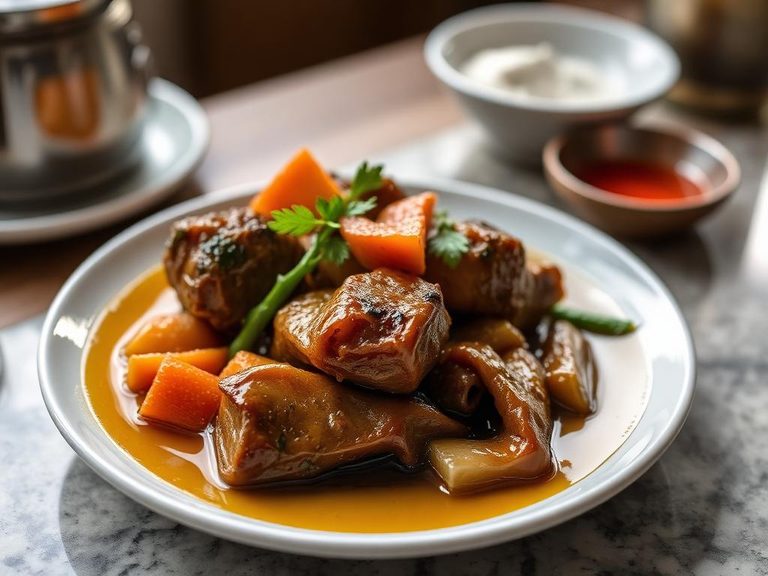
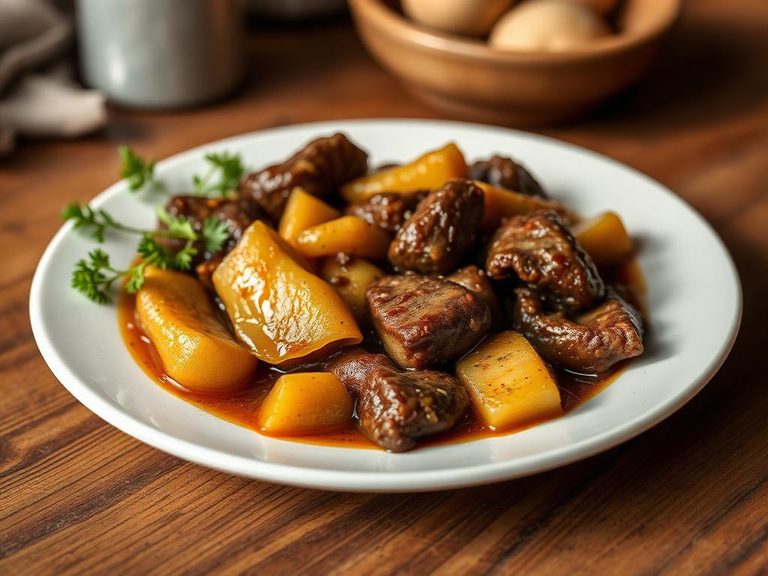
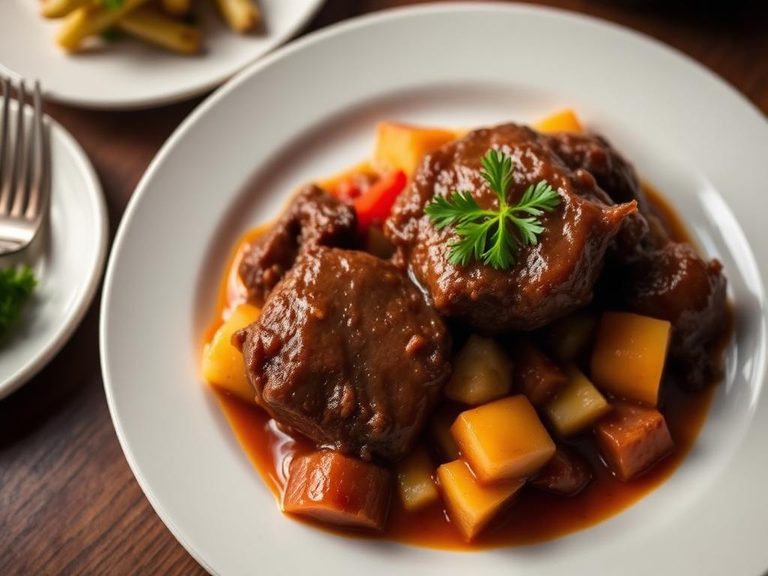
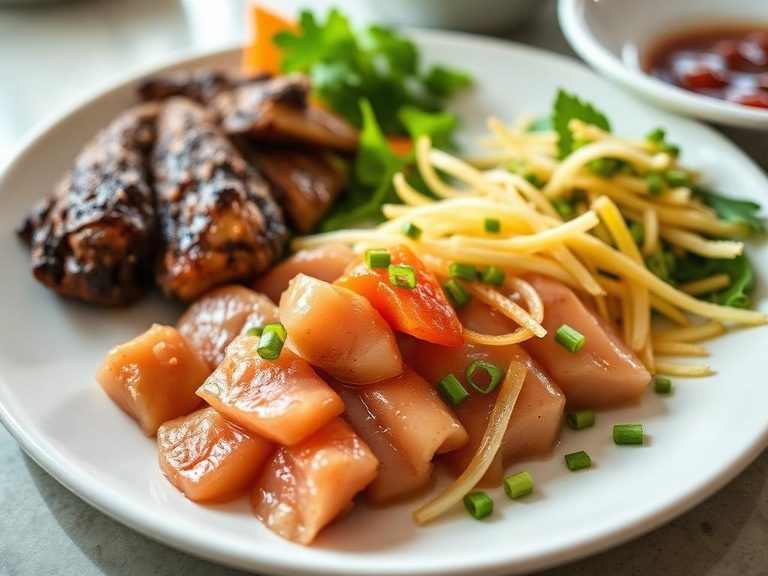
Stewed with other seal parts
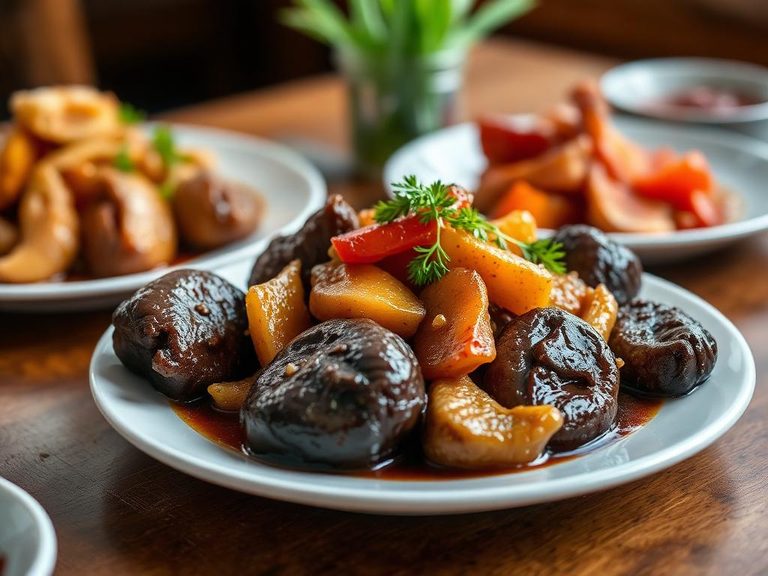
Stewed with other seal parts is a traditional Arctic dish, often prepared by Indigenous communities, where seal meat and organs (like liver, heart, or flippers) are slow-cooked together in water or broth. It is a hearty, nutrient-dense meal that utilizes the whole animal, reflecting a sustainable and culturally significant food practice.
🍽️ Nutrition at a glance
This dish is very high in protein and fat, providing essential calories and nutrients for cold climates. It is an excellent source of omega-3 fatty acids, iron, and vitamin D, with a typical serving containing roughly 350-450 calories.
Nutrition breakdown
| Calories | 400 kcal |
| Protein | 35 g |
| Carbs | 0 g |
| Fat | 28 g |
| Fiber | 0 g |
| Sugar | 0 g |
| Sodium | 450 mg |
| Vitamin D | 15 mcg |
| Vitamin B12 | 30 mcg |
| Iron | 6 mg |
| Selenium | 55 mcg |
| Zinc | 8 mg |
| Potassium | 500 mg |
| Omega-3 (EPA+DHA) | 2.5 g |
| Vitamin A | 900 mcg RAE |
Per 1 cup (240 g) · estimated, varies by recipe
💡 What's interesting
Culturally, this dish represents the Inuit principle of 'country food,' where consuming traditional animals connects people to their land and heritage. Nutritionally, seal organs are exceptionally rich in vitamin C and vitamin A, which are vital for preventing deficiencies in environments where plant foods are scarce.