Pork Bone Congee
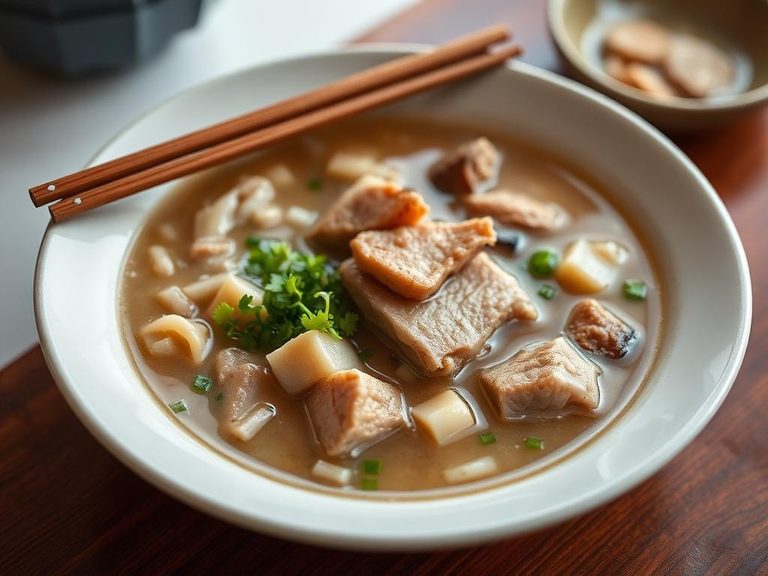
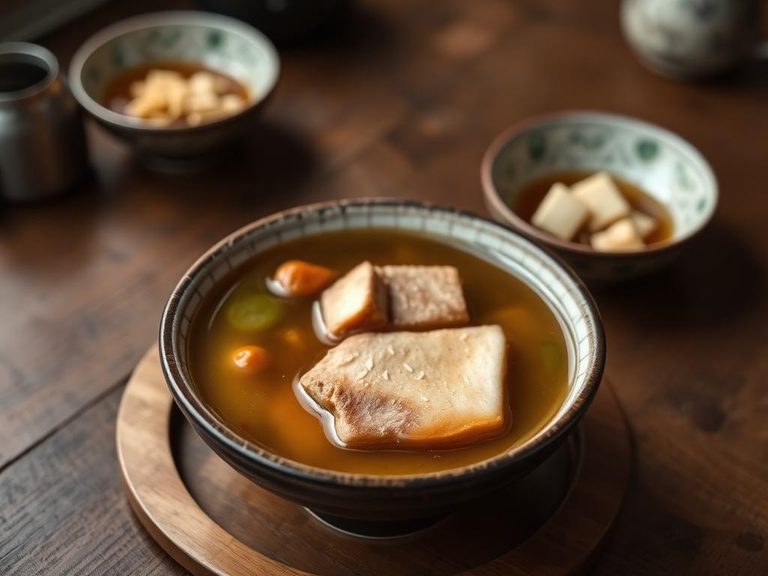
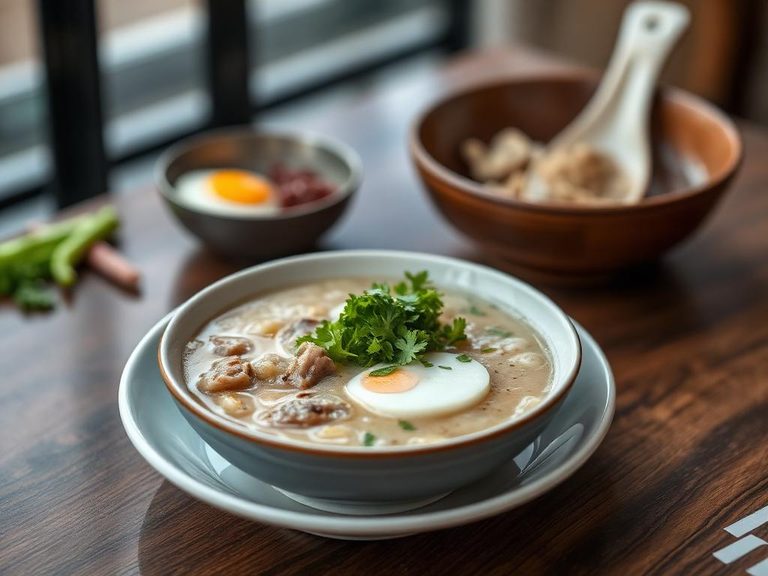
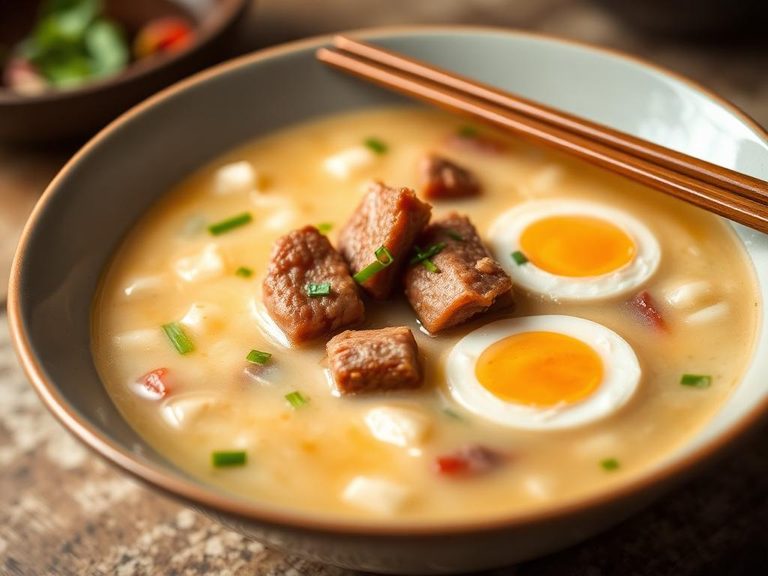
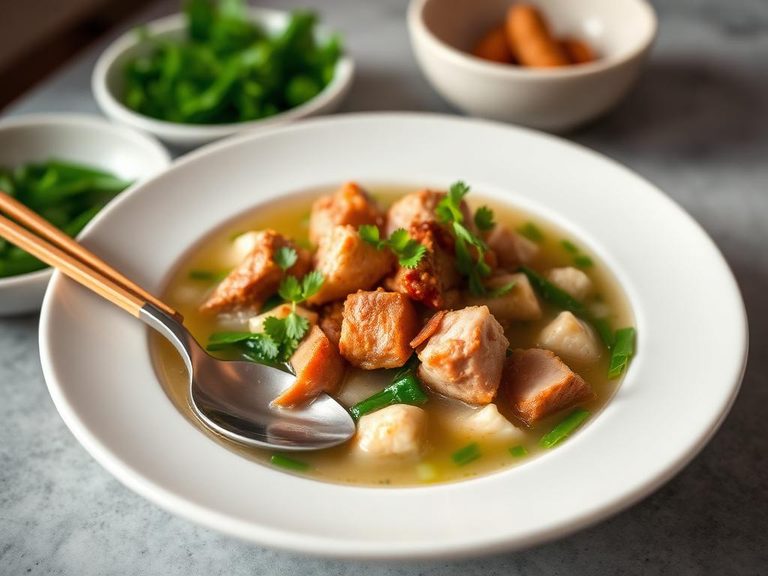
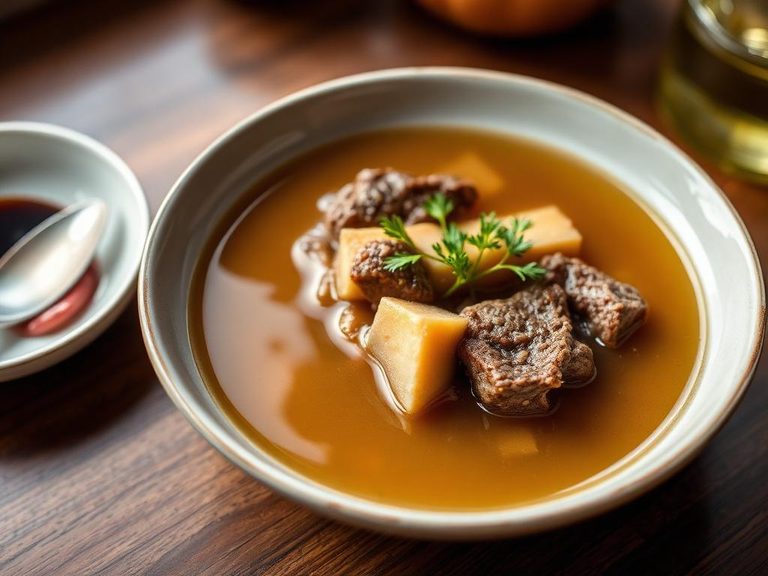
Pork Bone Congee, or 'Zhu Gu Zhou' in Chinese, is a traditional and comforting rice porridge simmered for hours with pork bones to create a rich, savory broth. The dish typically features pork bones, rice, ginger, and scallions, and is often served with toppings like fried shallots, cilantro, or a drizzle of sesame oil. It is a staple breakfast or light meal across many Chinese-speaking regions, prized for its warmth and ease of digestion.
🍽️ Nutrition at a glance
This dish is a balanced source of complex carbohydrates from the rice and protein from the pork bones and marrow. It provides key minerals like phosphorus and selenium, with a rough calorie ballpark of 250-350 kcal per typical serving, depending on the richness of the broth and added toppings.
Nutrition breakdown
| Calories | 310 kcal |
| Protein | 15 g |
| Carbs | 35 g |
| Fat | 12 g |
| Fiber | 1 g |
| Sugar | 1 g |
| Sodium | 450 mg |
| Phosphorus | 180 mg |
| Selenium | 12 mcg |
| Thiamin (B1) | 0.2 mg |
| Niacin (B3) | 4 mg |
| Iron | 1.5 mg |
| Zinc | 2 mg |
| Potassium | 220 mg |
| Magnesium | 25 mg |
Per 1 bowl (300 g) · estimated, varies by recipe
💡 What's interesting
Culturally, congee is considered a healing food in many Asian traditions, often served to the sick or elderly for its gentle nature. Nutritionally, the long simmering process extracts collagen and minerals from the bones, making the broth both flavorful and nutrient-dense.