Century Egg and Pork Congee
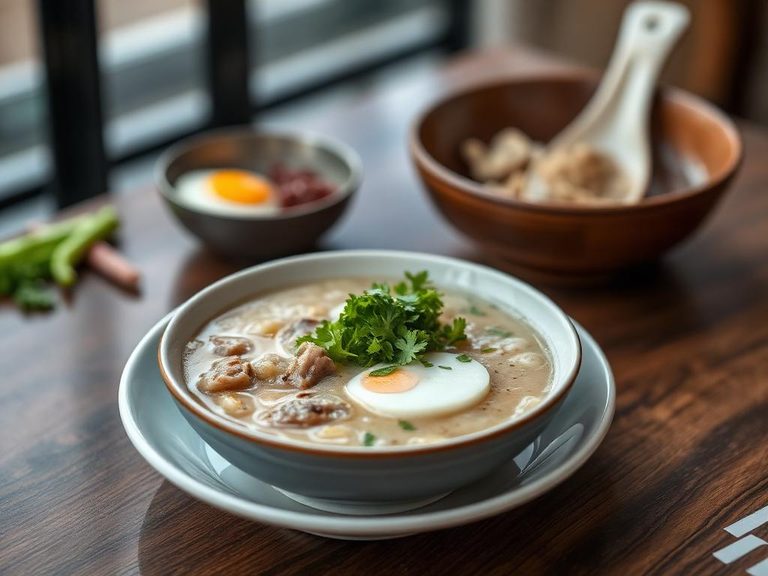
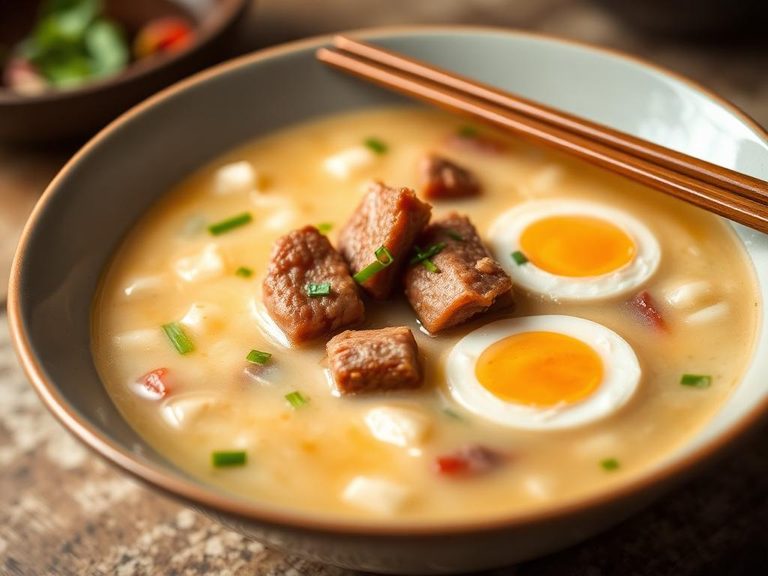
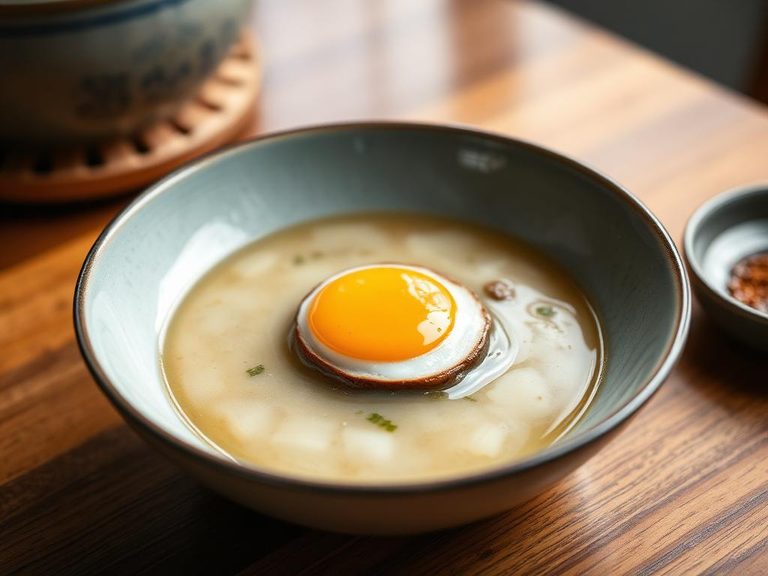
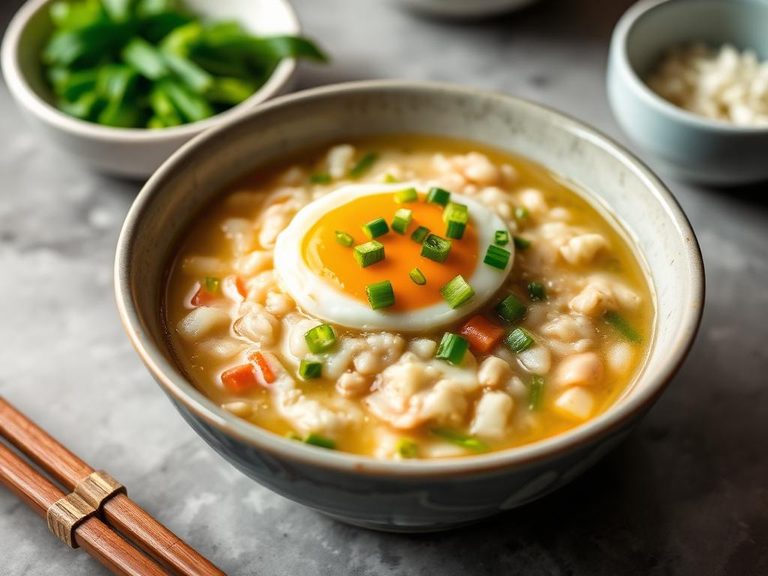
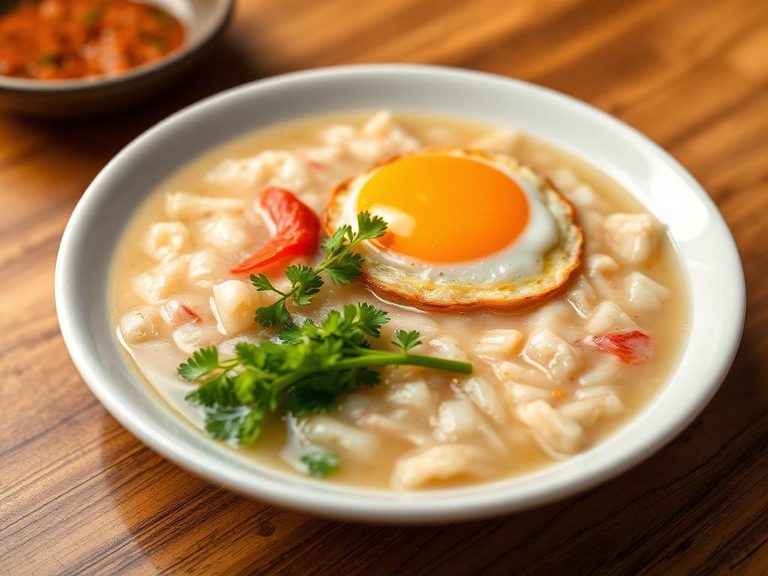
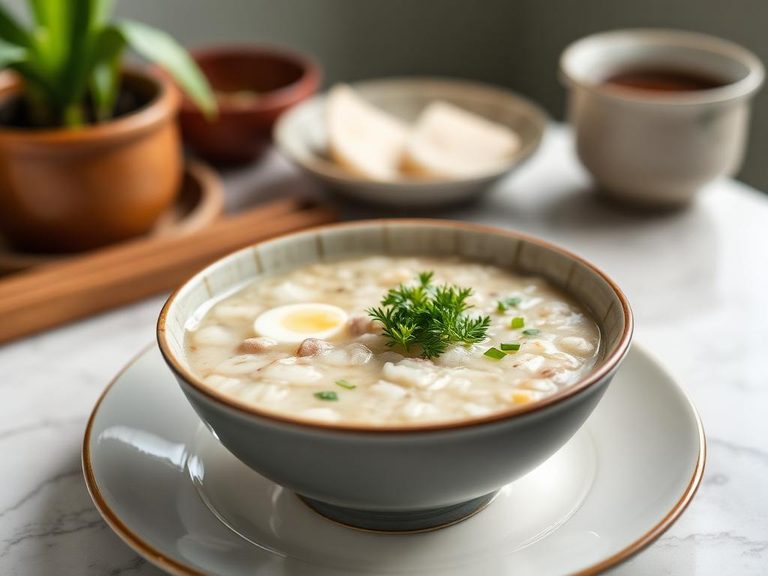
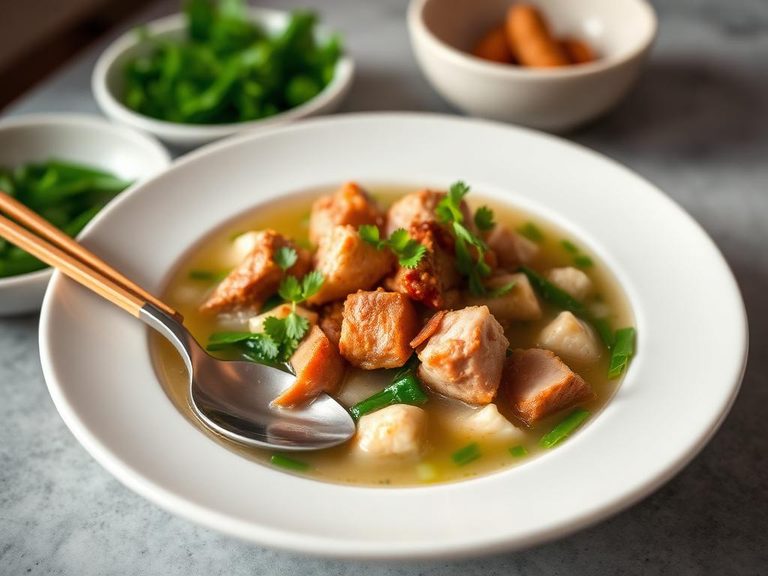
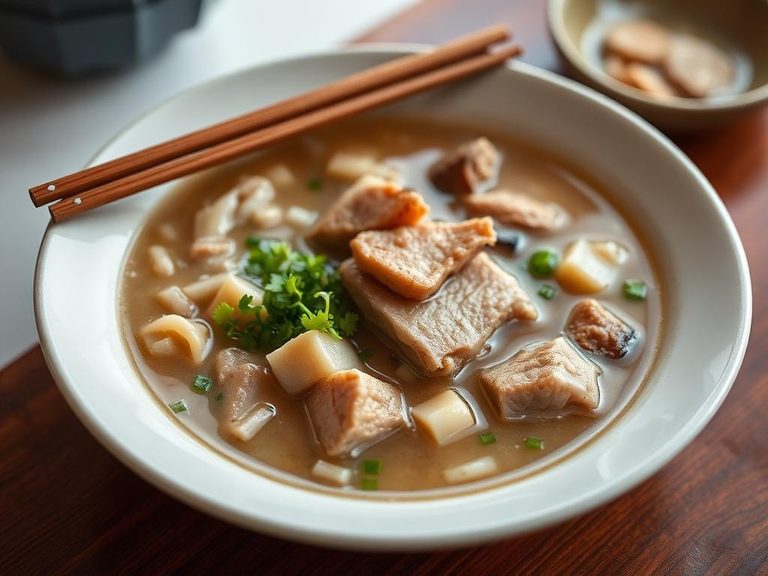
Century Egg and Pork Congee, also known as 'pidan shourou zhou,' is a savory and comforting Chinese rice porridge. It features a base of slow-cooked rice, studded with chunks of marinated pork and distinctive, creamy century eggs, and is often garnished with fresh ginger, scallions, and a drizzle of sesame oil. This dish is a beloved breakfast staple and comfort food found throughout China and in Chinese communities worldwide.
🍽️ Nutrition at a glance
This congee is primarily a high-carbohydrate dish from the rice base, with moderate protein from the pork and eggs. It is generally low in fat unless additional oils are added, and provides key nutrients like B vitamins and iron from the pork, along with various minerals from the preserved egg. A typical serving contains roughly 300-400 calories.
Nutrition breakdown
| Calories | 210 kcal |
| Protein | 12.5 g |
| Carbs | 28 g |
| Fat | 5.5 g |
| Fiber | 0.8 g |
| Sugar | 0.5 g |
| Sodium | 680 mg |
| Potassium | 280 mg |
| Iron | 2.8 mg |
| Phosphorus | 180 mg |
| Selenium | 15 µg |
| Vitamin B12 | 1.2 µg |
| Niacin (B3) | 4.5 mg |
| Calcium | 55 mg |
| Zinc | 2.2 mg |
Per 1 bowl (300 g) · estimated, varies by recipe
💡 What's interesting
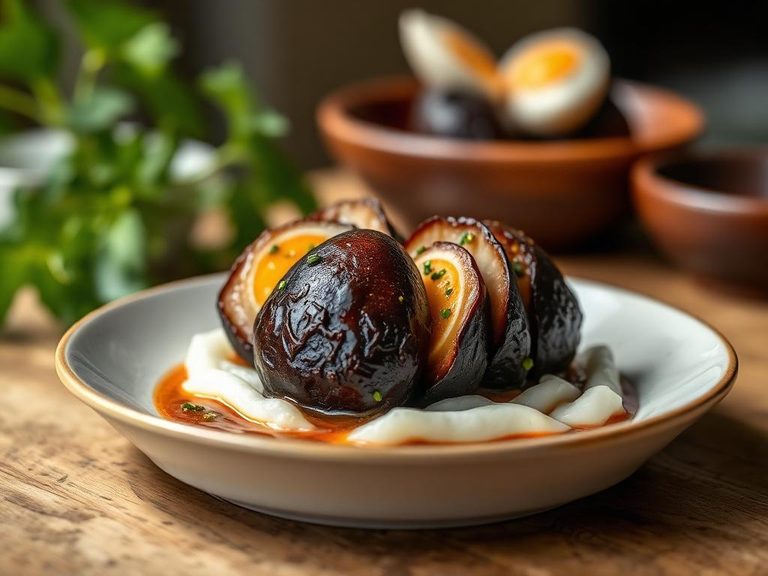
The 'century egg' (pidan) is a unique preservation technique where duck, chicken, or quail eggs are cured in a mixture of clay, ash, salt, quicklime, and rice hulls for several weeks to months, resulting in a dark, translucent 'white' and a creamy, greenish-grey yolk with a complex, savory flavor. Nutritionally, the congee is considered easy to digest and is often served as a restorative meal for those feeling unwell.