Century Egg (Pidan)
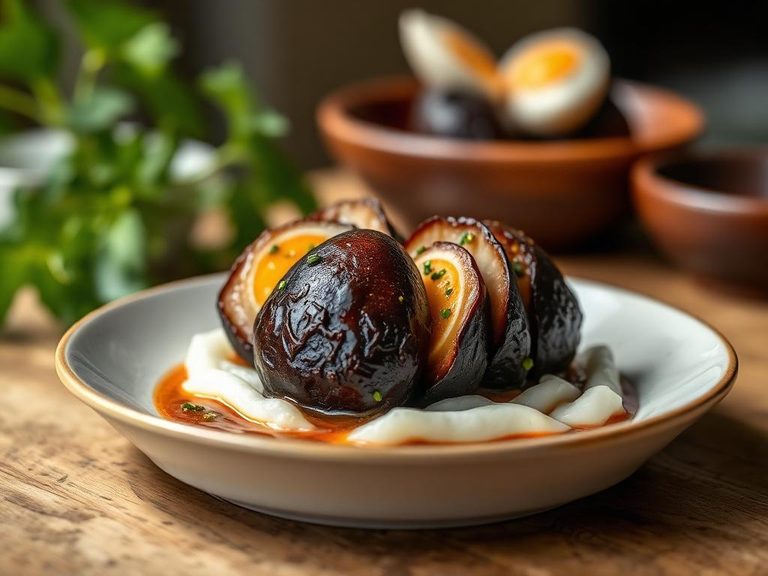
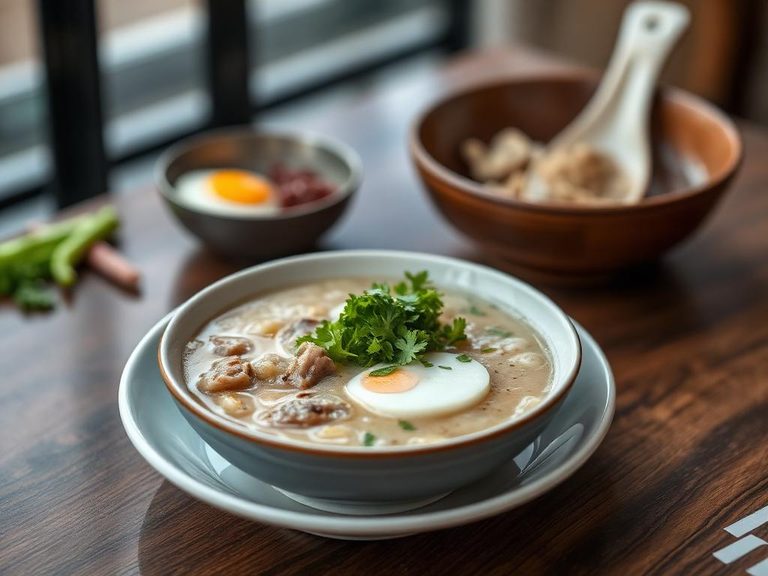
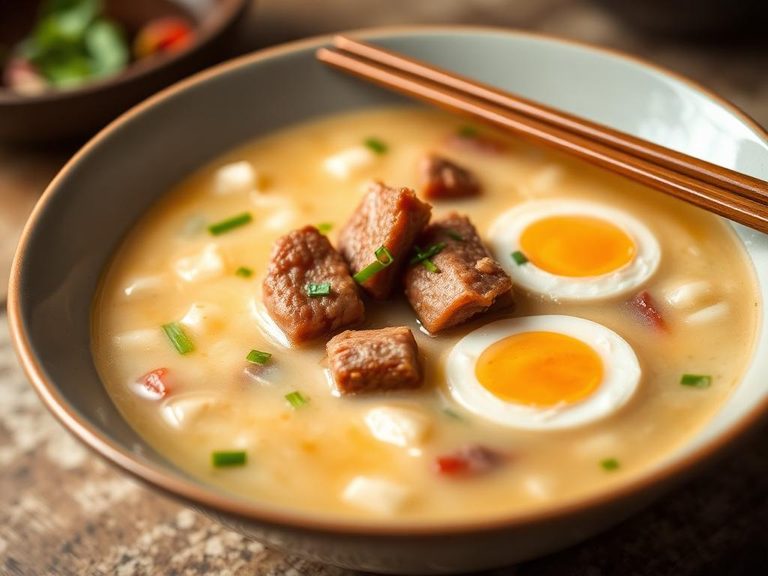
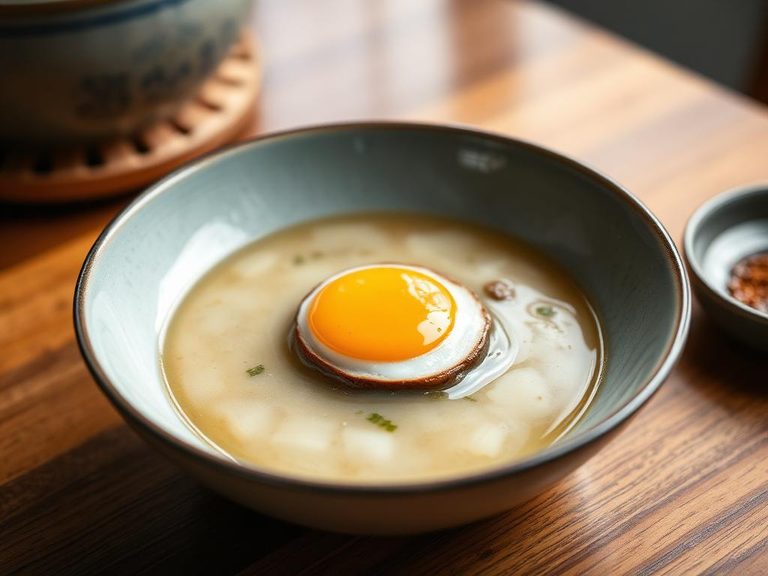
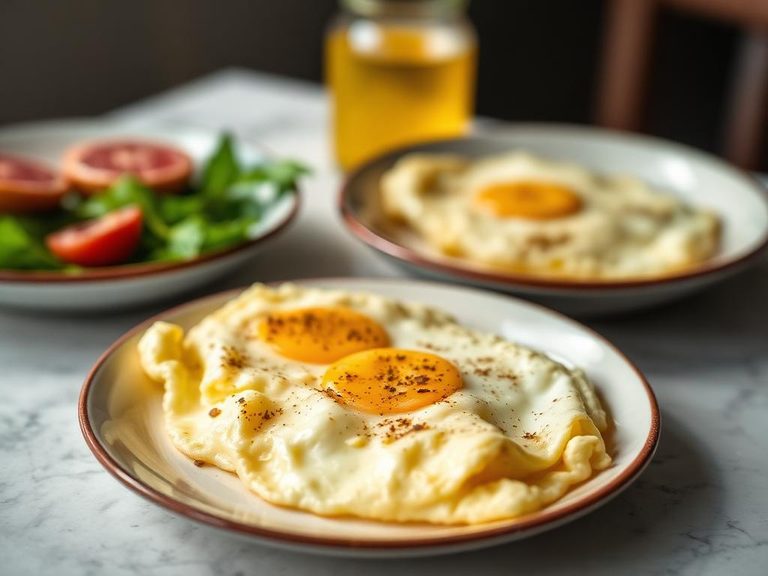
Century Egg, also known as Pidan, is a traditional Chinese preserved egg made by curing duck, chicken, or quail eggs in a mixture of clay, ash, salt, quicklime, and rice hulls for several weeks to months. This process transforms the egg white into a dark, translucent jelly and the yolk into a creamy, dark green or grey consistency with a rich, savory flavor. It is a popular appetizer or ingredient in various Chinese dishes.
🍽️ Nutrition at a glance
Century Egg is high in protein and fat, with minimal carbohydrates. It is a good source of iron, selenium, and vitamin B12, and a single egg provides roughly 60-70 calories.
Nutrition breakdown
| Calories | 65 kcal |
| Protein | 5.5 g |
| Carbs | 1 g |
| Fat | 4.5 g |
| Fiber | 0 g |
| Sugar | 0.5 g |
| Sodium | 320 mg |
| Iron | 1.8 mg |
| Selenium | 14 mcg |
| Vitamin B12 | 0.9 mcg |
| Phosphorus | 90 mg |
| Choline | 75 mg |
| Vitamin D | 1.0 mcg |
| Zinc | 1.0 mg |
| Vitamin A | 60 IU |
Per 1 century egg (approx. 50 g) · estimated, varies by recipe
💡 What's interesting
The unique preservation process creates its distinctive color and texture, and it is often served with pickled ginger to balance its rich, alkaline flavor. Nutritionally, the curing process increases the bioavailability of some minerals.