

Poke Salad
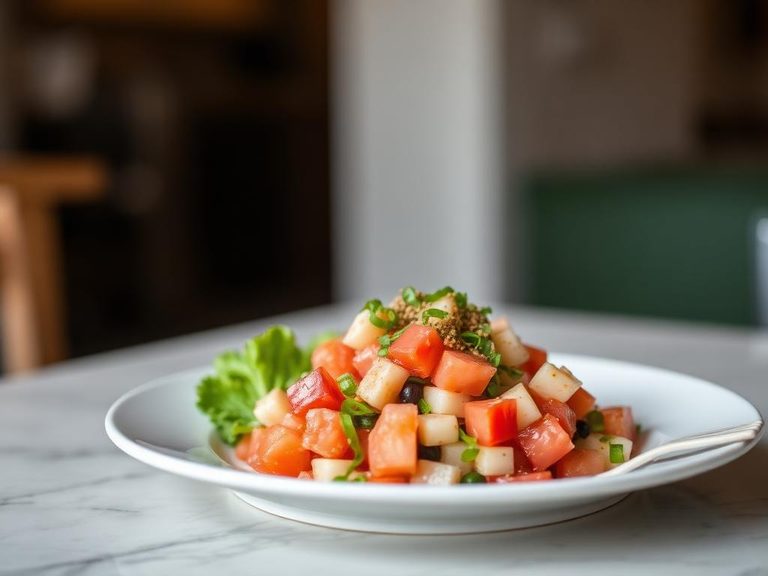
Poke Salad, often called 'poke sallet' in the American South, is a traditional cooked green dish made from the leaves of the pokeweed plant. It typically involves boiling the young leaves multiple times to remove natural toxins, then sautéing them with ingredients like bacon, onions, and vinegar. It's a classic foraged food with roots in Native American and Appalachian culinary traditions.
🍽️ Nutrition at a glance
This dish is low in carbohydrates and fat but provides a good amount of protein, primarily from the bacon or ham hock used in preparation. It is a notable source of vitamins A, C, and K, as well as minerals like iron and calcium, with a typical serving containing roughly 150-200 calories.
Nutrition breakdown
| Calories | 180 kcal |
| Protein | 10 g |
| Carbs | 5 g |
| Fat | 13 g |
| Fiber | 3 g |
| Sugar | 1 g |
| Sodium | 480 mg |
| Vitamin A | 450 µg RAE |
| Vitamin C | 25 mg |
| Vitamin K | 290 µg |
| Iron | 2.5 mg |
| Calcium | 180 mg |
| Magnesium | 45 mg |
| Potassium | 320 mg |
| Manganese | 0.8 mg |
Per 1 cup (180 g), cooked and drained · estimated, varies by recipe
💡 What's interesting
The unique cultural aspect of Poke Salad is its deep connection to foraging and self-sufficiency in the rural South, requiring specific knowledge to prepare safely. Nutritionally, it transforms a potentially toxic wild plant into a nutrient-dense cooked green, similar to spinach but with a distinct, slightly earthy flavor.
🍽️ Related dishes
AI estimate may be inaccurate · Terms