Pickled Kohlrabi
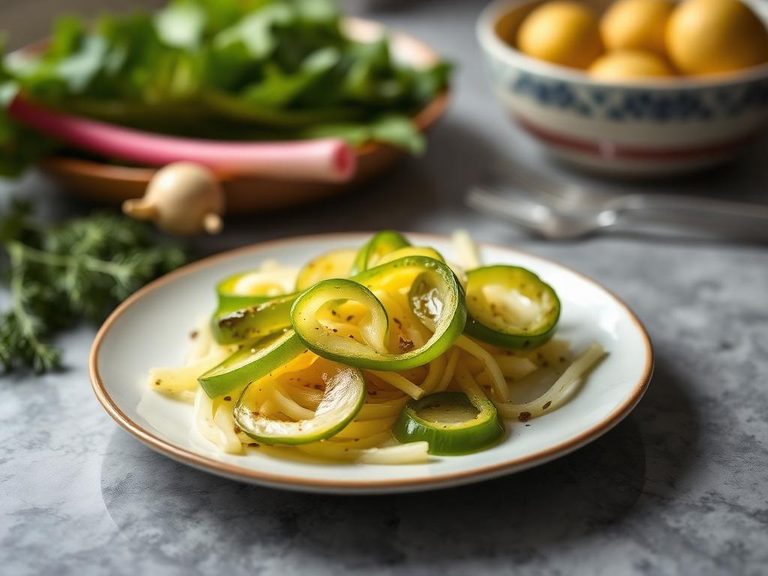
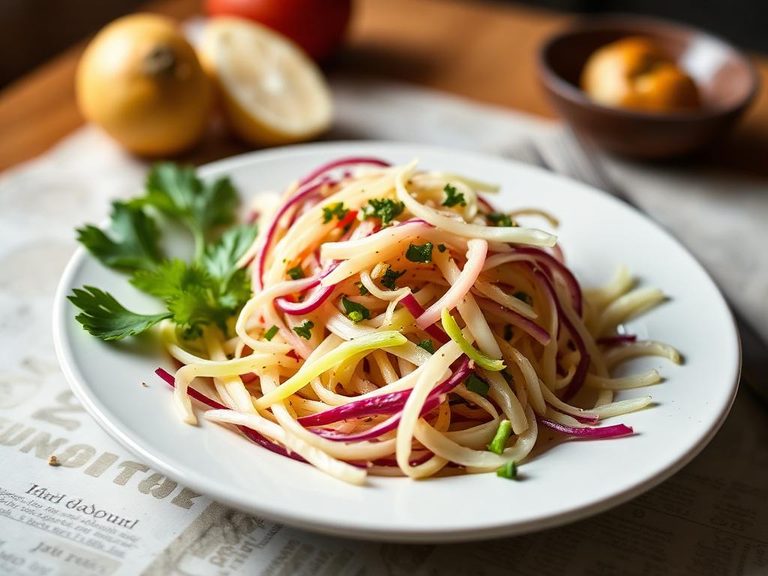
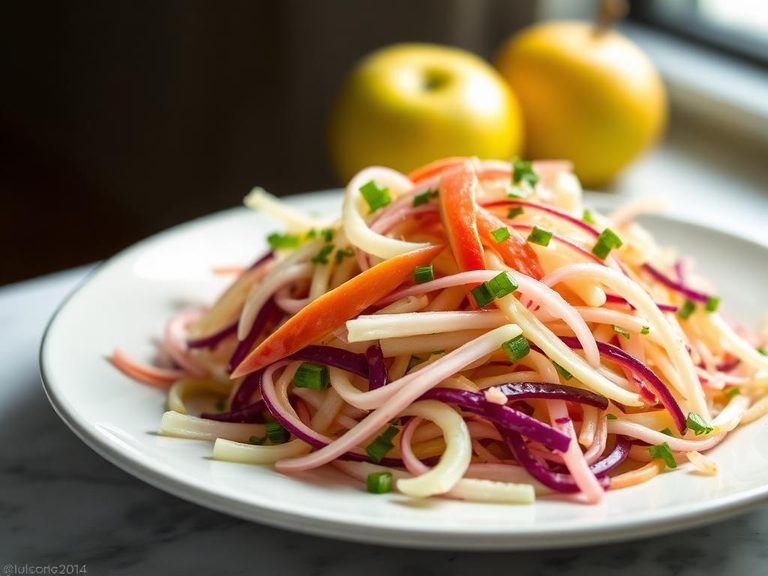
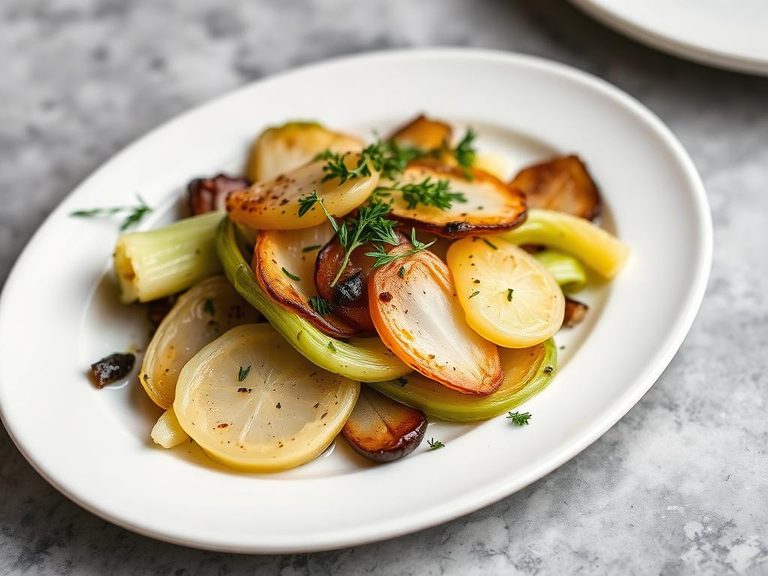
Pickled Kohlrabi is a tangy, crunchy condiment or side dish made from the bulbous stem of the kohlrabi plant, typically sliced or diced and preserved in a brine of vinegar, salt, water, and spices like mustard seeds, dill, or garlic. It is a popular preparation in Central and Eastern European cuisines, particularly in German, Polish, and Scandinavian cooking, where it's often served alongside hearty meats or as part of a cold buffet.
🍽️ Nutrition at a glance
This dish is low in calories, with a typical serving containing roughly 20-30 calories, and is virtually fat-free and very low in protein. Its primary nutritional value comes from kohlrabi's good supply of vitamin C, potassium, and dietary fiber, though some nutrients may be reduced during the pickling process.
Nutrition breakdown
| Calories | 45 kcal |
| Protein | 2.5 g |
| Carbs | 8 g |
| Fat | 0.5 g |
| Fiber | 3 g |
| Sugar | 4 g |
| Sodium | 680 mg |
| Vitamin C | 65 mg |
| Vitamin K | 15 mcg |
| Potassium | 400 mg |
| Calcium | 50 mg |
| Iron | 1.0 mg |
| Magnesium | 25 mg |
| Folate | 30 mcg |
| Manganese | 0.3 mg |
Per 1 cup (170 g) · estimated, varies by recipe
💡 What's interesting
Culturally, pickled kohlrabi is a classic example of traditional food preservation, transforming a fresh vegetable into a long-lasting, flavor-enhancing staple for winter months. Nutritionally, while the pickling process reduces some heat-sensitive vitamins, it can increase the availability of certain antioxidants and provides beneficial probiotics if fermented naturally.