

Pepsi Blue
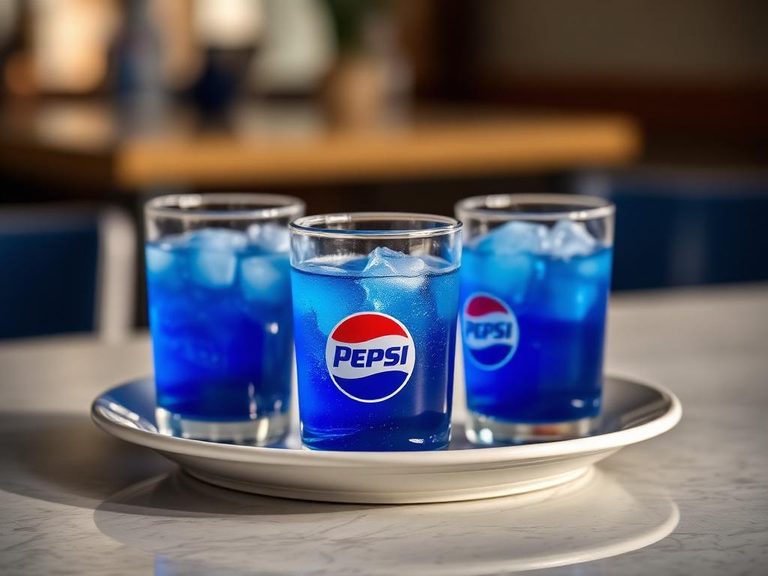
Pepsi Blue was a limited-edition, berry-flavored soda from PepsiCo, first released in the early 2000s and known for its striking, artificially blue color. It was a carbonated soft drink, not a food dish, made with high-fructose corn syrup, caramel color, phosphoric acid, and natural and artificial flavors. It was primarily marketed in the United States.
🍳 View the full Pepsi Blue recipe →
🍽️ Nutrition at a glance
As a sugary soda, Pepsi Blue was very high in simple carbohydrates (sugar) and provided no significant protein, fat, or essential nutrients. A typical 12-ounce can contained around 150-160 calories, almost entirely from about 40-42 grams of added sugar.
Nutrition breakdown
| Calories | 150 kcal |
| Protein | 0 g |
| Carbs | 41 g |
| Fat | 0 g |
| Fiber | 0 g |
| Sugar | 41 g |
| Sodium | 35 mg |
| Potassium | 10 mg |
| Sodium | 35 mg |
| Phosphorus | 10 mg |
| Magnesium | 5 mg |
| Niacin (B3) | 100% DV |
| Vitamin B6 | 100% DV |
| Vitamin B12 | 100% DV |
| Zinc | 25% DV |
Per 1 can (355 ml / 355 g) · estimated, varies by recipe
💡 What's interesting
Pepsi Blue's cultural legacy is tied to its bold, almost neon-blue hue and its association with the pop culture of the Y2K era, making it a nostalgic icon for millennials. Its discontinuation after a short initial run turned it into a sought-after collector's item and a frequent subject of online 'bring it back' campaigns.
🍽️ Related dishes
AI estimate may be inaccurate · Terms