

Pan de Muerto
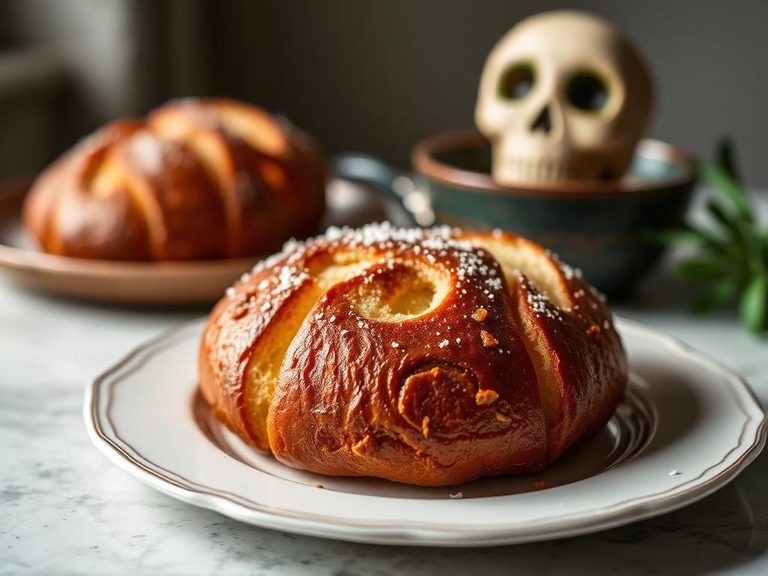
Pan de Muerto, meaning 'Bread of the Dead,' is a traditional Mexican sweet bread baked for Día de los Muertos (Day of the Dead) celebrations. It is a soft, brioche-like bread flavored with orange blossom water or anise, often topped with sugar and decorated with bone-shaped dough pieces. The dish originates from Mexico, with roots blending pre-Hispanic and colonial Spanish traditions.
🍳 View the full Pan de Muerto recipe →
🍽️ Nutrition at a glance
Pan de Muerto is high in carbohydrates and fat due to its enriched dough, which typically includes flour, sugar, butter, and eggs. A standard serving (about 100g) provides roughly 300-350 calories, with key nutrients like iron from flour and small amounts of calcium from eggs, but it is primarily an energy-dense treat rather than a balanced meal.
Nutrition breakdown
| Calories | 320 kcal |
| Protein | 6 g |
| Carbs | 52 g |
| Fat | 10 g |
| Fiber | 2 g |
| Sugar | 18 g |
| Sodium | 280 mg |
| Iron | 2.5 mg |
| Calcium | 80 mg |
| Potassium | 120 mg |
| Vitamin A | 45 mcg |
| Thiamin (B1) | 0.2 mg |
| Riboflavin (B2) | 0.15 mg |
| Niacin (B3) | 1.8 mg |
| Folate | 40 mcg |
Per 1 piece (about 100 g) · estimated, varies by recipe
💡 What's interesting
Culturally, the bread's bone-shaped decorations symbolize the deceased loved ones being honored, making it a edible tribute during Día de los Muertos altars. Nutritionally, its use of orange blossom water adds a unique aromatic flavor that also provides trace antioxidants, setting it apart from typical sweet breads.
🍽️ Related dishes



AI estimate may be inaccurate · Terms