

Mung Bean Porridge (Korean)
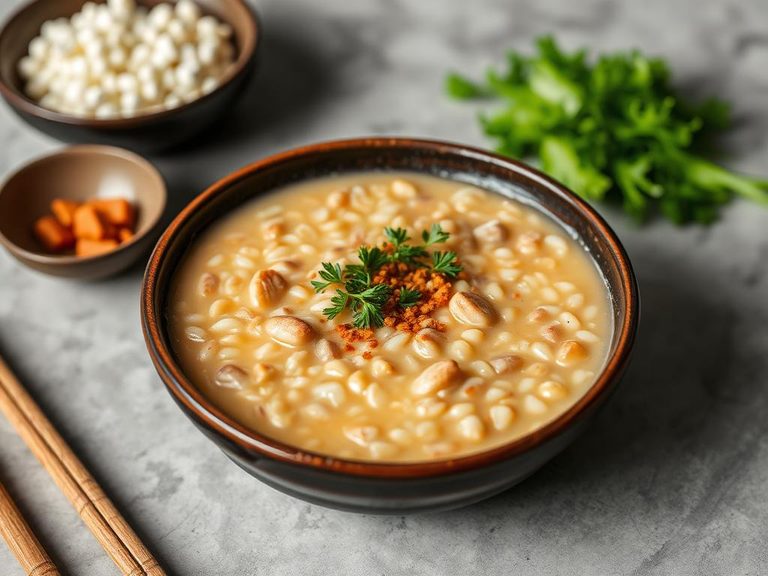
Mung Bean Porridge (Patjuk or Sukjuk) is a traditional Korean dish made by boiling mung beans until they break down into a smooth, thick, and often savory porridge. It is typically prepared with water and a pinch of salt, and can be served plain or with various toppings like rice, nuts, or sweet red bean paste for a dessert version. This comforting dish is deeply rooted in Korean cuisine, especially during the summer months.
🍽️ Nutrition at a glance
This porridge is primarily a source of complex carbohydrates and plant-based protein, making it a filling, low-fat meal. It is rich in dietary fiber, vitamins like folate, and essential minerals such as iron and magnesium, with a typical serving containing roughly 200-250 calories.
Nutrition breakdown
| Calories | 120 kcal |
| Protein | 6.5 g |
| Carbs | 22 g |
| Fat | 0.5 g |
| Fiber | 4.5 g |
| Sugar | 3 g |
| Sodium | 5 mg |
| Potassium | 320 mg |
| Magnesium | 50 mg |
| Iron | 1.5 mg |
| Phosphorus | 100 mg |
| Folate | 80 mcg |
| Manganese | 0.6 mg |
| Thiamin (B1) | 0.15 mg |
| Vitamin B6 | 0.1 mg |
Per 1 cup (240 g) · estimated, varies by recipe
💡 What's interesting
Nutritionally, mung beans are prized in East Asian diets for their 'cooling' properties, believed to help detoxify the body and reduce internal heat, making this porridge a popular choice during hot weather. Culturally, it is often associated with recovery and is traditionally served to those feeling unwell due to its gentle, easy-to-digest nature.
🍽️ Related dishes





AI estimate may be inaccurate · Terms