Marinades for Fried Chicken
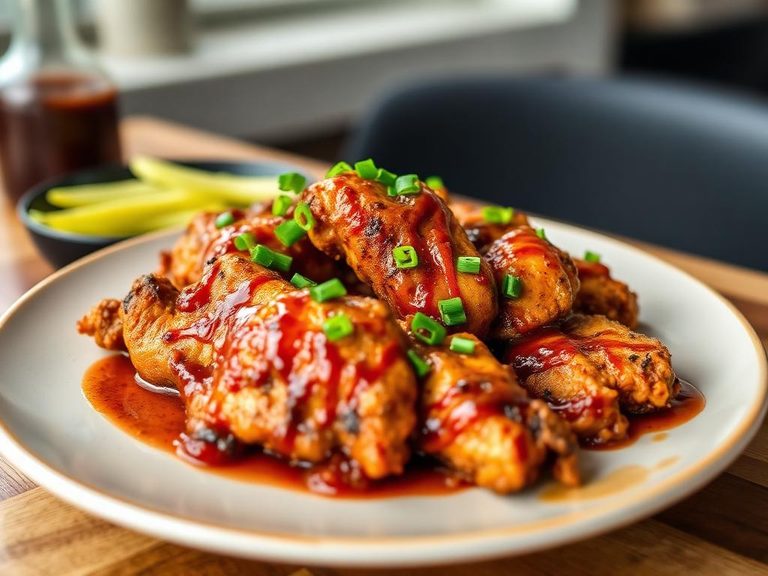
A marinade for fried chicken is a flavorful liquid mixture used to tenderize and season chicken pieces before coating and deep-frying. It typically includes a base like buttermilk or yogurt, combined with acidic elements (like vinegar or citrus juice), herbs, spices, and aromatics such as garlic and onion. This technique is foundational in many cuisines, notably in the American South, where buttermilk marinades are iconic.
🍽️ Nutrition at a glance
A serving of fried chicken marinated and cooked in this style is high in protein and fat, with minimal carbohydrates coming mainly from the marinade and coating. It provides significant amounts of B vitamins (especially niacin and B6), selenium, and phosphorus, with a rough calorie estimate of 400-600 kcal per 100g of cooked chicken, depending on the cut and frying method.
Nutrition breakdown
| Calories | 480 kcal |
| Protein | 28 g |
| Carbs | 12 g |
| Fat | 36 g |
| Fiber | 1 g |
| Sugar | 2 g |
| Sodium | 650 mg |
| Niacin (B3) | 7 mg |
| Vitamin B6 | 0.5 mg |
| Phosphorus | 200 mg |
| Selenium | 25 mcg |
| Zinc | 3 mg |
| Iron | 1.5 mg |
| Potassium | 280 mg |
| Choline | 80 mg |
Per 1 piece (about 150 g) of fried chicken thigh, marinated in buttermilk · estimated, varies by recipe
💡 What's interesting
Culturally, the buttermilk marinade is a hallmark of Southern U.S. cooking, believed to tenderize the meat and promote a crispier crust. Nutritionally, the lactic acid in buttermilk helps break down proteins for a more tender texture, while the marinade can also help retain moisture during high-heat frying.