Lasagna Bolognese
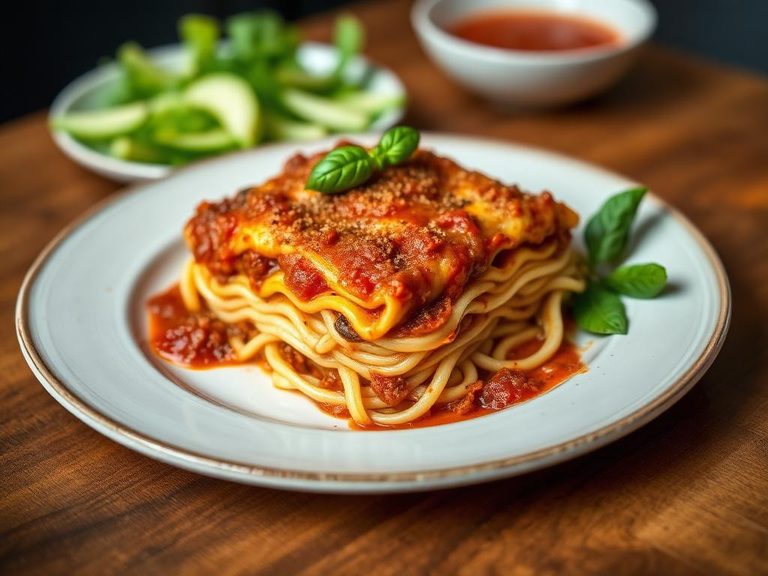
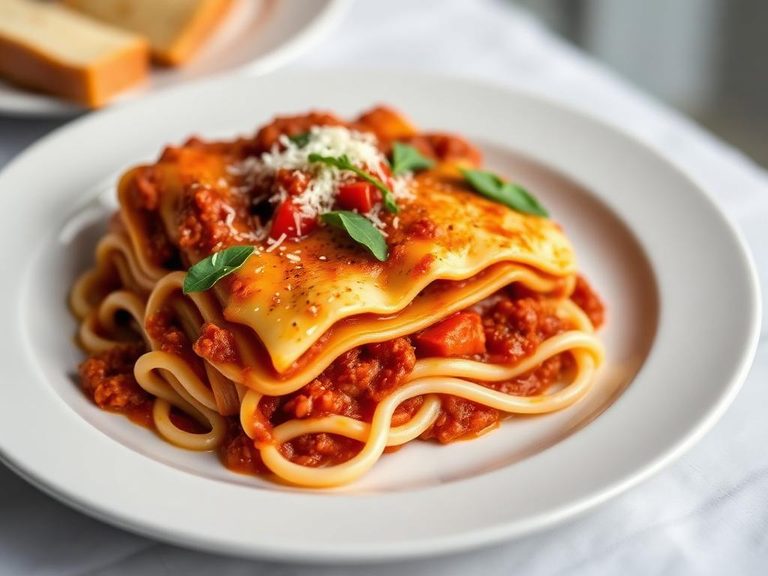
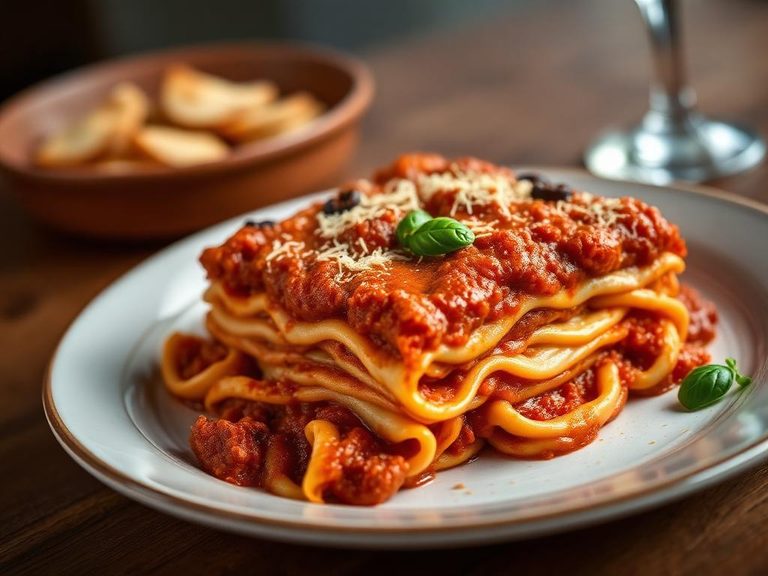
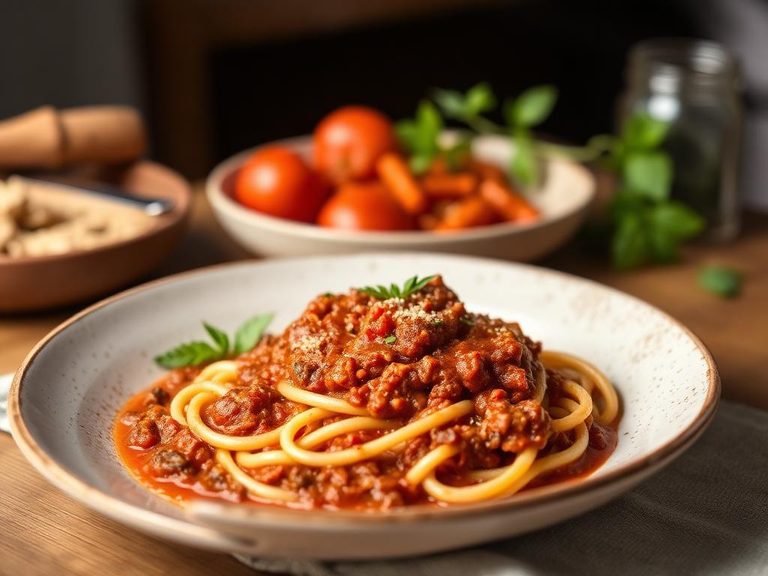
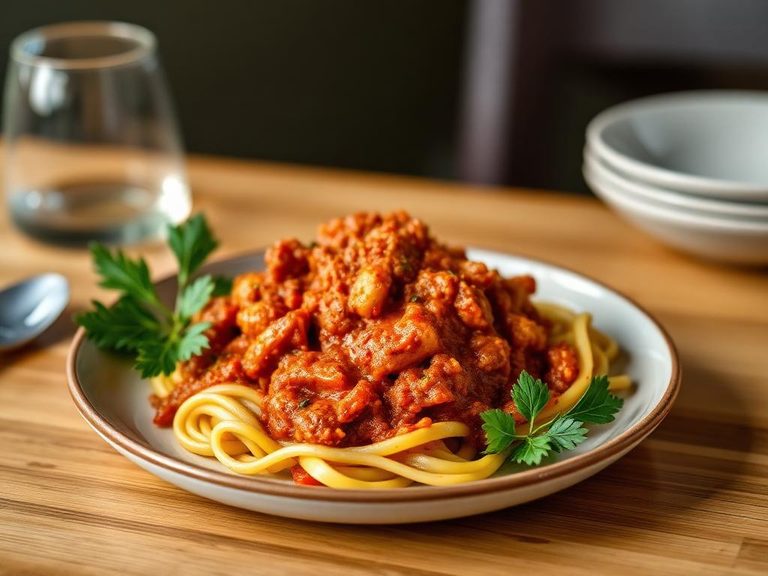
Lasagna Bolognese is a classic Italian baked pasta dish originating from the city of Bologna, characterized by layers of flat pasta sheets, a rich meat-based ragù (Bolognese sauce), creamy béchamel sauce, and often Parmigiano-Reggiano cheese. It is traditionally made with a slow-cooked ragù containing ground beef, pork, soffritto (onion, celery, carrot), tomatoes, and wine, layered with the pasta and béchamel before baking to a golden finish.
🍽️ Nutrition at a glance
Lasagna Bolognese is a hearty, calorie-dense dish, typically ranging from 400-600 calories per serving, with a balanced profile of carbohydrates from the pasta, protein from the meat and cheese, and fat from the béchamel and ragù. It provides key nutrients like iron, calcium, and B vitamins, but its richness makes it a substantial, indulgent meal rather than a light option.
Nutrition breakdown
| Calories | 375 kcal |
| Protein | 21 g |
| Carbs | 31 g |
| Fat | 19 g |
| Fiber | 3 g |
| Sugar | 8 g |
| Sodium | 850 mg |
| Calcium | 280 mg |
| Iron | 2.8 mg |
| Potassium | 350 mg |
| Vitamin A | 180 µg RAE |
| Vitamin C | 8 mg |
| Vitamin B12 | 1.5 µg |
| Phosphorus | 250 mg |
| Zinc | 3.2 mg |
Per 1 piece (approx. 240 g) · estimated, varies by recipe
💡 What's interesting
Culturally, Lasagna Bolognese is a symbol of Italian comfort food and regional pride, with the authentic recipe from Bologna often using tagliatelle instead of lasagna sheets and emphasizing slow-cooked ragù over heavy tomato sauce. Nutritionally, its combination of slow-cooked meat, dairy, and pasta makes it a classic example of a 'complete' meal, offering sustained energy and a satisfying blend of flavors and textures.