

Italian Fegatini
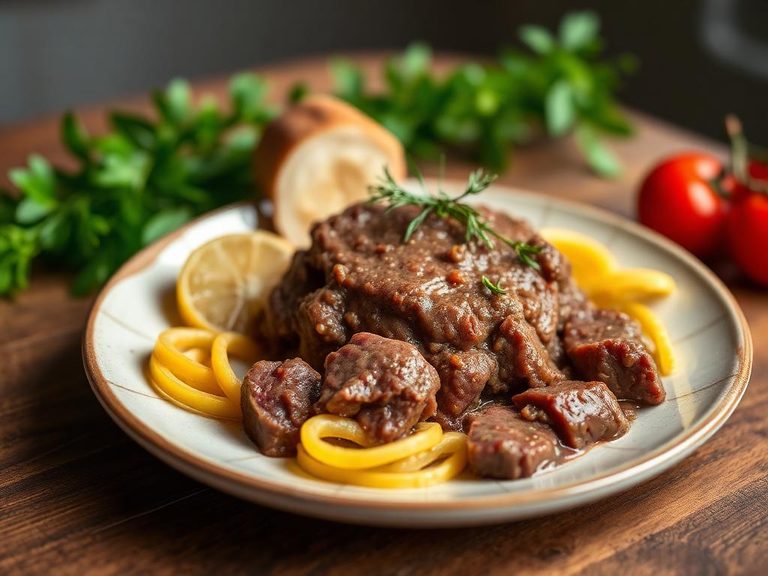
Italian Fegatini is a rich, savory pâté traditionally made from chicken livers and kidneys, finely chopped or ground and cooked with aromatics like onion, celery, and sometimes white wine or vinegar. Hailing from various regions of Italy, it's often served as an antipasto, spread on crusty bread, or used as a filling for pasta and pastries. Its deep, mineral flavor and smooth texture make it a classic example of Italian 'cucina povera' or peasant cooking, utilizing offal to create a nutritious and flavorful dish.
🍽️ Nutrition at a glance
This dish is very high in protein and fat, with minimal carbohydrates. It is an exceptional source of iron, vitamin B12, and vitamin A, providing a dense concentration of essential nutrients in a small serving. A typical 100g serving contains roughly 200-250 kcal.
Nutrition breakdown
| Calories | 150 kcal |
| Protein | 12 g |
| Carbs | 1 g |
| Fat | 10 g |
| Fiber | 0 g |
| Sugar | 0.5 g |
| Sodium | 300 mg |
| Iron | 4.5 mg |
| Vitamin B12 | 16.2 mcg |
| Vitamin A | 2800 IU |
| Selenium | 28 mcg |
| Riboflavin (B2) | 1.1 mg |
| Niacin (B3) | 6.5 mg |
| Copper | 0.5 mg |
| Phosphorus | 220 mg |
Per 1/4 cup (65 g) · estimated, varies by recipe
💡 What's interesting
Culturally, Fegatini is a prime example of the Italian tradition of 'quinto quarto' (the fifth quarter), which celebrates the use of offal to minimize waste. Nutritionally, it's a powerhouse; a single serving can deliver over 100% of the daily recommended intake for vitamin B12 and a significant portion of iron, making it particularly beneficial for those needing to boost these nutrients.
🍽️ Related dishes
AI estimate may be inaccurate · Terms