

Huckleberry Syrup
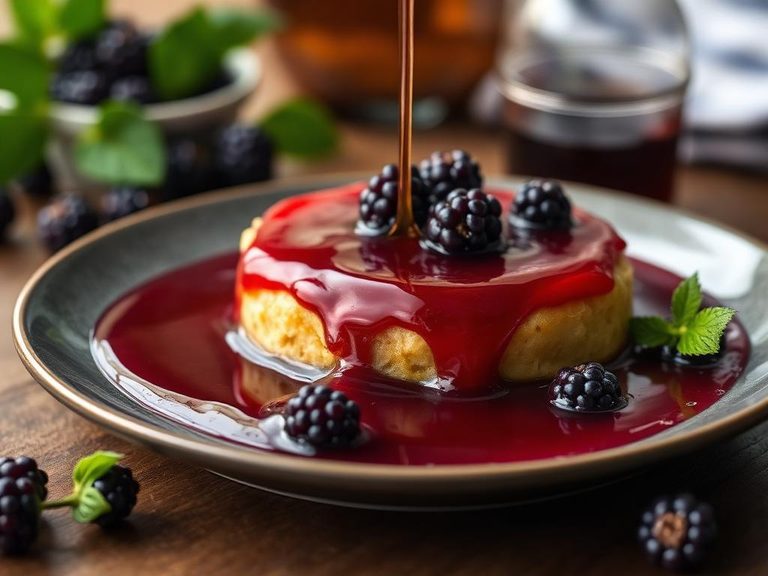
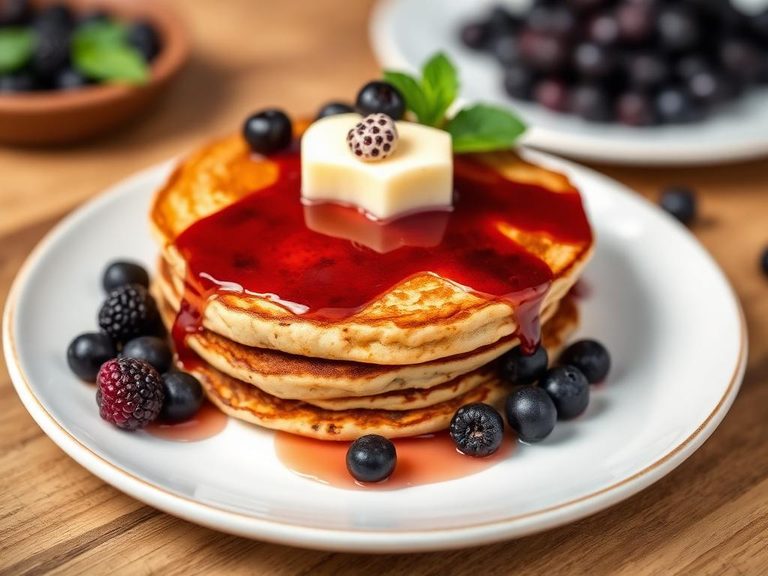
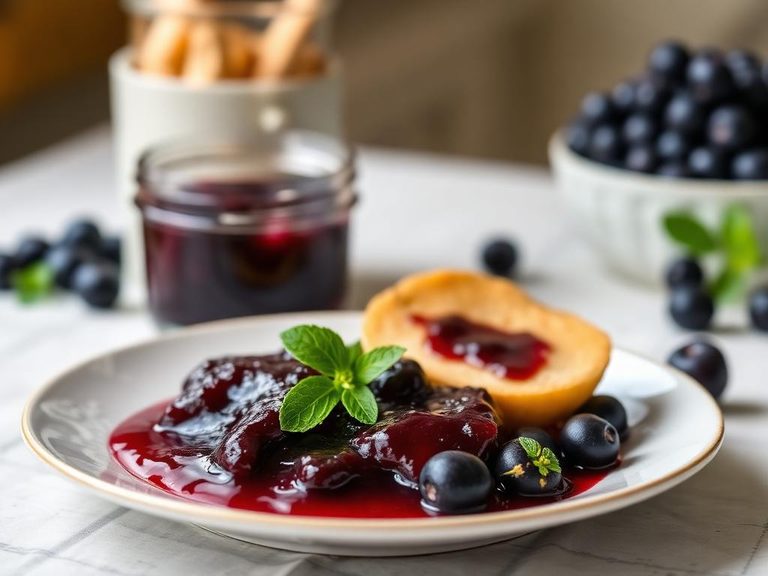
Huckleberry syrup is a rich, sweet condiment made by simmering wild huckleberries with sugar and water, often with a touch of lemon juice. It hails from the mountainous regions of North America, particularly the Pacific Northwest and Rocky Mountains, where wild huckleberries are foraged. The syrup is prized for its deep, complex berry flavor that is more intense and tart than blueberries.
🍽️ Nutrition at a glance
This syrup is very high in carbohydrates, almost entirely from natural fruit sugars and added sweeteners, with negligible fat or protein. A typical serving provides a quick source of energy and small amounts of antioxidants and vitamin C from the berries.
Nutrition breakdown
| Calories | 120 kcal |
| Protein | 0 g |
| Carbs | 30 g |
| Fat | 0 g |
| Fiber | 1 g |
| Sugar | 28 g |
| Sodium | 5 mg |
| Vitamin C | 2 mg |
| Potassium | 45 mg |
| Manganese | 0.1 mg |
| Iron | 0.2 mg |
Per 2 tablespoons (about 40 g) · estimated, varies by recipe
💡 What's interesting
Huckleberries are notoriously difficult to cultivate commercially, making wild-harvested syrup a prized regional specialty. Its unique, robust flavor profile is often described as a cross between a blueberry, raspberry, and black currant.
🍽️ Related dishes
AI estimate may be inaccurate · Terms