

Horta (Greek)

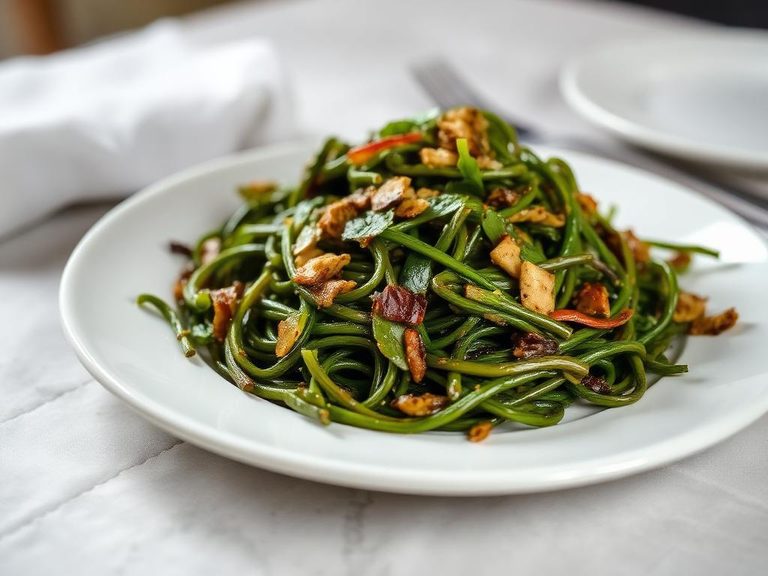
Horta is a traditional Greek dish consisting of wild or cultivated leafy greens, typically boiled and served with olive oil and lemon. Common varieties include dandelion, chicory, spinach, and amaranth, reflecting the Mediterranean foraging tradition. It is a staple in Greek households, especially during Lent and spring.
🍽️ Nutrition at a glance
Horta is low in calories and carbohydrates, with minimal fat and protein, making it a light, nutrient-dense side dish. It is rich in vitamins A, C, and K, as well as minerals like iron and calcium, providing significant antioxidants and fiber.
Nutrition breakdown
| Calories | 45 kcal |
| Protein | 3.5 g |
| Carbs | 6 g |
| Fat | 1.5 g |
| Fiber | 4 g |
| Sugar | 1 g |
| Sodium | 40 mg |
| Vitamin K | 450 mcg |
| Vitamin A | 5000 IU |
| Vitamin C | 25 mg |
| Iron | 2.5 mg |
| Calcium | 120 mg |
| Potassium | 400 mg |
| Magnesium | 35 mg |
| Folate | 80 mcg |
Per 1 cup (150 g), boiled and drained · estimated, varies by recipe
💡 What's interesting
Culturally, horta embodies the Greek philosophy of 'farm-to-table' long before it was trendy, often foraged from hillsides and gardens. Nutritionally, it is a powerhouse of phytonutrients and is traditionally prepared without heavy sauces, preserving its natural health benefits.
🍽️ Related dishes







AI estimate may be inaccurate · Terms