

Congee with Carrots
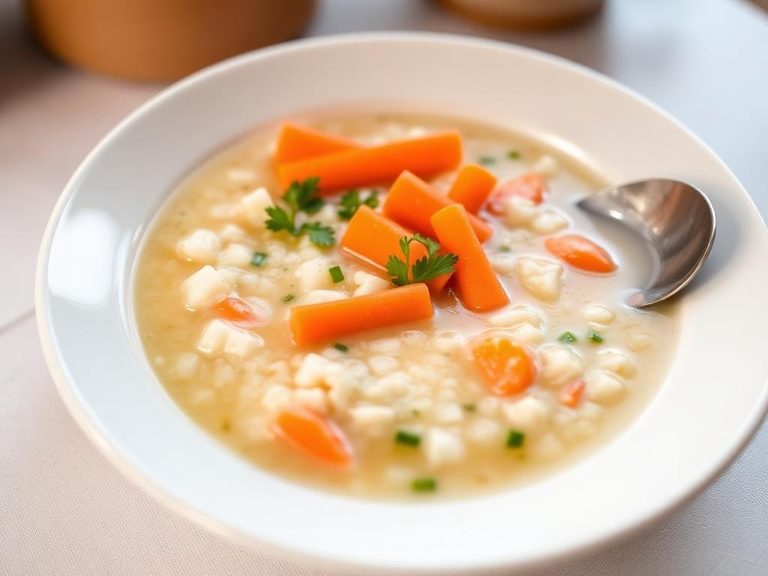
Congee with Carrots is a comforting, savory rice porridge dish originating from Chinese cuisine, where rice is slow-cooked until creamy and then combined with sweet, tender carrots. It's a simple, nourishing staple often enjoyed for breakfast or as a light meal, sometimes enhanced with ginger, scallions, or a dash of sesame oil. This variation adds a mild sweetness and vibrant color to the classic, plain congee base.
🍽️ Nutrition at a glance
This dish is primarily a source of complex carbohydrates from the rice, with minimal fat and a small amount of plant-based protein. The carrots contribute valuable beta-carotene (a precursor to Vitamin A), fiber, and potassium, making it a nutrient-dense, low-fat option. A typical serving contains roughly 150-250 calories, depending on the rice-to-water ratio and any added seasonings or toppings.
Nutrition breakdown
| Calories | 130 kcal |
| Protein | 3 g |
| Carbs | 28 g |
| Fat | 0.5 g |
| Fiber | 2 g |
| Sugar | 2 g |
| Sodium | 400 mg |
| Potassium | 200 mg |
| Vitamin A | 450 mcg |
| Vitamin C | 3 mg |
| Vitamin B6 | 0.1 mg |
| Folate | 25 mcg |
| Magnesium | 20 mg |
| Phosphorus | 45 mg |
| Manganese | 0.4 mg |
Per 1 cup (240 g) · estimated, varies by recipe
💡 What's interesting
Culturally, congee is a quintessential comfort food across many Asian cultures, often served to the sick or elderly for its easy digestibility, and adding carrots is a common way to boost both nutrition and appeal for children. Nutritionally, the slow cooking process breaks down the rice starches, making the nutrients highly bioavailable and gentle on the digestive system, while the beta-carotene in carrots is better absorbed when cooked with a tiny amount of fat, like a few drops of oil.
🍽️ Related dishes

AI estimate may be inaccurate · Terms