

Classic Swiss Muesli
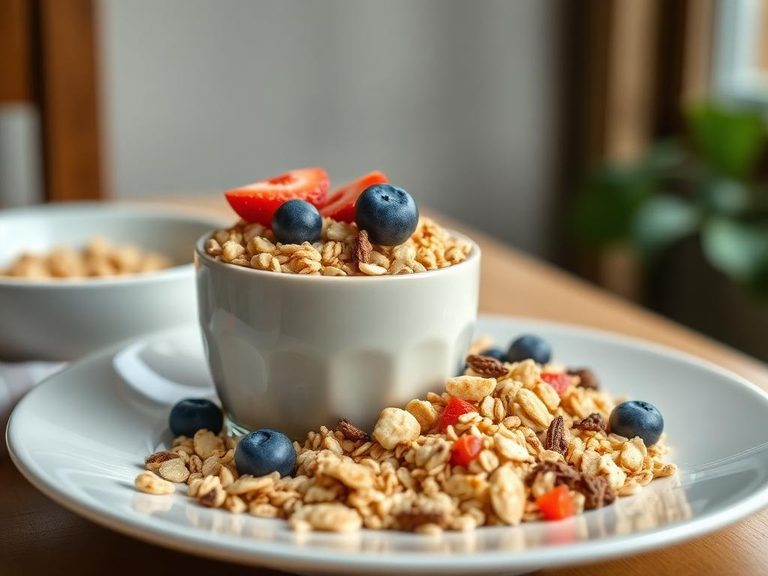
Classic Swiss Muesli is a hearty, cold breakfast dish originating from Switzerland, traditionally made with rolled oats, dried fruits, nuts, and seeds. It is typically soaked overnight in milk or yogurt to soften the oats, then served with fresh fruit like grated apple or berries. The dish was developed in the early 20th century as a health food by Swiss physician Maximilian Bircher-Benner.
🍽️ Nutrition at a glance
Muesli is a balanced, high-fiber dish with a good mix of complex carbohydrates, plant-based protein, and healthy fats from nuts and seeds. A typical serving provides a sustained energy release and is rich in micronutrients like iron, magnesium, and B vitamins, with a calorie range of approximately 300-400 kcal.
Nutrition breakdown
| Calories | 350 kcal |
| Protein | 12 g |
| Carbs | 55 g |
| Fat | 10 g |
| Fiber | 8 g |
| Sugar | 15 g |
| Sodium | 50 mg |
| Iron | 4 mg |
| Magnesium | 120 mg |
| Phosphorus | 300 mg |
| Zinc | 3 mg |
| Manganese | 2.5 mg |
| Thiamin (B1) | 0.4 mg |
| Folate | 60 mcg |
| Potassium | 400 mg |
Per 1 cup (240 g) · estimated, varies by recipe
💡 What's interesting
Culturally, muesli is a cornerstone of the Swiss breakfast tradition and has influenced healthy eating worldwide. Nutritionally, its unique overnight soaking process is believed to improve digestibility and nutrient absorption, making it a pioneering example of food preparation for health.
🍽️ Related dishes

AI estimate may be inaccurate · Terms