Charcuterie or cold cut platters
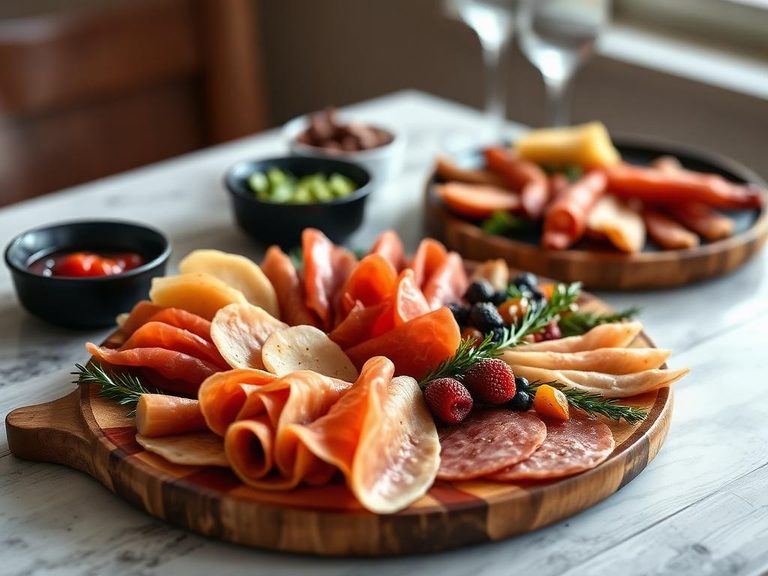
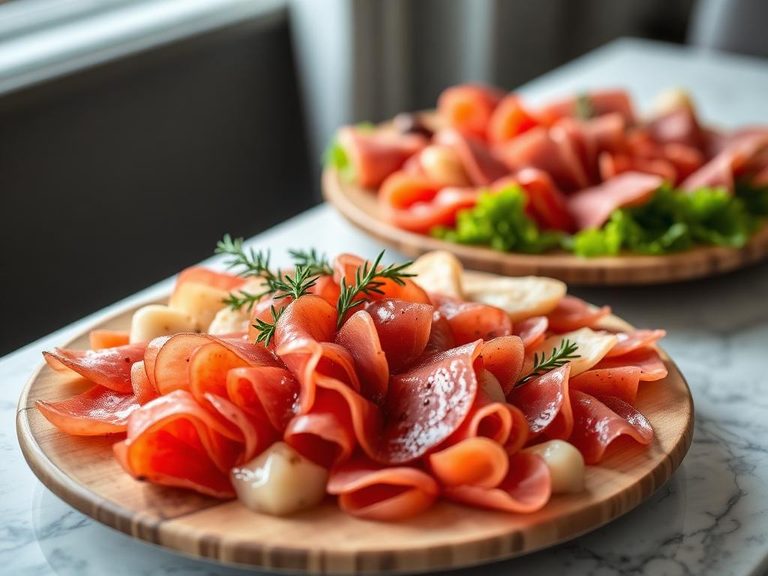
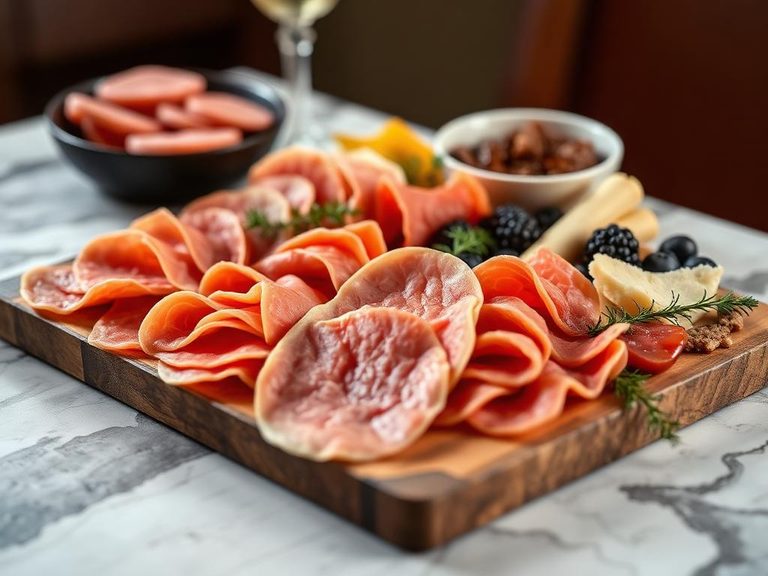
A charcuterie or cold cut platter is an assortment of prepared and cured meats, often served sliced, that originated as a way to preserve meat before refrigeration. While it can include a wide variety of items, it typically features cured pork products like prosciutto, salami, and ham, sometimes accompanied by cheeses, crackers, and condiments. The practice is deeply rooted in European culinary traditions, particularly in France and Italy.
🍽️ Nutrition at a glance
This dish is very high in protein and fat, with minimal carbohydrates. It is a significant source of sodium and provides essential nutrients like iron, zinc, and B vitamins, particularly B12. A typical serving can range from 300 to 500 calories, depending on the specific meats and portion size.
Nutrition breakdown
| Calories | 350 kcal |
| Protein | 22 g |
| Carbs | 2 g |
| Fat | 28 g |
| Fiber | 0 g |
| Sugar | 1 g |
| Sodium | 1450 mg |
| Vitamin B12 | 2.1 mcg |
| Iron | 1.8 mg |
| Zinc | 3.2 mg |
| Selenium | 24 mcg |
| Niacin (B3) | 5.5 mg |
| Phosphorus | 220 mg |
| Potassium | 280 mg |
| Thiamine (B1) | 0.3 mg |
Per 1 typical serving (about 113 g or 4 oz) · estimated, varies by recipe
💡 What's interesting
The art of charcuterie is a centuries-old preservation technique using salt, air, and sometimes smoke to transform perishable meat into a shelf-stable delicacy. Nutritionally, it offers a concentrated source of complete protein and certain micronutrients, but its high sodium and saturated fat content means it's often enjoyed as part of a balanced, occasional indulgence.