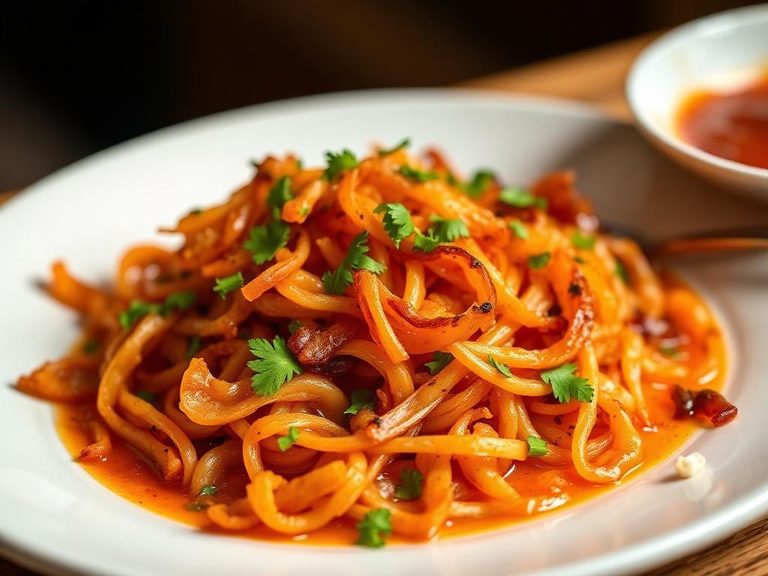
Bhaji
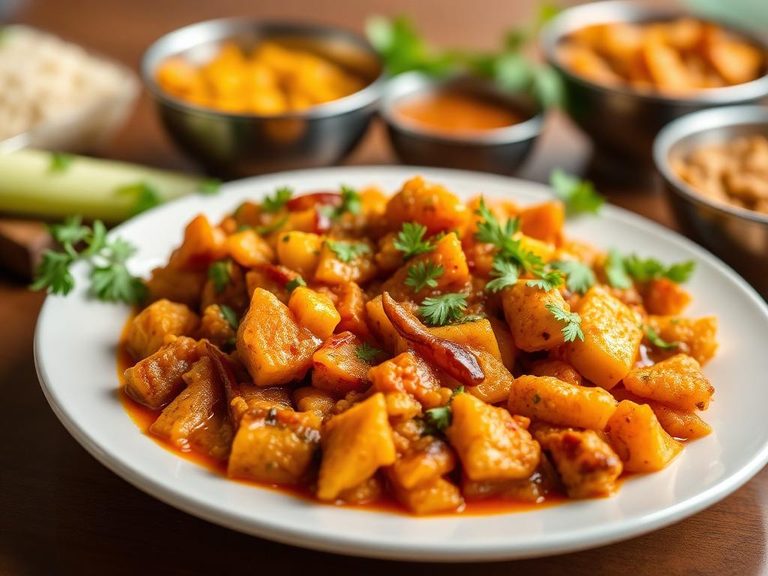
Bhaji is a popular Indian dry curry dish, typically made by sautéing vegetables like potatoes, cauliflower, peas, or mixed seasonal veggies with a blend of aromatic spices such as turmeric, cumin, coriander, and garam masala. It hails from the Indian subcontinent and is a staple in many regional cuisines, often served as a side dish with bread (like roti or naan) or rice.
🍽️ Nutrition at a glance
Bhaji is generally moderate in carbohydrates, primarily from the vegetables and any added potatoes, with a modest amount of protein if legumes or paneer are included. It provides key nutrients like fiber, vitamins A and C, and minerals such as potassium and iron, with a typical serving containing around 150-250 calories depending on the vegetable mix and oil used.
Nutrition breakdown
| Calories | 200 kcal |
| Protein | 4 g |
| Carbs | 28 g |
| Fat | 9 g |
| Fiber | 6 g |
| Sugar | 5 g |
| Sodium | 450 mg |
| Potassium | 450 mg |
| Vitamin C | 30 mg |
| Vitamin A | 120 mcg |
| Iron | 2 mg |
| Calcium | 60 mg |
| Magnesium | 40 mg |
| Phosphorus | 90 mg |
| Folate | 70 mcg |
Per 1 cup (240 g) · estimated, varies by recipe
💡 What's interesting
Culturally, bhaji is incredibly versatile and reflects the diversity of Indian cooking, with each region and family having its own unique spice blend and vegetable combination. Nutritionally, it's often a low-calorie, high-fiber dish that can be easily adapted to be vegan or gluten-free, making it a healthy and inclusive option.