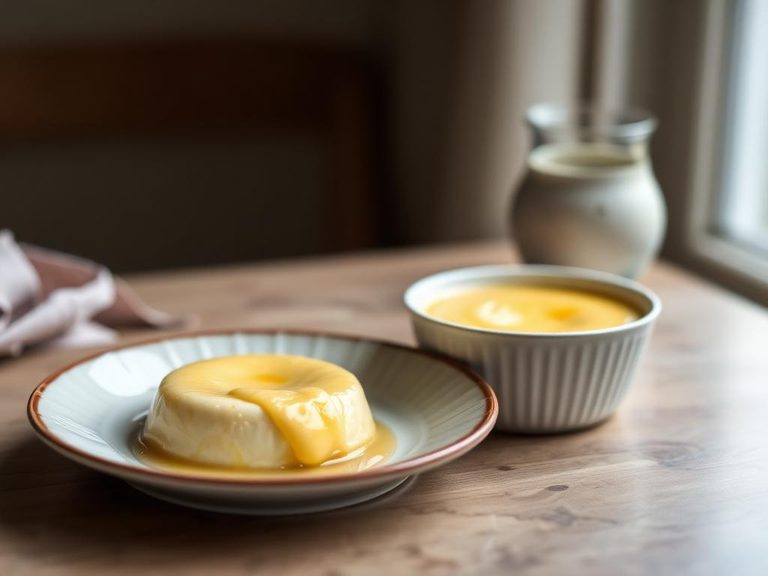
Baked Goose Egg

Baked Goose Egg is a simple, rich dish where a large goose egg is gently cooked in the oven, often in a ramekin or small dish. It typically requires just the egg itself, sometimes with a pinch of salt, pepper, or herbs, and is a specialty in regions where geese are commonly raised, such as parts of Eastern Europe and rural England.
🍽️ Nutrition at a glance
This dish is very high in protein and fat, with minimal carbohydrates. A single serving provides a substantial dose of vitamins like B12 and selenium, with a calorie count around 260-300 kcal.
Nutrition breakdown
| Calories | 266 kcal |
| Protein | 19 g |
| Carbs | 1.5 g |
| Fat | 20 g |
| Fiber | 0 g |
| Sugar | 0.5 g |
| Sodium | 200 mg |
| Vitamin B12 | 3.8 µg |
| Selenium | 42 µg |
| Riboflavin (B2) | 0.5 mg |
| Phosphorus | 280 mg |
| Vitamin D | 2.5 µg |
| Choline | 320 mg |
| Iron | 3.5 mg |
| Vitamin A | 270 µg |
Per 1 large baked goose egg (approx. 144 g) · estimated, varies by recipe
💡 What's interesting
Goose eggs are significantly larger and richer than chicken eggs, with a higher fat content that gives the baked dish a uniquely creamy, custard-like texture. Culturally, they are often considered a seasonal or farmstead delicacy rather than an everyday food.