Asian Salad Dressings
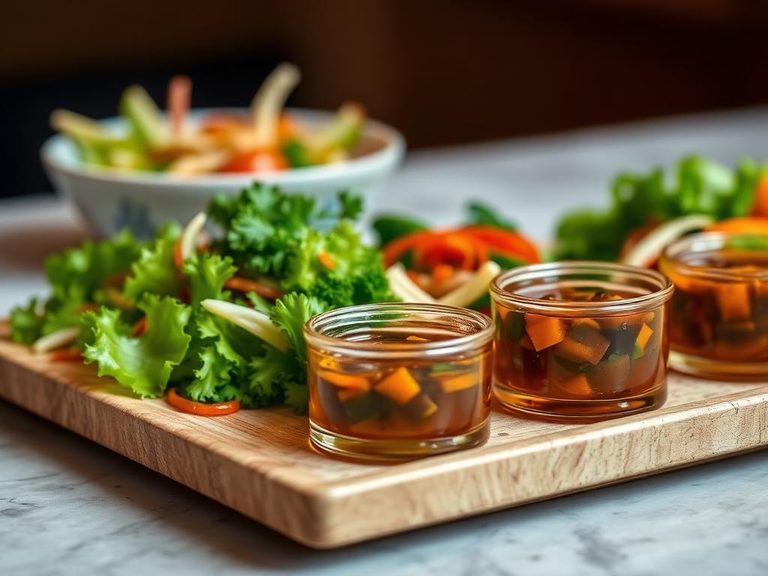
Asian salad dressings are a diverse category of flavorful, often tangy and savory condiments used to dress salads, noodles, and other dishes. Common bases include soy sauce, rice vinegar, sesame oil, and ginger, with variations found across East and Southeast Asian cuisines. They are typically used in small amounts to add a complex, umami-rich flavor profile.
🍽️ Nutrition at a glance
These dressings are generally high in fat, primarily from oils like sesame or vegetable oil, and can be high in sodium from soy sauce or fish sauce. They provide minimal protein and carbohydrates, with a typical serving containing around 80-120 calories.
Nutrition breakdown
| Calories | 100 kcal |
| Protein | 0.5 g |
| Carbs | 2 g |
| Fat | 10 g |
| Fiber | 0 g |
| Sugar | 1 g |
| Sodium | 500 mg |
| Vitamin E | 1.5 mg |
| Vitamin K | 5 µg |
| Manganese | 0.2 mg |
| Copper | 0.1 mg |
| Magnesium | 5 mg |
| Selenium | 1 µg |
| Iron | 0.3 mg |
| Phosphorus | 10 mg |
Per 2 tablespoons (30 g) · estimated, varies by recipe
💡 What's interesting
Culturally, these dressings showcase the Asian culinary principle of balancing flavors—salty, sweet, sour, and umami. Nutritionally, ingredients like ginger and garlic are known for their anti-inflammatory properties, and sesame oil provides healthy unsaturated fats.