

Abiyuch pickle
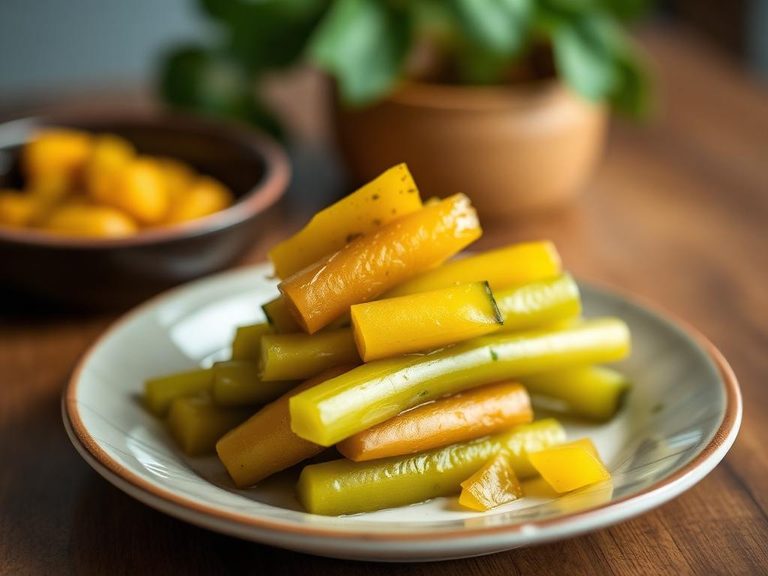
Abiyuch pickle is a traditional fermented condiment made from the fruit of the African locust bean tree (Parkia biglobosa). It is a staple in West African cuisine, particularly in countries like Nigeria, Ghana, and Senegal, where it is often used as a flavor base for soups and stews. The preparation involves boiling, fermenting, and sometimes drying the seeds, resulting in a pungent, umami-rich ingredient.
🍽️ Nutrition at a glance
Abiyuch pickle is a low-fat, low-carbohydrate food that is primarily a source of plant-based protein and dietary fiber. A typical serving provides a good amount of iron, potassium, and B vitamins, with a calorie count generally ranging between 150-200 kcal per 100 grams.
Nutrition breakdown
| Calories | 55 kcal |
| Protein | 4.5 g |
| Carbs | 6 g |
| Fat | 1 g |
| Fiber | 2.5 g |
| Sugar | 0.5 g |
| Sodium | 280 mg |
| Iron | 2.8 mg |
| Potassium | 150 mg |
| Magnesium | 45 mg |
| Phosphorus | 85 mg |
| Zinc | 1.2 mg |
| Vitamin B1 (Thiamine) | 0.15 mg |
| Vitamin B2 (Riboflavin) | 0.10 mg |
| Vitamin B3 (Niacin) | 2.0 mg |
Per 2 tablespoons (30 g) · estimated, varies by recipe
💡 What's interesting
Culturally, Abiyuch (also known as dawadawa, iru, or soumbala) is prized for its deep, savory flavor that acts as a natural MSG, enhancing the taste of dishes without animal products. Nutritionally, the fermentation process not only preserves the seeds but also increases the bioavailability of nutrients like iron and creates beneficial probiotics.
🍽️ Related dishes
AI estimate may be inaccurate · Terms