Vinaigrette for green salads
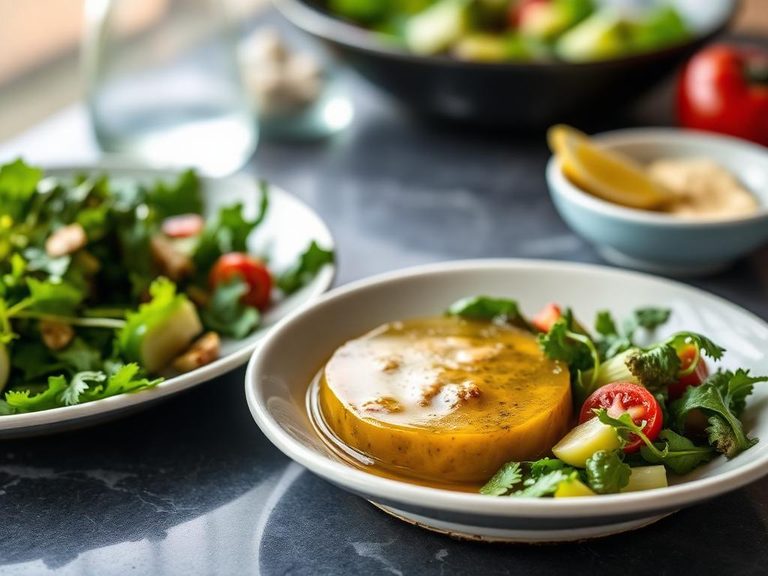
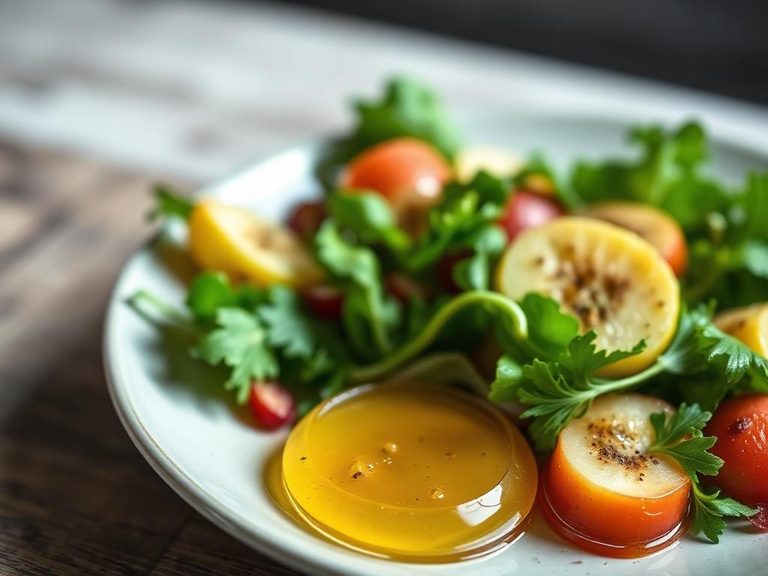
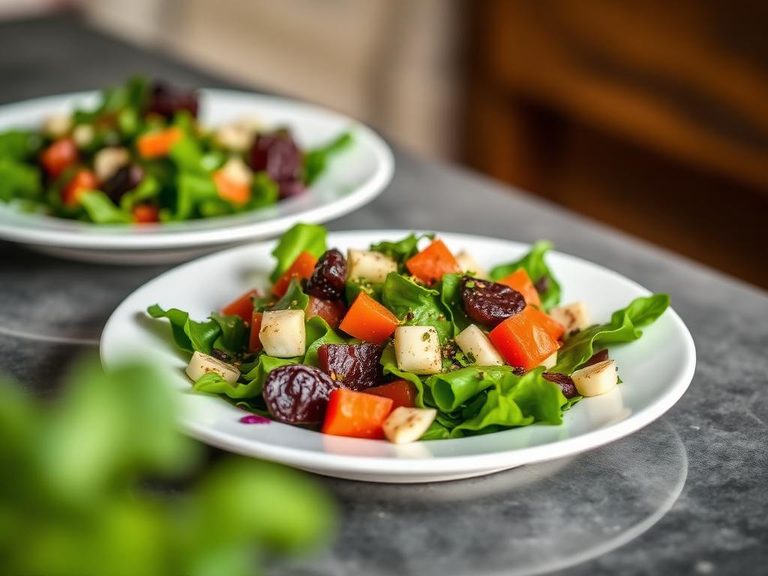
Vinaigrette for green salads is a classic, emulsified dressing made by whisking oil and acid, typically vinegar or lemon juice. Its core ingredients are a neutral or olive oil, an acidic component like red wine or balsamic vinegar, and seasonings such as Dijon mustard, salt, and pepper. This dressing has its roots in French cuisine, where it is a foundational element of culinary preparation.
🍽️ Nutrition at a glance
This dressing is predominantly high in fat, derived from its primary ingredient, oil, with negligible protein and very few carbohydrates. A typical serving provides a significant amount of monounsaturated fats (if using olive oil) and small amounts of fat-soluble vitamins like Vitamin E. The calorie count is relatively high for its volume, primarily from the oil.
Nutrition breakdown
| Calories | 120 kcal |
| Protein | 0 g |
| Carbs | 1 g |
| Fat | 14 g |
| Fiber | 0 g |
| Sugar | 0 g |
| Sodium | 150 mg |
| Vitamin E | 1.5 mg |
| Vitamin K | 8 mcg |
| Potassium | 10 mg |
| Sodium | 150 mg |
Per 2 tablespoons (30 g) · estimated, varies by recipe
💡 What's interesting
Culturally, the vinaigrette is the quintessential 'mother sauce' of French cold dressings, demonstrating the fundamental culinary technique of emulsification. Nutritionally, when made with extra virgin olive oil, it serves as a vehicle for heart-healthy fats and antioxidants that can aid in the absorption of fat-soluble vitamins from the salad greens.