

Vegetable Adobo with Udon

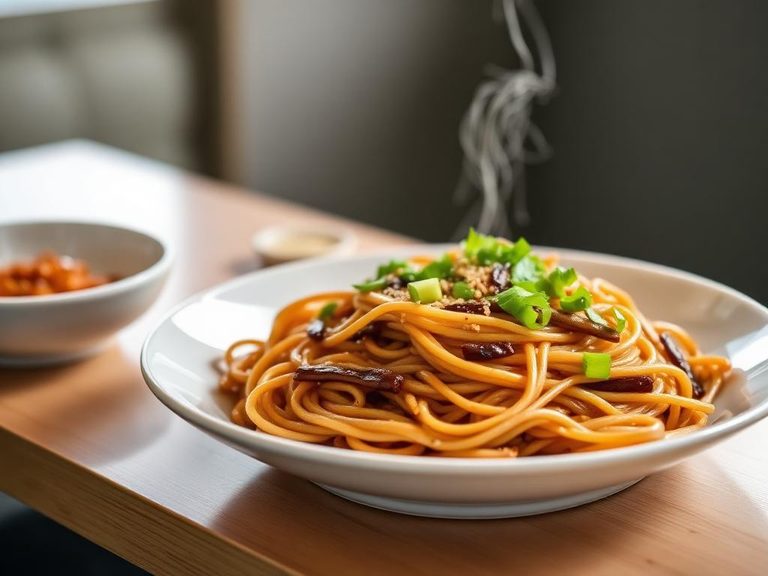
Vegetable Adobo with Udon is a fusion dish that combines the savory, tangy, and slightly sweet flavors of Filipino adobo with the hearty, chewy texture of Japanese udon noodles. The dish typically features a medley of vegetables like bell peppers, carrots, and mushrooms simmered in a sauce of soy sauce, vinegar, garlic, and spices, then tossed with udon. It's a modern, plant-based twist on a classic comfort food, blending culinary traditions from the Philippines and Japan.
🍽️ Nutrition at a glance
This dish is primarily a source of complex carbohydrates from the udon noodles and fiber from the vegetables, with a moderate amount of protein if tofu or other plant-based proteins are included. A typical serving provides a good balance of key nutrients like potassium and iron, with a calorie range of approximately 400-500 kcal, depending on the specific ingredients and portion size.
Nutrition breakdown
| Calories | 450 kcal |
| Protein | 12 g |
| Carbs | 75 g |
| Fat | 10 g |
| Fiber | 6 g |
| Sugar | 8 g |
| Sodium | 980 mg |
| Potassium | 420 mg |
| Iron | 3.5 mg |
| Vitamin C | 25 mg |
| Vitamin A | 300 mcg |
| Calcium | 60 mg |
| Magnesium | 45 mg |
| Phosphorus | 150 mg |
| Manganese | 1.2 mg |
Per 1 cup (240 g) · estimated, varies by recipe
💡 What's interesting
Culturally, this dish represents a creative fusion of two distinct Asian culinary heritages, showcasing how traditional recipes can evolve and adapt. Nutritionally, it's interesting because the vinegar-based adobo sauce not only adds flavor but may also aid in mineral absorption from the vegetables, while the udon provides sustained energy.
🍽️ Related dishes

AI estimate may be inaccurate · Terms