

Stuffed Crust Pizza
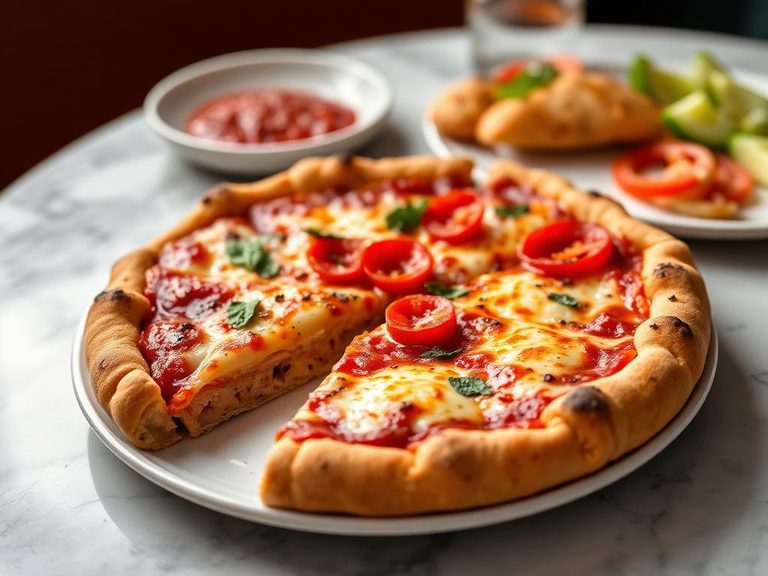
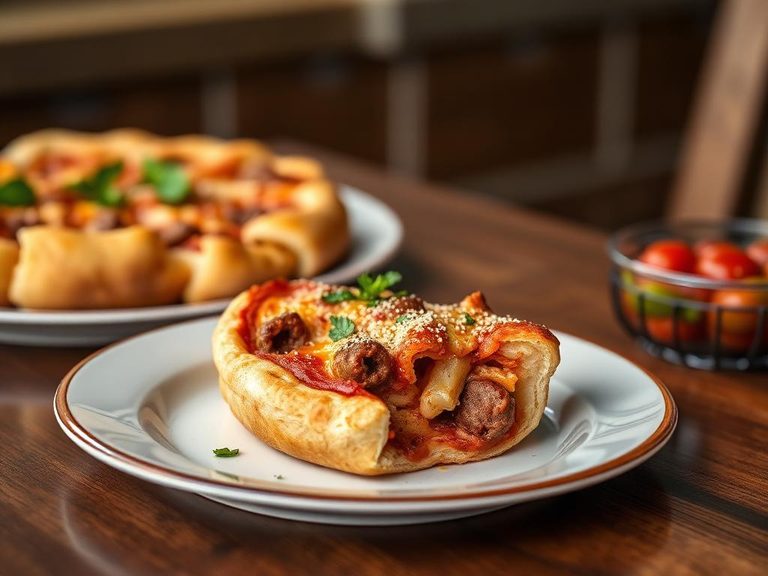
Stuffed crust pizza is a popular variation of the classic Italian-American dish, featuring a ring of melted cheese, most commonly mozzarella, baked directly into the folded edge of the pizza dough. It typically starts with a traditional pizza base topped with sauce, cheese, and various toppings, but its defining feature is the gooey, savory surprise hidden within the crust. This innovation is widely credited to the American pizza chain Pizza Hut, which introduced it to the mainstream in 1995.
🍳 View the full Stuffed Crust Pizza recipe →
🍽️ Nutrition at a glance
This dish is generally high in calories, fat, and refined carbohydrates, with a single slice often containing a significant portion of daily recommended values. The key nutrients come from the dairy in the cheese (calcium, protein) and the wheat in the crust (carbohydrates), but it is also typically high in sodium and saturated fat, with a rough ballpark of 350-500 calories per standard slice.
Nutrition breakdown
| Calories | 420 kcal |
| Protein | 18 g |
| Carbs | 45 g |
| Fat | 19 g |
| Fiber | 2 g |
| Sugar | 5 g |
| Sodium | 950 mg |
| Calcium | 250 mg |
| Iron | 2.5 mg |
| Potassium | 200 mg |
| Vitamin A | 150 mcg RAE |
| Vitamin C | 4 mg |
| Vitamin D | 0.2 mcg |
| Vitamin B12 | 0.8 mcg |
| Phosphorus | 200 mg |
Per 1 slice (150 g) · estimated, varies by recipe
💡 What's interesting
Culturally, the stuffed crust pizza represents a successful American innovation on an Italian staple, becoming a global fast-food phenomenon and a symbol of indulgent comfort food. Nutritionally, it cleverly uses the crust—often the least popular part—as a vehicle for extra cheese, thereby increasing both the calorie density and the overall enjoyment of the meal.
🍽️ Related dishes
AI estimate may be inaccurate · Terms