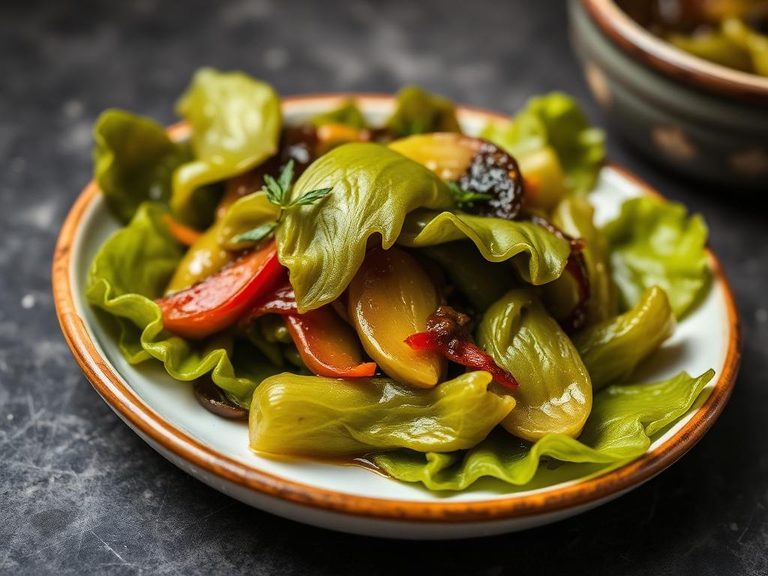
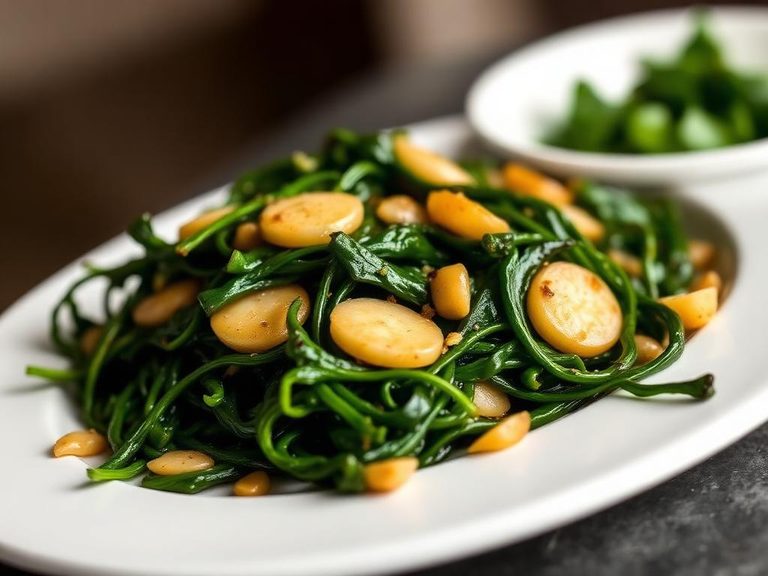
Sourdock salad with wild greens
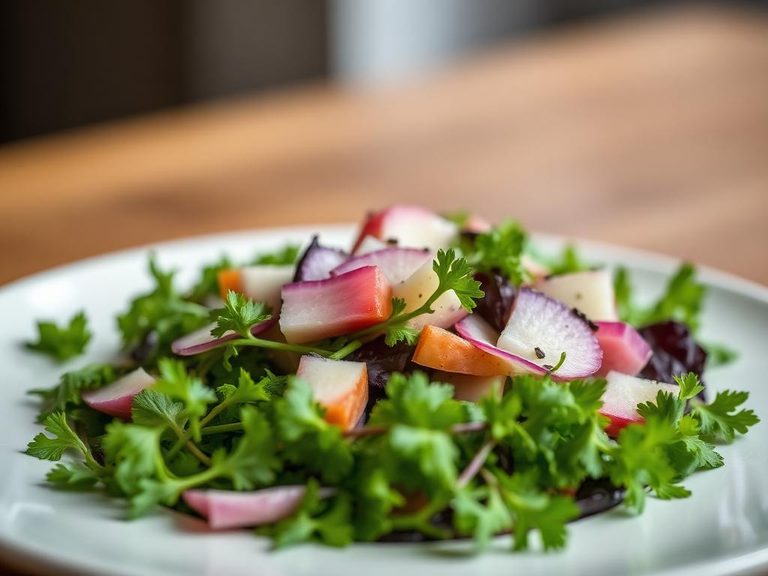
Sourdock salad with wild greens is a rustic, foraged salad featuring the tart, lemony leaves of the sourdock plant (Rumex acetosa) mixed with other seasonal wild greens like dandelion, sorrel, or chickweed. It's a traditional dish found in various forms across European, North American, and Asian foraging cultures, often dressed simply with oil, vinegar, or lemon juice. The dish celebrates the use of freely available, nutrient-dense plants from meadows and woodlands.
🍽️ Nutrition at a glance
This salad is very low in calories, carbohydrates, and fat, but provides a good source of plant-based protein and is exceptionally high in dietary fiber and key micronutrients. A typical serving offers a significant boost of vitamins A, C, and K, along with minerals like iron and potassium.
Nutrition breakdown
| Calories | 25 kcal |
| Protein | 2.5 g |
| Carbs | 4 g |
| Fat | 0.3 g |
| Fiber | 3 g |
| Sugar | 1 g |
| Sodium | 15 mg |
| Vitamin K | 300 µg |
| Vitamin A | 450 µg RAE |
| Vitamin C | 15 mg |
| Potassium | 300 mg |
| Iron | 1.5 mg |
| Calcium | 80 mg |
| Magnesium | 20 mg |
| Manganese | 0.3 mg |
Per 1 cup (80 g) · estimated, varies by recipe
💡 What's interesting
Sourdock's distinctive tart flavor comes from oxalic acid, the same compound found in spinach and rhubarb, which historically made it a valuable spring tonic to replenish nutrients after winter. Foraging for these greens connects people directly to seasonal cycles and local ecosystems, a practice with deep cultural roots in many indigenous and rural communities.