Scottish wedding cookies
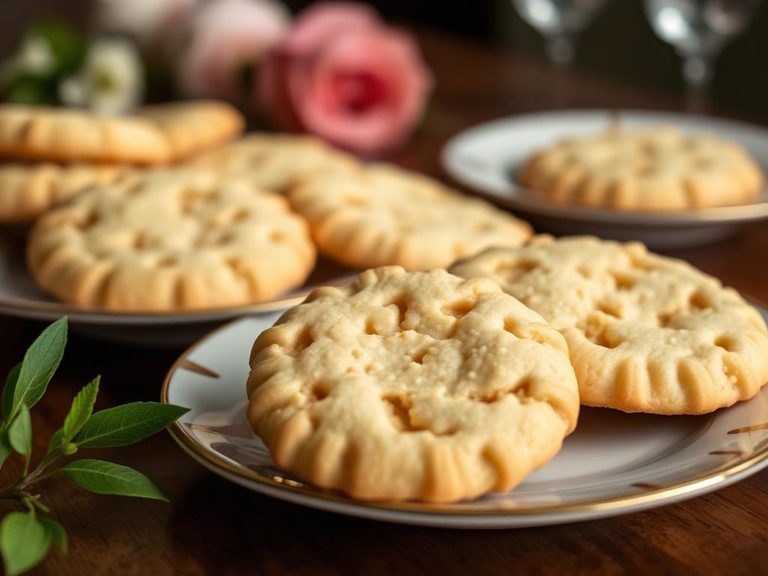
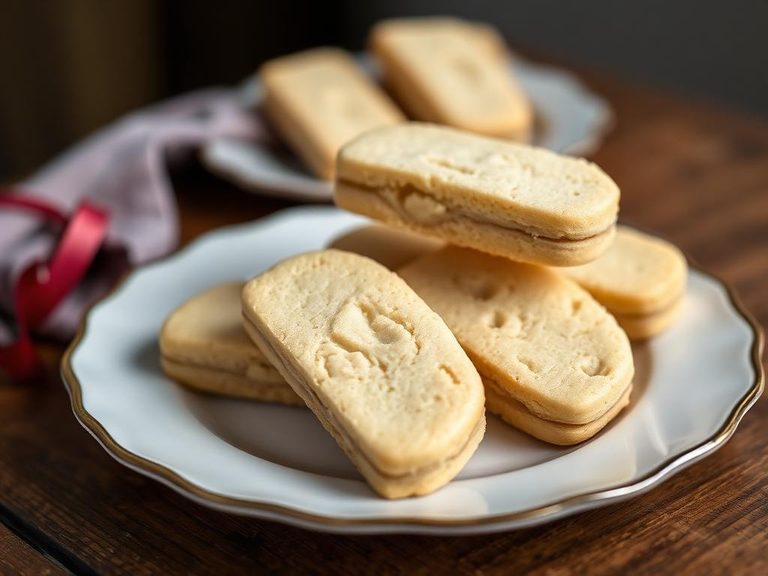
Scottish wedding cookies, also known as 'bride's cookies' or 'petticoat tails,' are delicate, buttery shortbread rounds often served at weddings and celebrations. They are typically made with just butter, sugar, flour, and sometimes rice flour or cornstarch for a tender texture, and are traditionally cut into wedge shapes. This simple yet elegant treat has been a staple of Scottish hospitality for centuries.
🍽️ Nutrition at a glance
These cookies are high in fat and carbohydrates due to their butter and sugar content, with minimal protein. A single serving (about two small rounds) provides roughly 120-150 calories, along with small amounts of calcium and iron from the flour and butter.
Nutrition breakdown
| Calories | 160 kcal |
| Protein | 2 g |
| Carbs | 18 g |
| Fat | 9.5 g |
| Fiber | 0.5 g |
| Sugar | 10 g |
| Sodium | 65 mg |
| Iron | 1.0 mg |
| Calcium | 20 mg |
| Potassium | 60 mg |
| Magnesium | 10 mg |
| Vitamin E | 0.5 mg |
| Phosphorus | 40 mg |
| Vitamin A | 40 IU |
| Zinc | 0.3 mg |
Per 2 cookies (approx. 30 g) · estimated, varies by recipe
💡 What's interesting
Culturally, these cookies symbolize good luck and prosperity for the newlyweds, and their simple ingredients reflect Scotland's historical emphasis on high-quality dairy and grain. Nutritionally, their high butter content makes them a calorie-dense energy source, which was historically practical for celebrations in cooler climates.