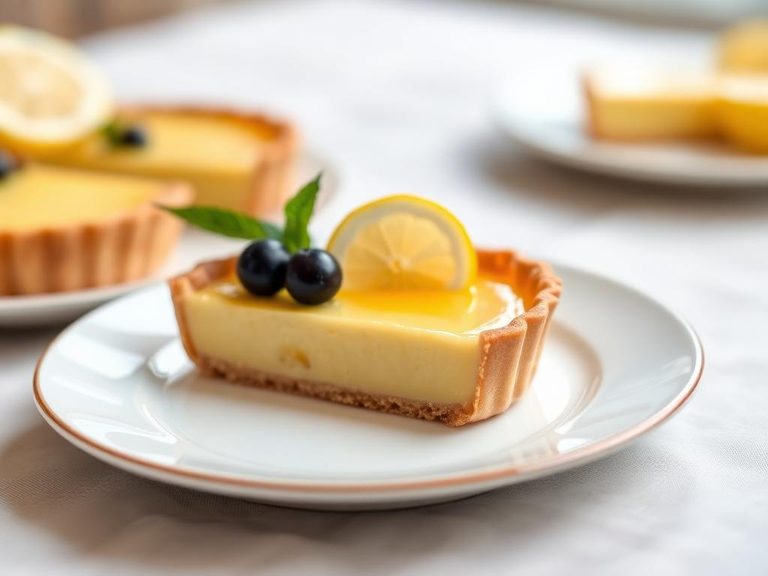
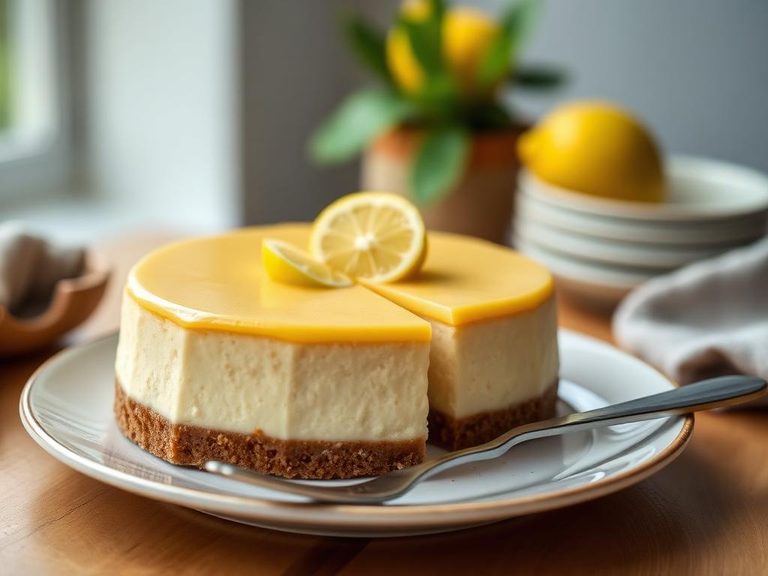
Scone with Lemon Curd

A scone with lemon curd is a classic British afternoon tea treat, featuring a light, crumbly scone made from flour, butter, and milk, split and topped with a tangy, sweet lemon curd. The scone itself is a staple of British baking, while the lemon curd adds a bright, zesty contrast.
🍽️ Nutrition at a glance
This dish is high in carbohydrates and fat, primarily from the scone's flour and butter and the curd's sugar and eggs. A typical serving provides a quick energy boost and some vitamin C from the lemon, with a rough calorie estimate of 300-400 per scone with a generous spread of curd.
Nutrition breakdown
| Calories | 380 kcal |
| Protein | 5.5 g |
| Carbs | 48 g |
| Fat | 19 g |
| Fiber | 1.2 g |
| Sugar | 24 g |
| Sodium | 320 mg |
| Potassium | 120 mg |
| Calcium | 65 mg |
| Iron | 2.1 mg |
| Vitamin A | 110 mcg RAE |
| Vitamin C | 4 mg |
| Vitamin D | 0.2 mcg |
| Vitamin B1 (Thiamin) | 0.2 mg |
| Phosphorus | 80 mg |
Per 1 scone (100 g) with lemon curd (30 g) · estimated, varies by recipe
💡 What's interesting
Culturally, scones with lemon curd are emblematic of the British tradition of afternoon tea, which became a social ritual in the 19th century. Nutritionally, the lemon curd offers a refreshing source of antioxidants and vitamin C, balancing the richer, more indulgent scone.