

Scandinavian crispbread

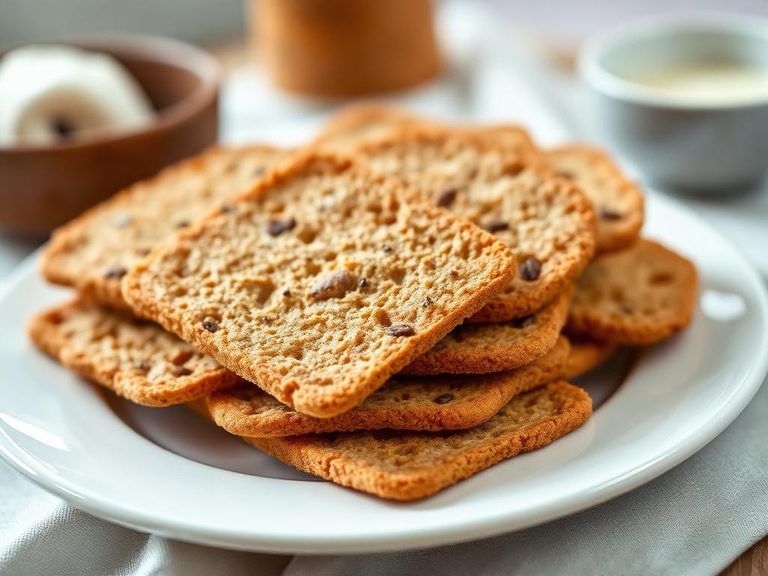
Scandinavian crispbread, known as 'knäckebröd' in Swedish, is a thin, dry, and crunchy bread that originated in Sweden. It is traditionally made from rye flour, water, and salt, though modern versions may include other whole grains, seeds, and spices.
🍽️ Nutrition at a glance
This bread is a high-fiber, complex carbohydrate food with a moderate amount of protein and very low fat. A typical serving provides a good source of dietary fiber and key minerals like iron and magnesium, with a calorie count around 100-150 kcal.
Nutrition breakdown
| Calories | 110 kcal |
| Protein | 3 g |
| Carbs | 22 g |
| Fat | 1 g |
| Fiber | 5 g |
| Sugar | 1 g |
| Sodium | 200 mg |
| Iron | 1.5 mg |
| Magnesium | 40 mg |
| Phosphorus | 80 mg |
| Manganese | 0.8 mg |
| Selenium | 10 µg |
| Thiamin (B1) | 0.1 mg |
| Folate | 20 µg |
| Zinc | 0.8 mg |
Per 2 crispbread slices (30 g) · estimated, varies by recipe
💡 What's interesting
Crispbread has been a staple in Scandinavia for centuries, valued for its long shelf life and was historically used as an edible plate. Nutritionally, its high fiber content from whole rye promotes digestive health and sustained energy.
🍽️ Related dishes


AI estimate may be inaccurate · Terms