Salmon Caviar (Ikura)
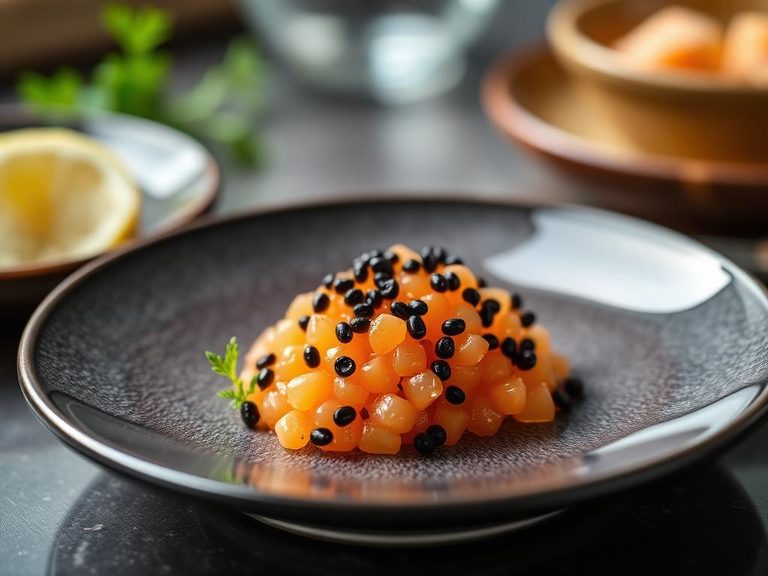
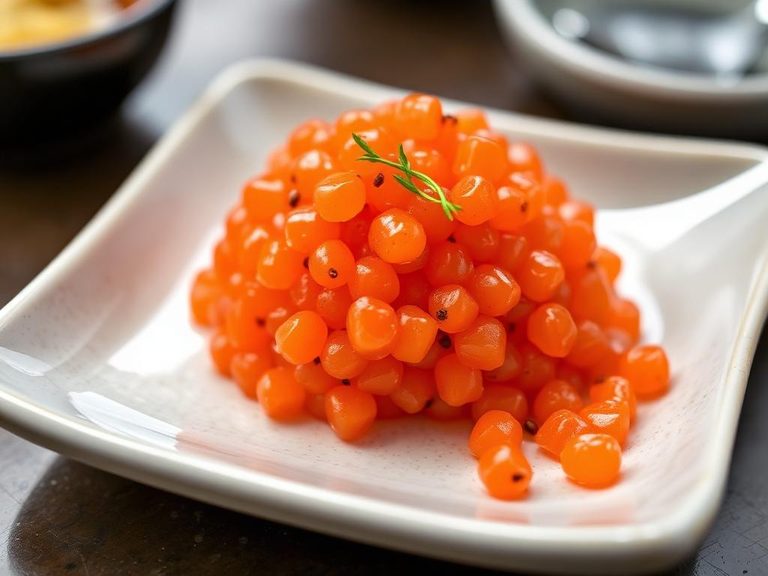
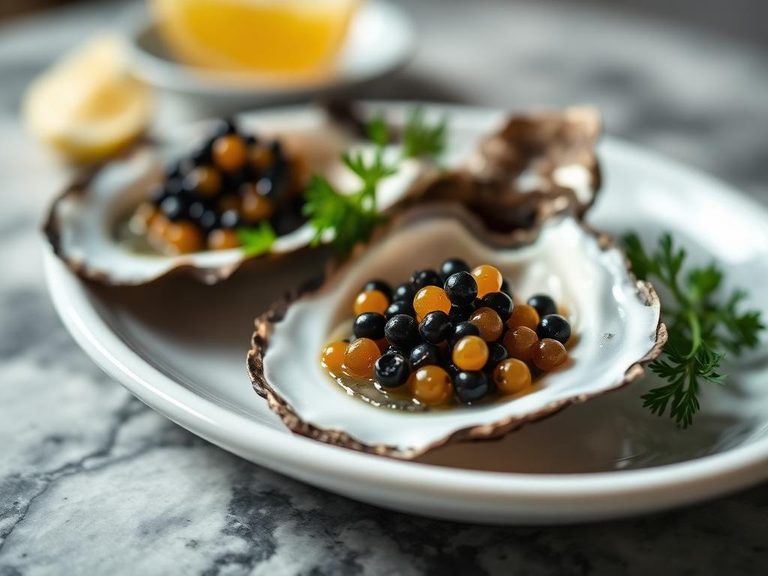
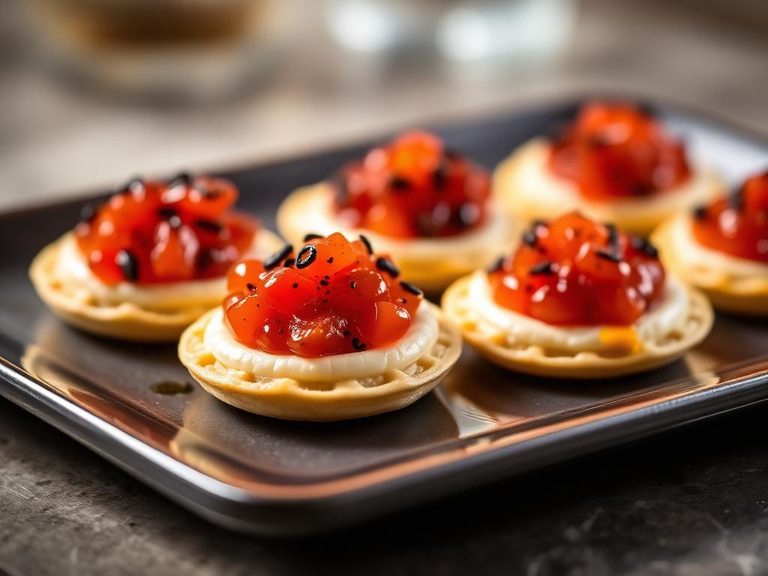
Salmon caviar, commonly known as Ikura, consists of the vibrant orange-red roe (eggs) harvested from salmon. The eggs are typically cured in a brine of soy sauce, mirin, and sake, which gives them a glossy appearance and a rich, savory-salty flavor. This delicacy is a staple in Japanese cuisine, often served as a topping for sushi, rice bowls, or on its own.
🍽️ Nutrition at a glance
Ikura is very low in carbohydrates and provides a good source of high-quality protein and healthy fats, particularly omega-3 fatty acids. A single serving is rich in essential nutrients like Vitamin B12, Vitamin D, and selenium, with a calorie count that primarily comes from protein and fat.
Nutrition breakdown
| Calories | 40 kcal |
| Protein | 4 g |
| Carbs | 0.5 g |
| Fat | 2.5 g |
| Fiber | 0 g |
| Sugar | 0 g |
| Sodium | 300 mg |
| Vitamin B12 | 3.5 mcg |
| Vitamin D | 3.5 mcg |
| Selenium | 10 mcg |
| Phosphorus | 50 mg |
| Vitamin E | 1.2 mg |
| Vitamin B6 | 0.1 mg |
| Niacin (B3) | 0.5 mg |
| Iron | 0.3 mg |
Per 1 tablespoon (15 g) · estimated, varies by recipe
💡 What's interesting
Culturally, Ikura is a prized ingredient in Japanese New Year's dishes (Osechi-ryori), symbolizing fertility and prosperity. Nutritionally, its intense orange color comes from astaxanthin, a powerful antioxidant also found in salmon flesh.