Salmon Roe (Ikura)
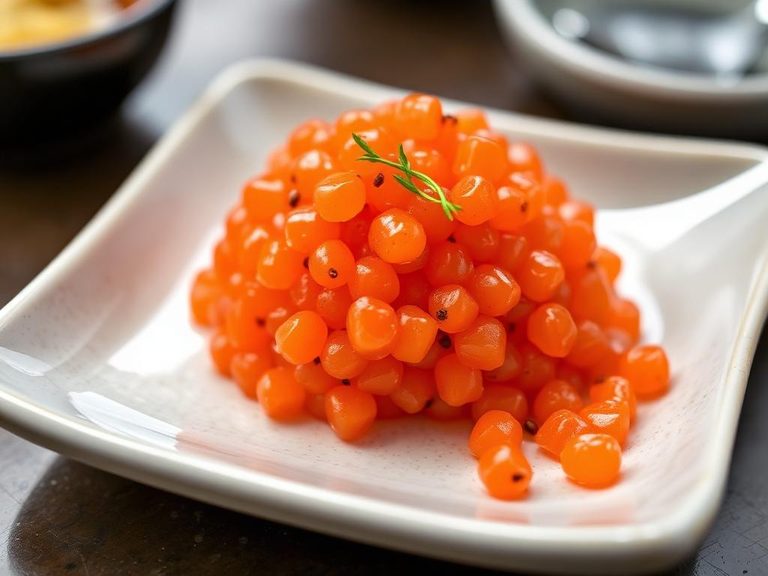
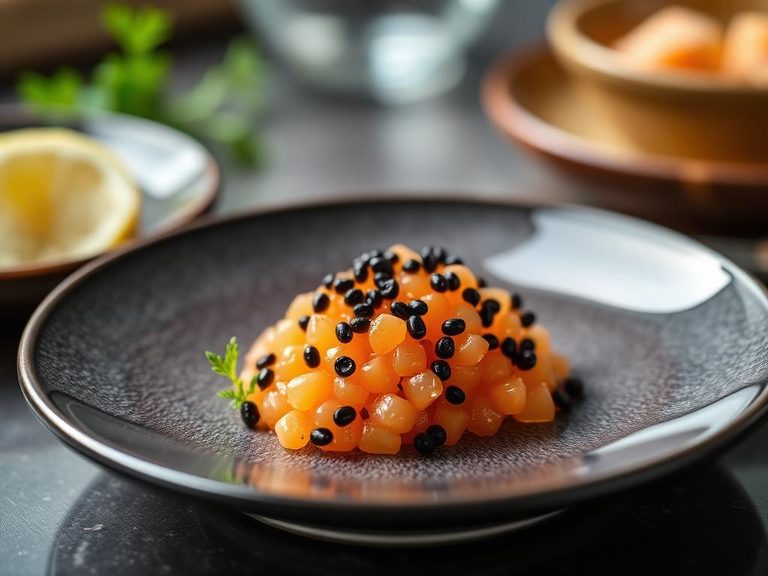
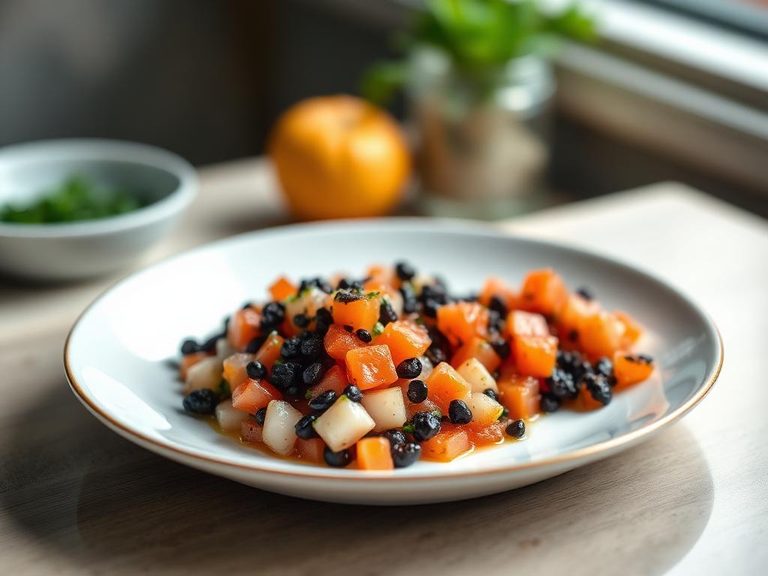
Salmon roe, known as ikura in Japan, consists of the bright orange, glistening eggs of salmon, typically served raw or lightly cured. This delicacy is a staple in Japanese cuisine, often enjoyed as a topping for sushi, rice bowls, or on its own as a luxurious appetizer. It's prized for its unique burst of briny, oceanic flavor.
🍽️ Nutrition at a glance
Salmon roe is a high-protein, low-carbohydrate food with a moderate amount of healthy fats, particularly omega-3 fatty acids. A typical serving (about 1 tablespoon or 15 grams) provides roughly 40-50 calories, along with significant amounts of vitamin B12, vitamin D, and selenium.
Nutrition breakdown
| Calories | 130 kcal |
| Protein | 12 g |
| Carbs | 4 g |
| Fat | 7 g |
| Fiber | 0 g |
| Sugar | 0 g |
| Sodium | 460 mg |
| Vitamin B12 | 16 mcg |
| Vitamin D | 8 mcg |
| Selenium | 30 mcg |
| Phosphorus | 250 mg |
| Sodium | 460 mg |
| Omega-3 (EPA+DHA) | 1.2 g |
| Cholesterol | 120 mg |
| Iron | 1.5 mg |
Per 1/4 cup (56 g) · estimated, varies by recipe
💡 What's interesting
Culturally, ikura is a symbol of celebration and luxury in Japan, often served during New Year's (Oshogatsu) and other special occasions. Nutritionally, it's one of the richest natural sources of the potent antioxidant astaxanthin, which gives it its vibrant color.