

Rutabaga and potato hash
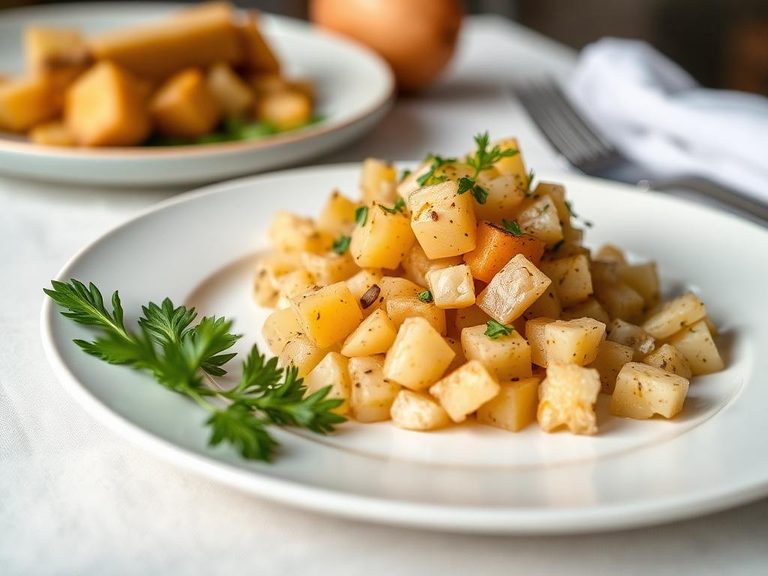
Rutabaga and potato hash is a hearty, comforting skillet dish made by pan-frying diced rutabaga and potatoes until golden and crispy, often seasoned with onions, herbs, and sometimes bacon or sausage. It's a staple in Northern European and North American home cooking, particularly popular in regions with cold climates where root vegetables are a winter pantry essential. The dish is a rustic, one-pan meal that transforms simple, earthy ingredients into a satisfying side or main.
🍽️ Nutrition at a glance
This dish is primarily high in complex carbohydrates and dietary fiber from the root vegetables, with a moderate amount of fat depending on how it's cooked (e.g., in butter, oil, or bacon fat). It provides a good source of vitamin C, potassium, and B vitamins, with a typical serving ranging from 200 to 350 calories.
Nutrition breakdown
| Calories | 180 kcal |
| Protein | 3 g |
| Carbs | 30 g |
| Fat | 6 g |
| Fiber | 4 g |
| Sugar | 5 g |
| Sodium | 300 mg |
| Potassium | 450 mg |
| Vitamin C | 20 mg |
| Vitamin A | 150 IU |
| Calcium | 40 mg |
| Iron | 1.0 mg |
| Magnesium | 25 mg |
| Phosphorus | 60 mg |
| Vitamin B6 | 0.2 mg |
Per 1 cup (220 g) · estimated, varies by recipe
💡 What's interesting
Culturally, it's a classic example of 'peasant food' that elevates humble, long-storing root vegetables into a flavorful dish, reflecting historical frugality and seasonal eating. Nutritionally, rutabaga adds a unique, slightly sweet and peppery note that balances the potato's starchiness, and it's notably rich in glucosinolates, compounds studied for their potential health benefits.
🍽️ Related dishes

AI estimate may be inaccurate · Terms