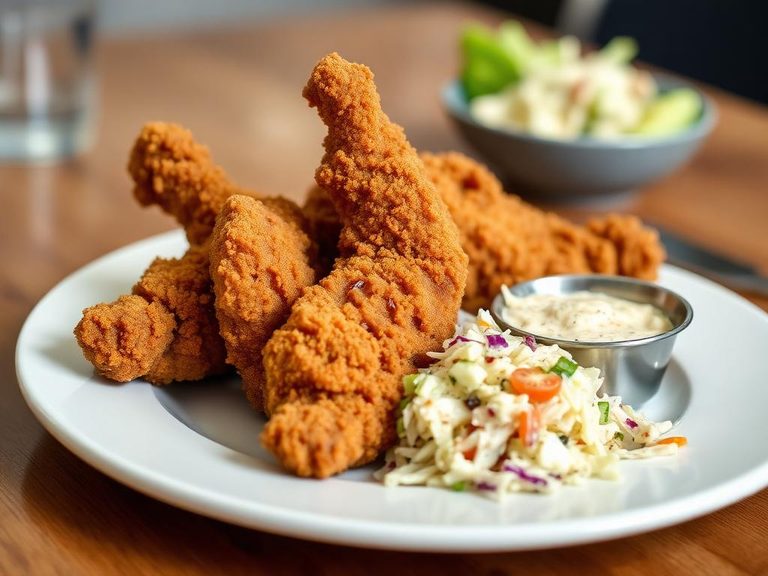
Reduced-Fat Coleslaw
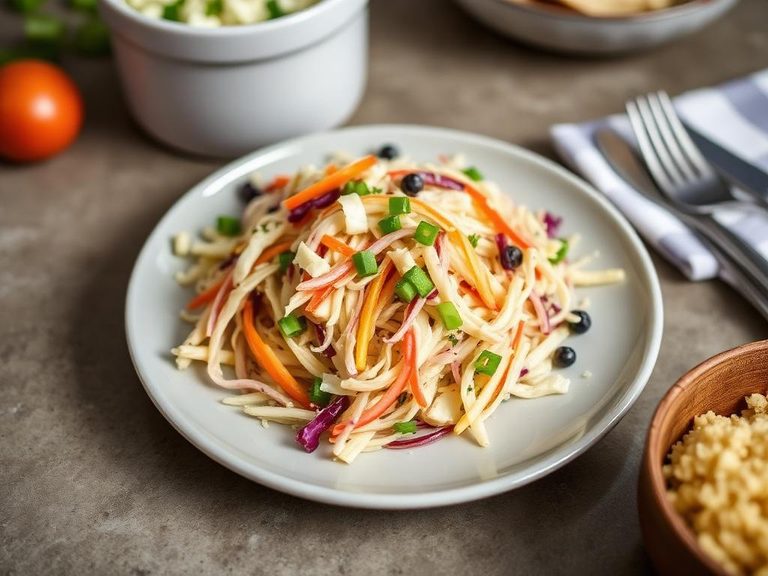
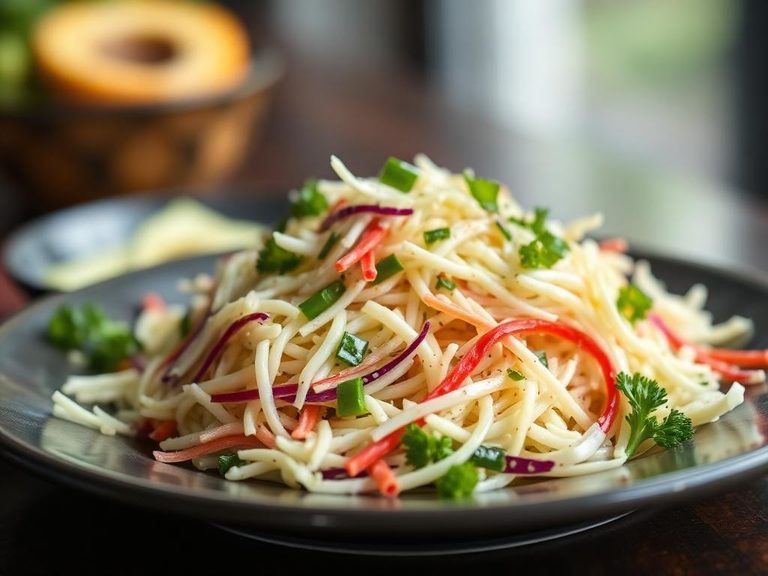
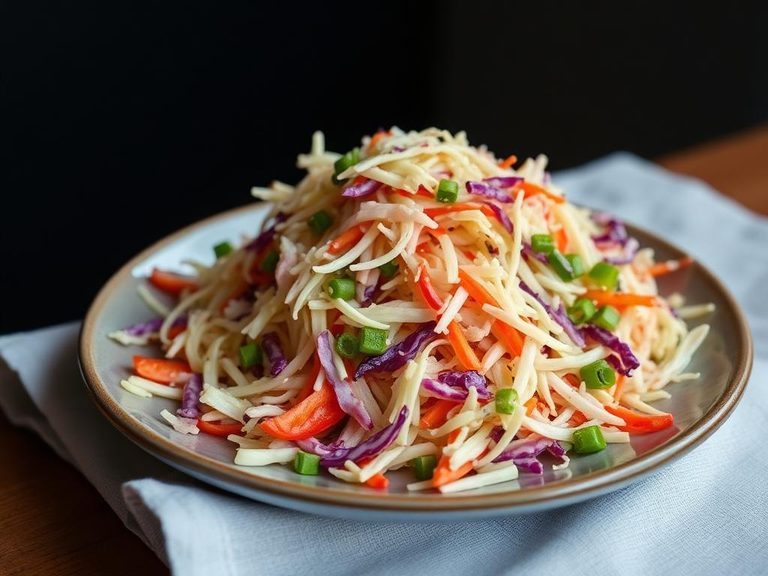
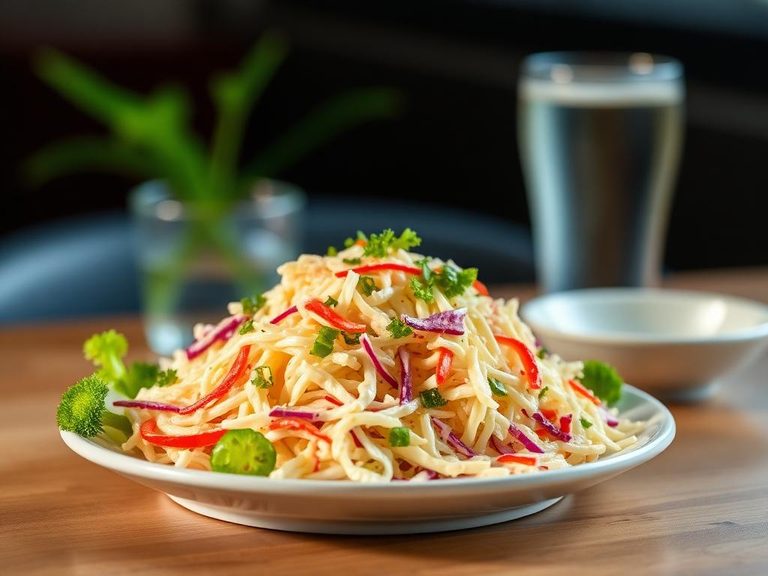
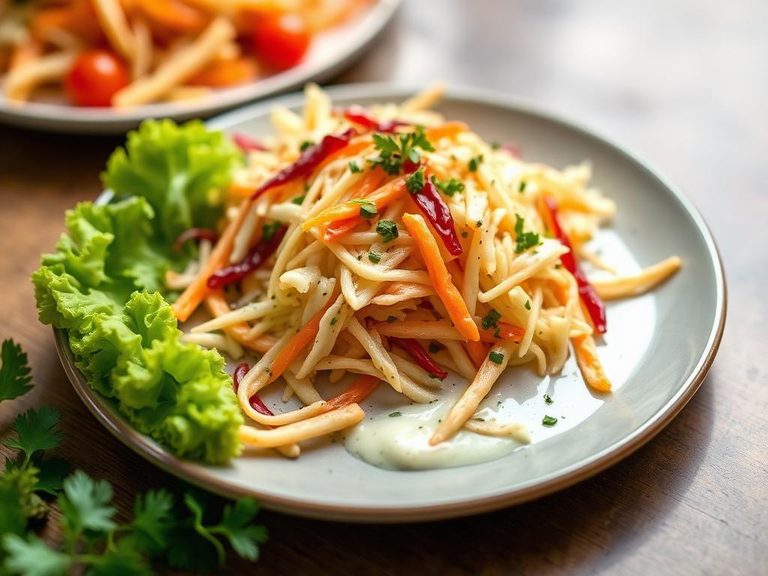
Reduced-fat coleslaw is a lighter take on the classic creamy cabbage salad, typically made with shredded cabbage, carrots, and a mayonnaise-based dressing that uses less fat or substitutes like yogurt. It's a popular side dish across North America, often served alongside barbecue, sandwiches, or fried foods.
🍽️ Nutrition at a glance
This dish is generally low in protein and moderate in carbohydrates from the vegetables and any added sugar, while its fat content is significantly lower than traditional coleslaw. It provides a good source of fiber and key vitamins like Vitamin K and Vitamin C, with a rough calorie ballpark of 100-150 kcal per cup.
Nutrition breakdown
| Calories | 120 kcal |
| Protein | 1.5 g |
| Carbs | 12 g |
| Fat | 8 g |
| Fiber | 2.5 g |
| Sugar | 8 g |
| Sodium | 320 mg |
| Vitamin K | 55 mcg |
| Vitamin C | 20 mg |
| Vitamin A | 120 mcg RAE |
| Potassium | 210 mg |
| Folate | 35 mcg |
| Manganese | 0.3 mg |
| Calcium | 35 mg |
| Iron | 0.5 mg |
Per 1 cup (150 g) · estimated, varies by recipe
💡 What's interesting
Culturally, coleslaw is a staple of American cookouts and deli counters, with its name derived from the Dutch 'koolsla' meaning 'cabbage salad.' Nutritionally, the reduced-fat version is a smart swap, cutting calories and saturated fat while retaining the crunchy texture and vegetable nutrients.