Reduced-fat cakes and muffins
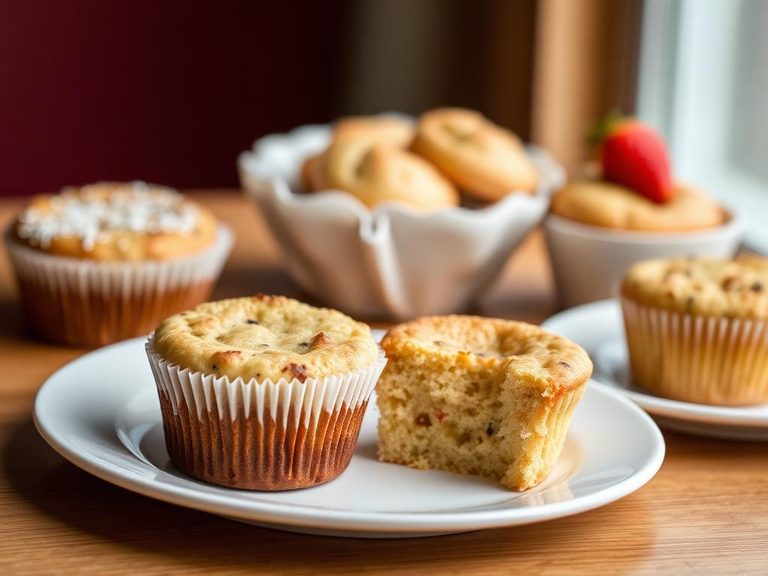
Reduced-fat cakes and muffins are baked goods formulated to contain less fat than traditional recipes, often by substituting oil or butter with applesauce, yogurt, or egg whites. They are popular in Western baking, particularly in the United States and United Kingdom, as a lighter alternative to classic desserts. These treats typically use flour, sugar, leavening agents, and flavorings like vanilla or fruit.
🍽️ Nutrition at a glance
These baked goods are primarily high in carbohydrates from flour and sugar, with reduced fat content compared to standard versions. They provide moderate amounts of protein and some essential nutrients like iron and B vitamins, with a typical serving ranging from 150-250 calories depending on size and ingredients.
Nutrition breakdown
| Calories | 180 kcal |
| Protein | 3.5 g |
| Carbs | 32 g |
| Fat | 4.5 g |
| Fiber | 1.5 g |
| Sugar | 14 g |
| Sodium | 210 mg |
| Iron | 1.8 mg |
| Calcium | 45 mg |
| Potassium | 80 mg |
| Vitamin B1 (Thiamine) | 0.2 mg |
| Vitamin B2 (Riboflavin) | 0.1 mg |
| Vitamin B3 (Niacin) | 1.5 mg |
| Folate | 40 mcg |
| Magnesium | 15 mg |
Per 1 muffin (85 g) · estimated, varies by recipe
💡 What's interesting
Reduced-fat baking often relies on the science of moisture retention, using ingredients like fruit purees to maintain texture without added fats, making them a popular choice for health-conscious bakers. Nutritionally, they can be a lower-calorie option but may still be high in sugar, highlighting the balance between taste and health in modern baking trends.