Pozole Blanco
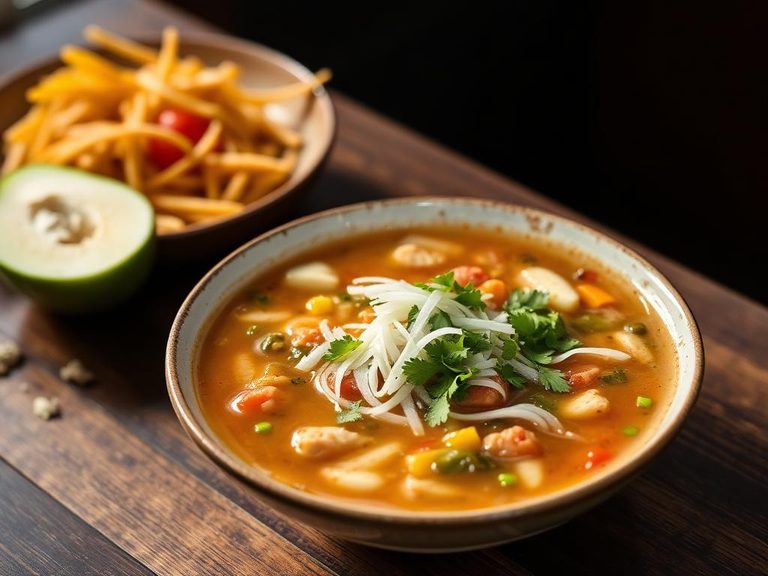
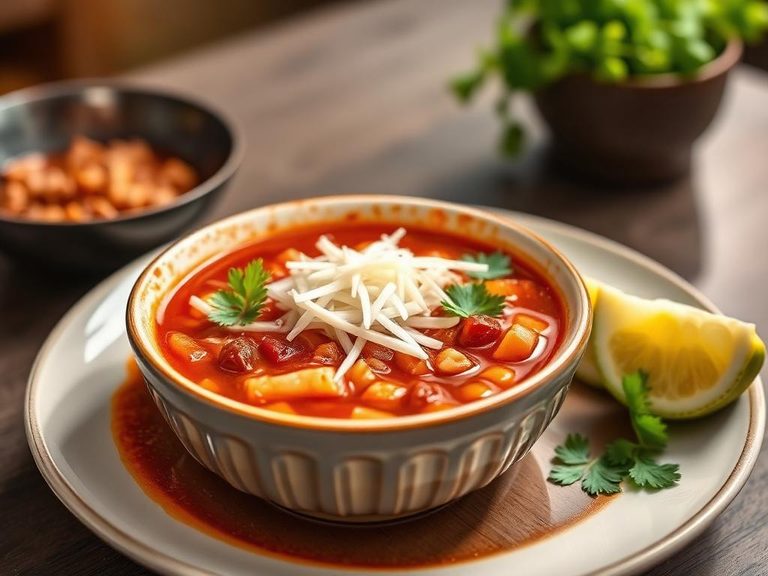
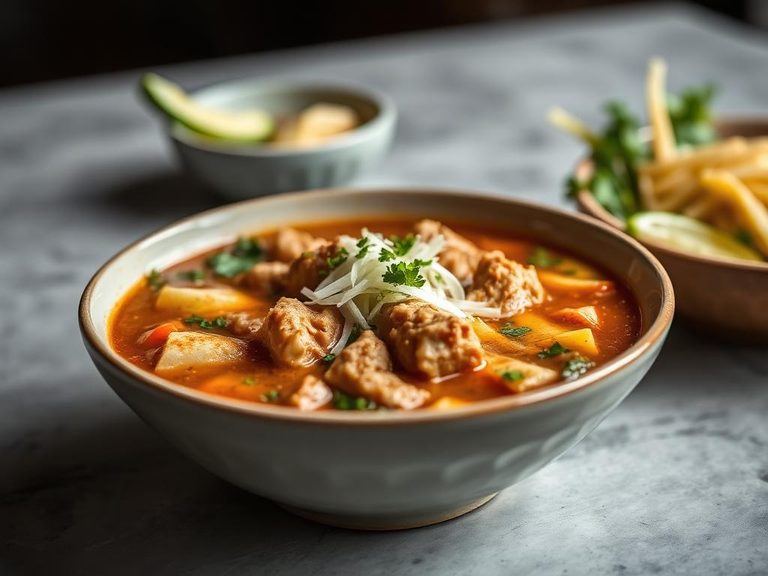
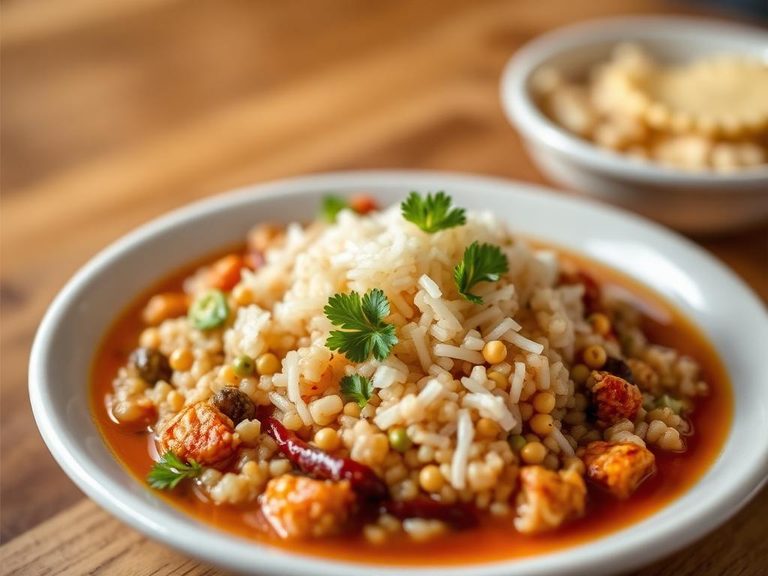
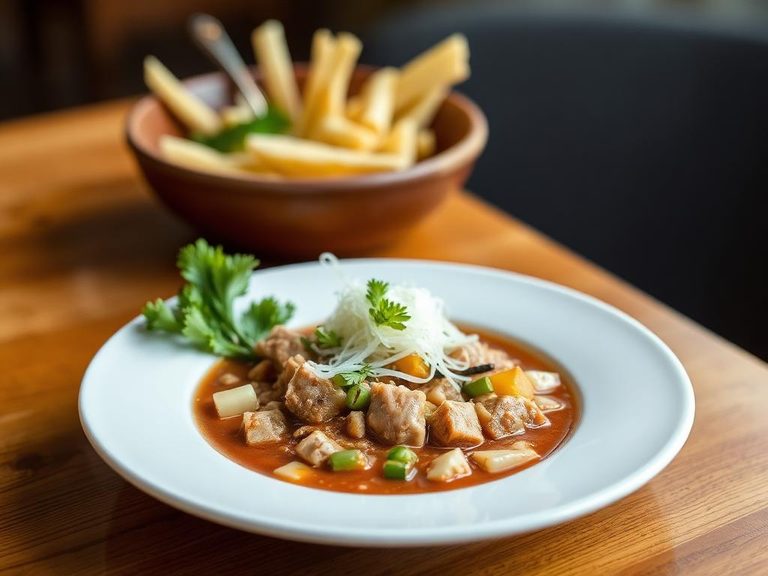
Pozole Blanco is a traditional Mexican soup or stew made with hominy (dried corn kernels treated with lime) and typically pork or chicken, though vegetarian versions exist. It originates from the pre-Hispanic era, with roots in Aztec cuisine, and is often served as a celebratory dish for holidays and special occasions.
🍽️ Nutrition at a glance
It is a well-balanced dish, generally high in protein from the meat and complex carbohydrates from the hominy, with a moderate fat content depending on the cut of meat used. A typical serving provides a good source of fiber, iron, and B vitamins, and ranges from 300 to 500 calories per bowl.
Nutrition breakdown
| Calories | 350 kcal |
| Protein | 28 g |
| Carbs | 38 g |
| Fat | 9 g |
| Fiber | 6 g |
| Sugar | 4 g |
| Sodium | 850 mg |
| Potassium | 620 mg |
| Phosphorus | 310 mg |
| Iron | 4.2 mg |
| Zinc | 3.8 mg |
| Vitamin B6 | 0.6 mg |
| Niacin (B3) | 8.5 mg |
| Selenium | 22 mcg |
| Magnesium | 75 mg |
Per 1 bowl (about 480 g) · estimated, varies by recipe
💡 What's interesting
Culturally, Pozole Blanco is deeply symbolic, often prepared for Mexican Independence Day and other communal gatherings, representing a connection to ancient traditions. Nutritionally, the hominy provides a unique, chewy texture and is a resilient, gluten-free grain that has sustained communities for centuries.