Pork Pozole
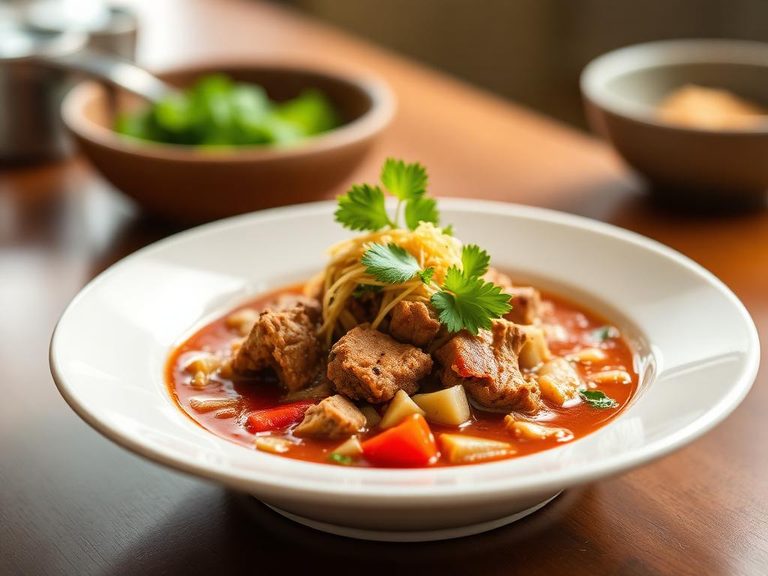
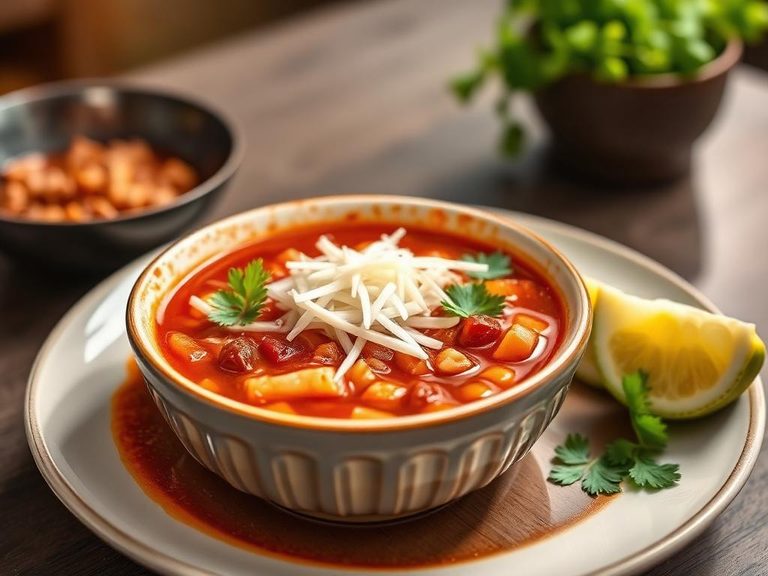
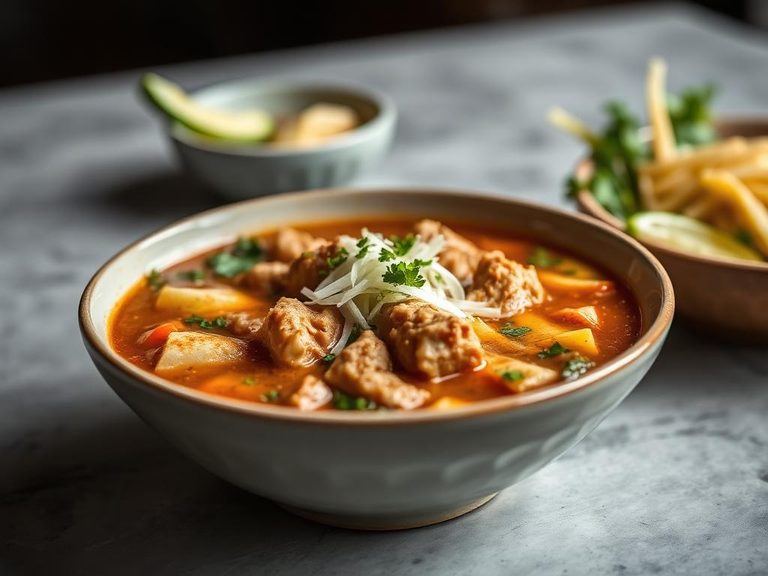
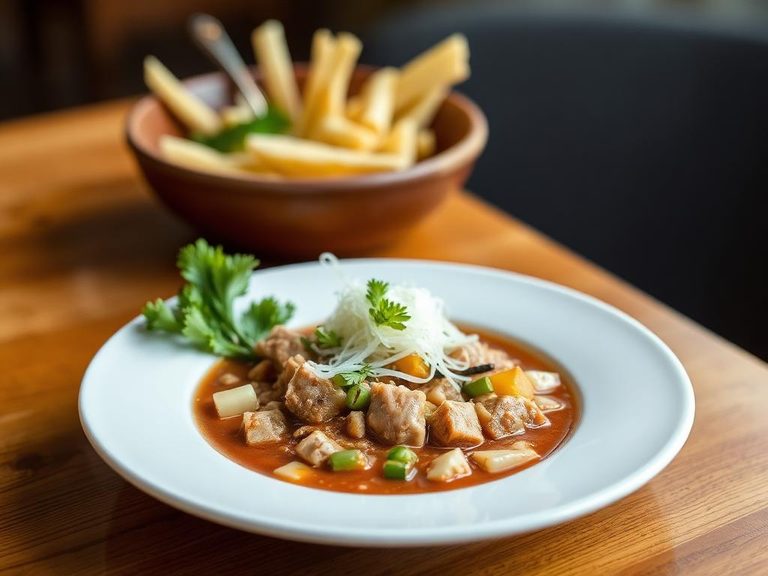
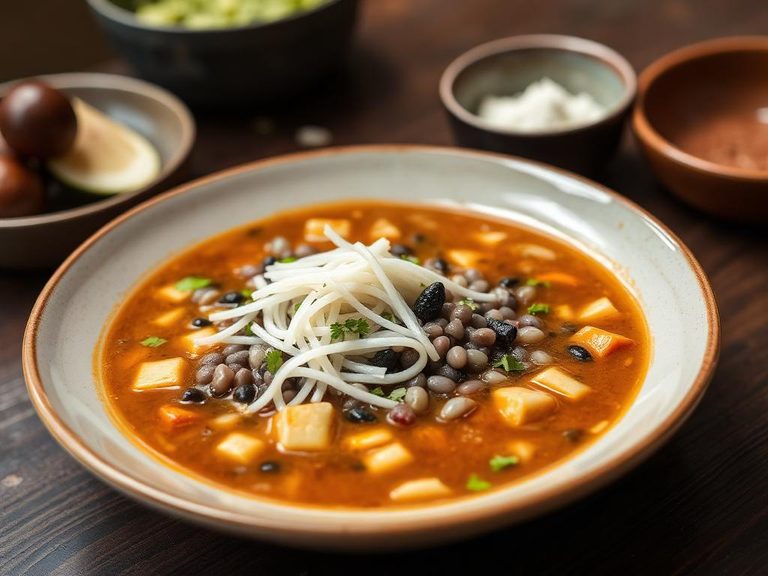
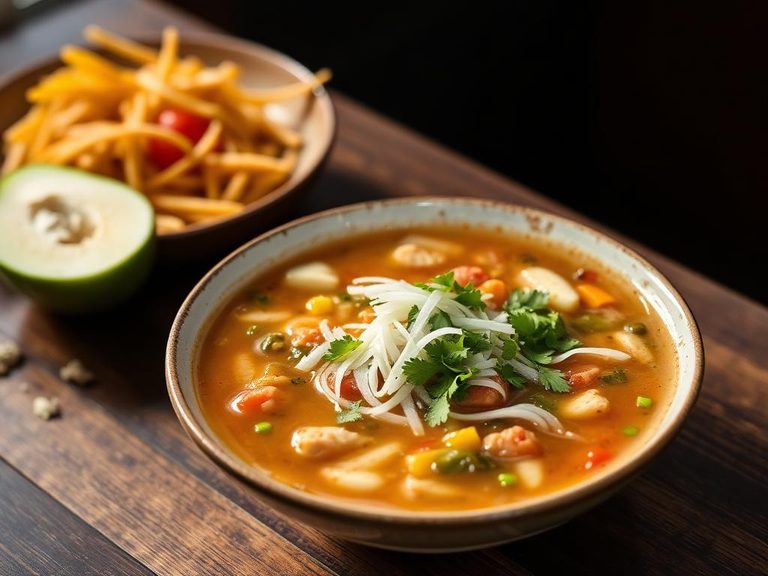
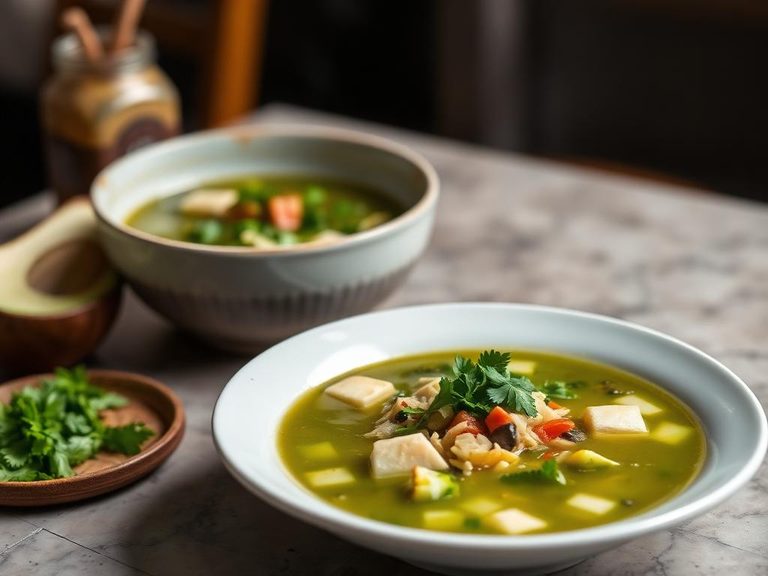
Pozole is a traditional Mexican stew, often considered a celebratory dish, featuring a base of hominy (nixtamalized corn kernels) and tender pork. It is typically seasoned with a blend of chilies, garlic, and herbs, and served with a variety of fresh garnishes like shredded cabbage, radish, oregano, and lime.
🍽️ Nutrition at a glance
This dish is a balanced source of protein from the pork and complex carbohydrates from the hominy, with a moderate amount of fat depending on the cut of meat used. A typical serving provides key nutrients like B vitamins, iron, and fiber, and generally ranges from 300 to 450 calories.
Nutrition breakdown
| Calories | 210 kcal |
| Protein | 18 g |
| Carbs | 15 g |
| Fat | 8 g |
| Fiber | 3 g |
| Sugar | 2 g |
| Sodium | 680 mg |
| Potassium | 450 mg |
| Iron | 2.5 mg |
| Vitamin C | 8 mg |
| Thiamin (B1) | 0.6 mg |
| Niacin (B3) | 5 mg |
| Vitamin B6 | 0.4 mg |
| Phosphorus | 200 mg |
| Zinc | 2.8 mg |
Per 1 cup (240 g) · estimated, varies by recipe
💡 What's interesting
Culturally, pozole has deep historical roots, with some theories tracing its origins to ancient Mesoamerican rituals. Nutritionally, the nixtamalization process for the hominy increases the bioavailability of niacin (vitamin B3), making it a more nutritionally complete grain.