Plum dumplings
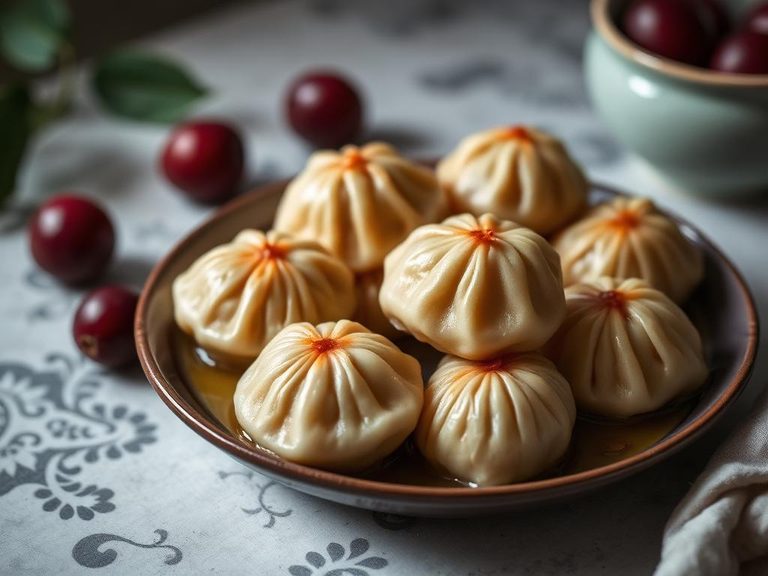
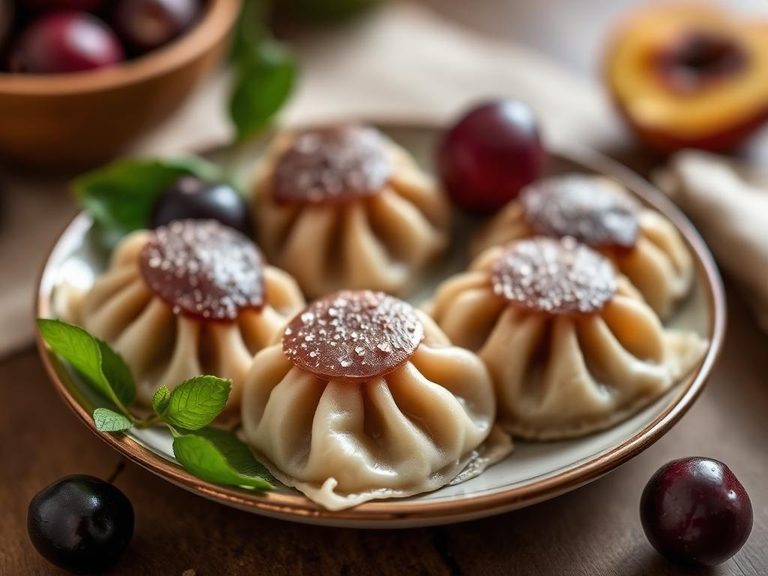
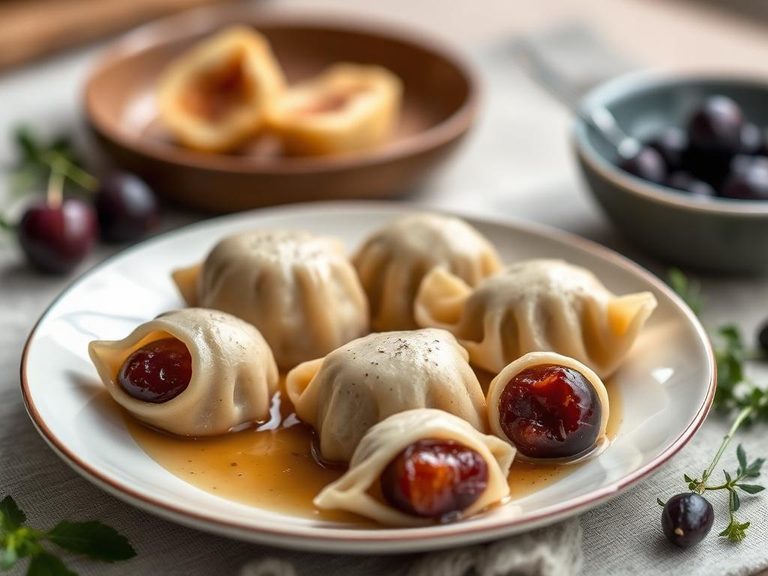
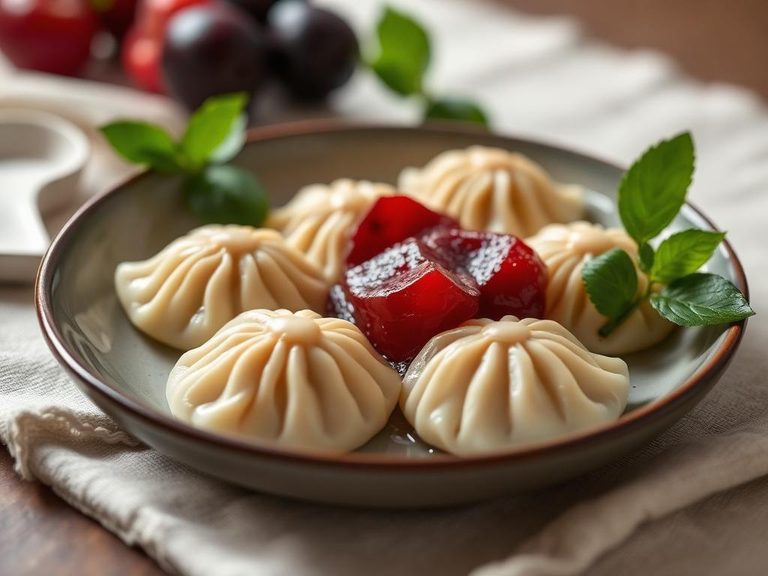
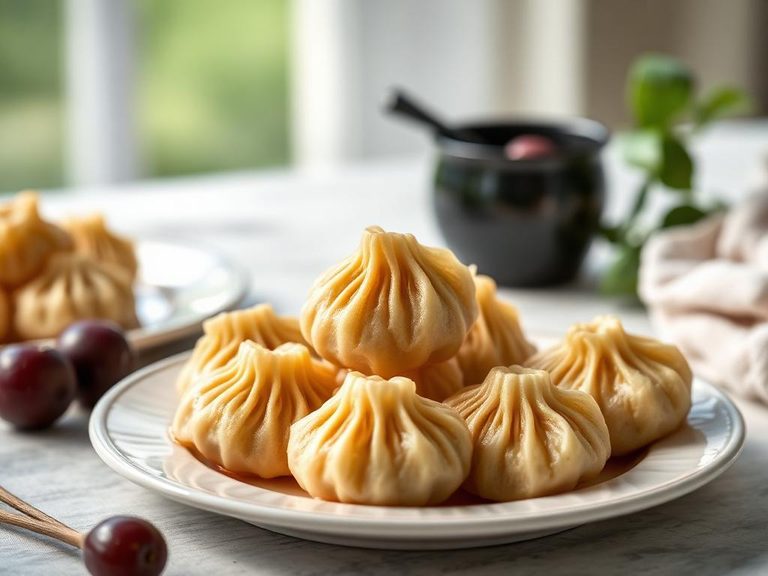
Plum dumplings (known as *Švestkové knedlíky* in Czech, *Szilvás gombóc* in Hungarian, or *Knedle sa šljivama* in Serbian) are a beloved Central European dessert featuring sweet, juicy plums encased in a soft potato or flour-based dough, then boiled and often topped with butter, sugar, and breadcrumbs. They are a seasonal favorite in countries like Austria, Hungary, Czech Republic, Slovakia, and parts of the Balkans, typically enjoyed from late summer through autumn when plums are at their peak.
🍽️ Nutrition at a glance
These dumplings are primarily a carbohydrate-rich dish due to the starchy dough and sweet plums, with moderate fat from butter and minimal protein. A typical serving of 2-3 dumplings provides roughly 300-450 calories, along with some dietary fiber, vitamin C from the plums, and small amounts of minerals like potassium.
Nutrition breakdown
| Calories | 450 kcal |
| Protein | 8 g |
| Carbs | 75 g |
| Fat | 15 g |
| Fiber | 4 g |
| Sugar | 35 g |
| Sodium | 120 mg |
| Potassium | 250 mg |
| Vitamin C | 10 mg |
| Vitamin A | 45 mcg RAE |
| Iron | 2 mg |
| Calcium | 60 mg |
| Magnesium | 25 mg |
| Phosphorus | 80 mg |
| Vitamin B6 | 0.2 mg |
Per 2 dumplings (approx. 200 g) · estimated, varies by recipe
💡 What's interesting
What makes plum dumplings unique is their clever transformation of a simple fruit into a hearty, comforting dessert that blurs the line between pastry and dumpling—a tradition reflecting Central Europe's love for fruit-filled doughs. Nutritionally, they offer a seasonal way to enjoy fresh fruit while providing quick energy from carbohydrates, making them a popular post-harvest treat in agricultural communities.