Pickled Quail Eggs
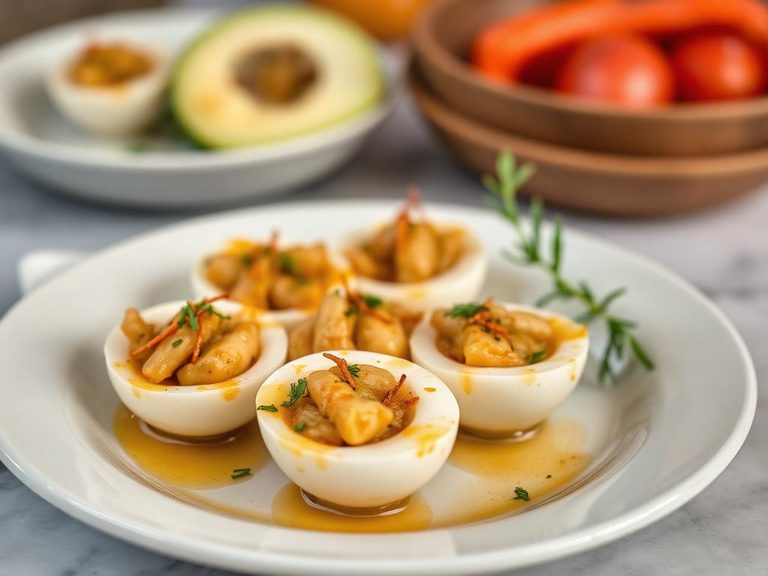
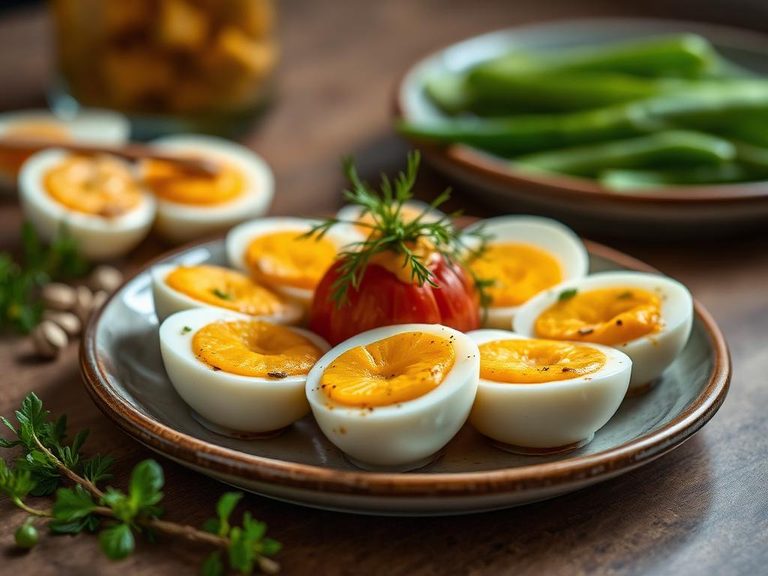
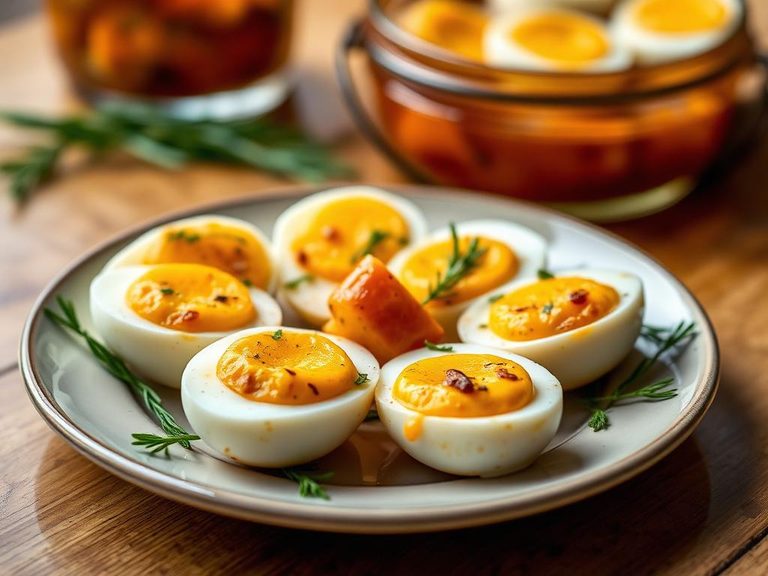
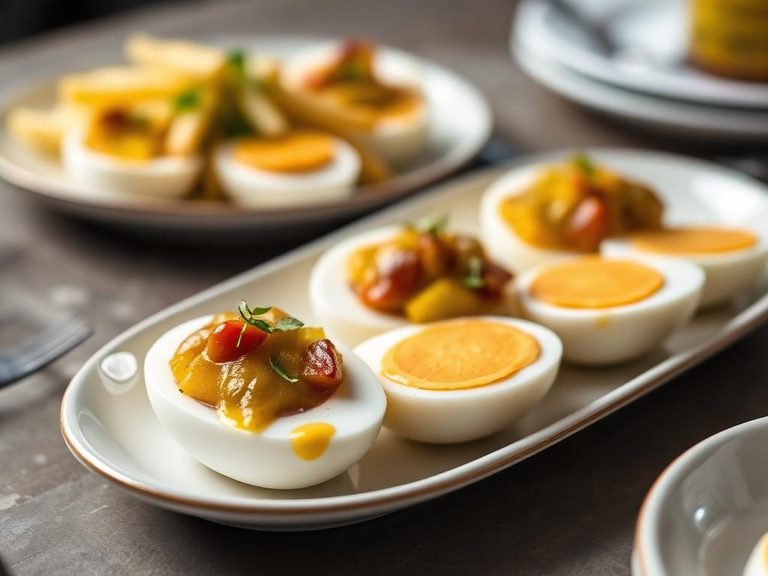
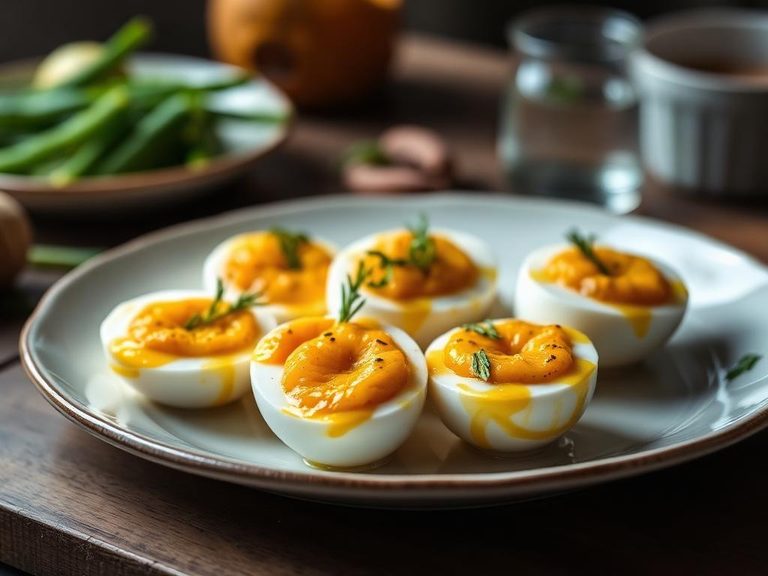
Pickled quail eggs are a popular snack and side dish made by first hard-boiling small quail eggs and then preserving them in a brine of vinegar, salt, and often sugar and spices. The eggs are a staple in various cuisines across East and Southeast Asia, including China, Vietnam, and the Philippines. They are commonly served as a tangy appetizer, a bar snack, or a garnish for noodle and rice dishes.
🍽️ Nutrition at a glance
This dish is a high-protein, low-carbohydrate food, with the primary nutrients coming from the egg itself. A typical serving provides a good source of protein and essential vitamins like B12, but can be very high in sodium due to the pickling brine.
Nutrition breakdown
| Calories | 110 kcal |
| Protein | 9.5 g |
| Carbs | 1.5 g |
| Fat | 7 g |
| Fiber | 0 g |
| Sugar | 1.2 g |
| Sodium | 480 mg |
| Vitamin B12 | 1.2 mcg |
| Selenium | 16 mcg |
| Riboflavin (B2) | 0.2 mg |
| Phosphorus | 140 mg |
| Choline | 100 mg |
| Iron | 1.4 mg |
| Vitamin A | 130 IU |
| Calcium | 45 mg |
Per 6 eggs (approximately 84 g) · estimated, varies by recipe
💡 What's interesting
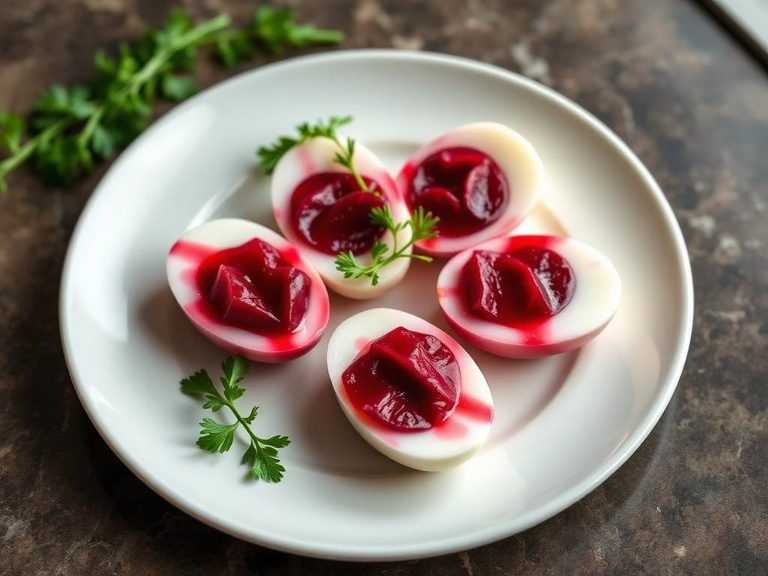
Culturally, the eggs are often dyed a vibrant red or brown from ingredients like soy sauce, tea, or beetroot, making them visually striking. Nutritionally, the pickling process adds sodium but also creates a food with a long shelf life, historically useful for preservation.