

Marinade for Jerky
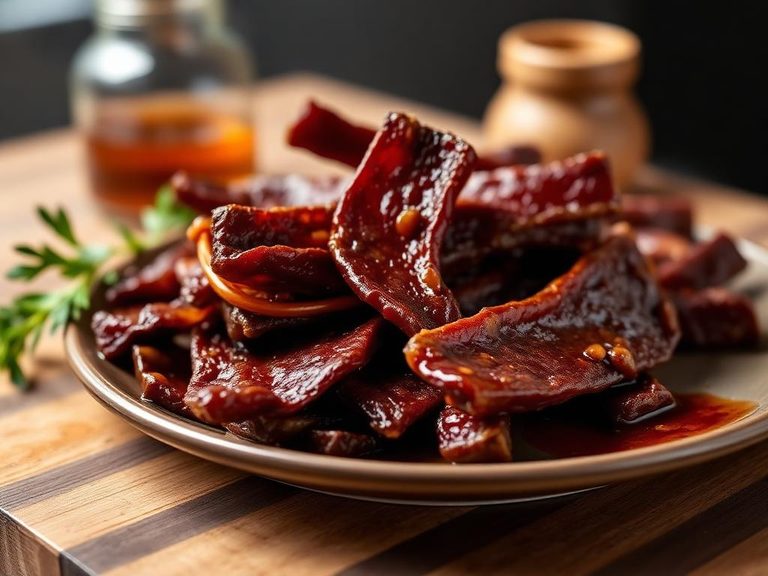
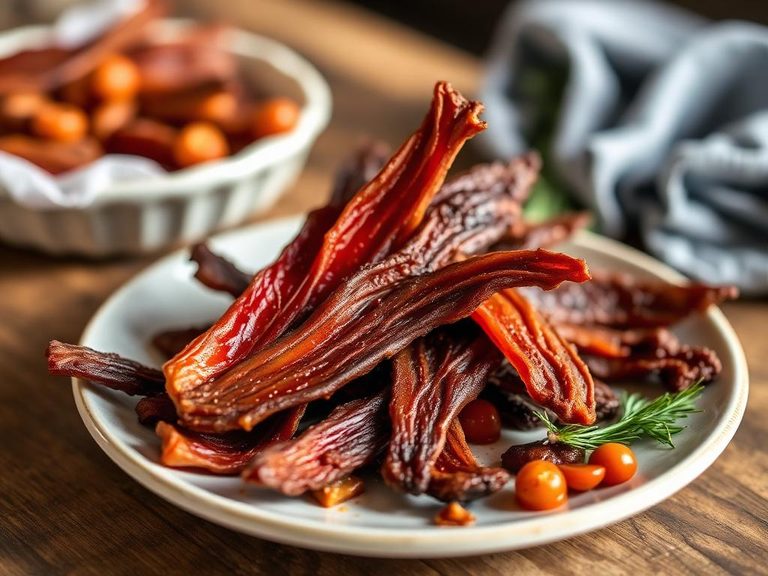
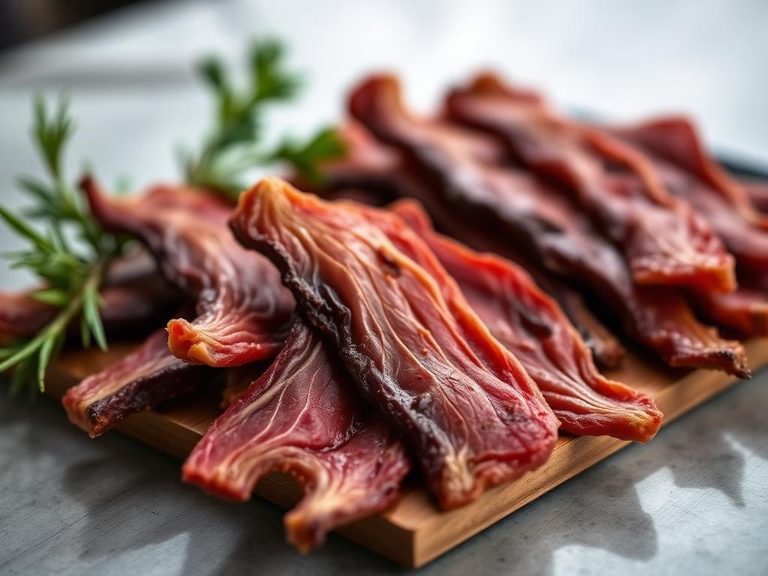
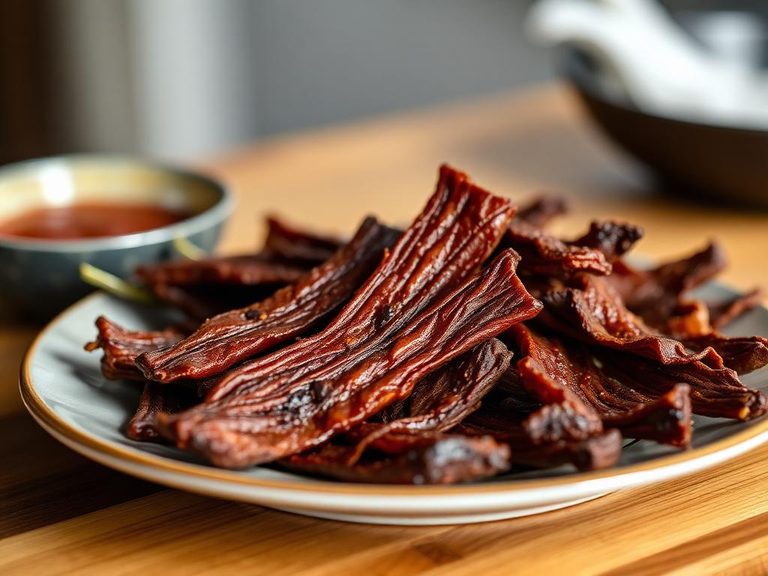
A marinade for jerky is a flavorful liquid mixture used to season and tenderize meat before dehydration, typically consisting of soy sauce, Worcestershire sauce, salt, sugar, and various spices like garlic, onion, and black pepper. This preparation method is deeply rooted in American and Australian bushcraft traditions, designed for preservation and portable nutrition.
🍽️ Nutrition at a glance
The marinade itself is very low in carbohydrates and fat but extremely high in sodium, primarily contributing flavor and electrolytes rather than significant calories. A typical serving provides minimal energy (around 15-20 kcal) but is a key source of sodium and small amounts of minerals like potassium from the sauces.
Nutrition breakdown
| Calories | 18 kcal |
| Protein | 1.2 g |
| Carbs | 3.5 g |
| Fat | 0.1 g |
| Fiber | 0.1 g |
| Sugar | 2.8 g |
| Sodium | 1180 mg |
| Sodium | 1180 mg |
| Potassium | 85 mg |
| Iron | 0.4 mg |
| Magnesium | 6 mg |
| Manganese | 0.1 mg |
| Niacin (B3) | 0.8 mg |
| Vitamin B6 | 0.05 mg |
| Folate | 8 µg |
Per 1/4 cup (60 ml) · estimated, varies by recipe
💡 What's interesting
Historically, jerky marinades were a crucial survival technique, using salt and acidic ingredients to inhibit bacterial growth and extend meat's shelf life without refrigeration, making it a staple for explorers, soldiers, and indigenous peoples.
🍽️ Related dishes
AI estimate may be inaccurate · Terms