

Japanese Nashi no Taki
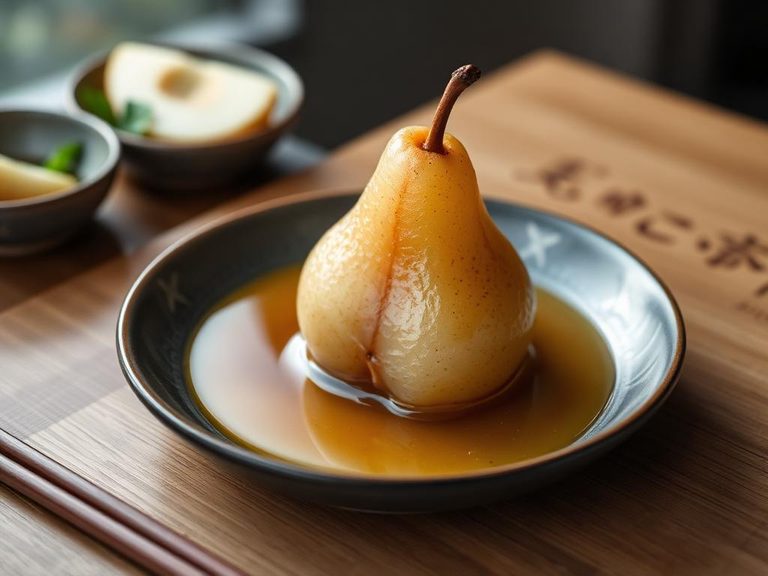
Nashi no Taki is a traditional Japanese simmered pear dish, typically made by gently cooking whole or halved pears in a sweetened liquid of water, sugar, and often a splash of soy sauce or mirin until tender and translucent. It originates from Japan and is a classic example of 'nimono' (simmered dishes), often enjoyed as a comforting dessert or a palate cleanser.
🍽️ Nutrition at a glance
This dish is primarily high in carbohydrates from the natural fruit sugars and added sweeteners, with negligible fat and very little protein. A single serving provides a good source of dietary fiber, vitamin C, and potassium, with a rough calorie range of 120-180 calories depending on the size of the pear and the sweetness of the simmering liquid.
Nutrition breakdown
| Calories | 120 kcal |
| Protein | 0.5 g |
| Carbs | 30 g |
| Fat | 0.2 g |
| Fiber | 4 g |
| Sugar | 24 g |
| Sodium | 10 mg |
| Potassium | 250 mg |
| Vitamin C | 8 mg |
| Vitamin K | 5 mcg |
| Copper | 0.15 mg |
| Manganese | 0.2 mg |
| Vitamin B6 | 0.05 mg |
| Folate | 10 mcg |
| Magnesium | 10 mg |
Per 1 cup (240 g) · estimated, varies by recipe
💡 What's interesting
Culturally, Nashi no Taki exemplifies the Japanese principle of 'shun' (enjoying ingredients at their peak season), as it highlights the delicate flavor of autumn pears. Nutritionally, the gentle simmering process helps preserve the pear's antioxidants while making its nutrients more easily digestible.
🍽️ Related dishes






AI estimate may be inaccurate · Terms