

Gelato
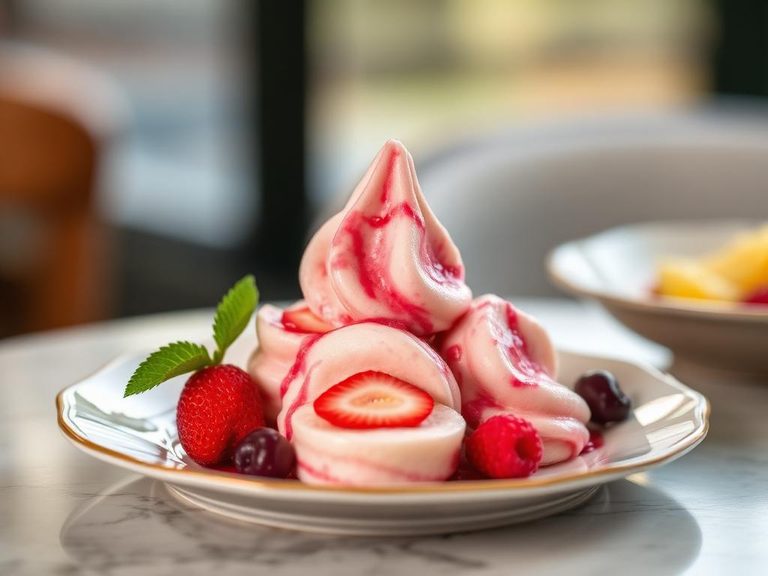
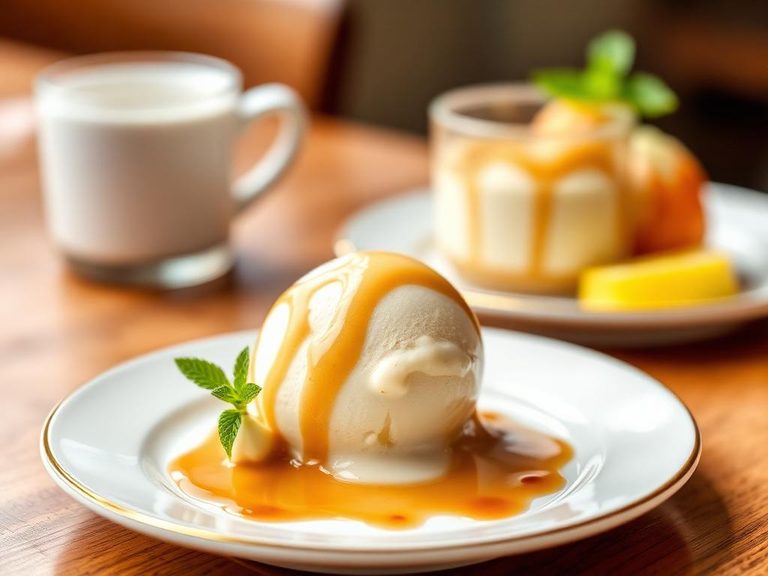
Gelato is Italy's beloved style of frozen dessert, known for its dense, creamy texture and intense flavor. It is typically made with milk, cream, sugar, and a base of egg yolks or cornstarch, along with natural flavorings like fresh fruit, nuts, or chocolate. Originating from Italy, it has become a global symbol of artisanal dessert craftsmanship.
🍳 View the full Gelato recipe →
🍽️ Nutrition at a glance
Gelato is generally high in carbohydrates from sugar and contains moderate fat from milk and cream, but it typically has less fat than traditional ice cream. A standard serving (about 1/2 cup) provides calcium, some protein, and roughly 150-250 calories, depending on the specific recipe and flavor.
Nutrition breakdown
| Calories | 207 kcal |
| Protein | 3.5 g |
| Carbs | 24 g |
| Fat | 11 g |
| Fiber | 0.5 g |
| Sugar | 21 g |
| Sodium | 60 mg |
| Calcium | 120 mg |
| Phosphorus | 100 mg |
| Potassium | 180 mg |
| Vitamin A | 90 mcg RAE |
| Vitamin D | 0.2 mcg |
| Vitamin B12 | 0.3 mcg |
| Riboflavin (B2) | 0.15 mg |
| Zinc | 0.5 mg |
Per 1/2 cup (100 g) · estimated, varies by recipe
💡 What's interesting
Culturally, gelato is deeply tied to Italian culinary tradition, often served in small portions to highlight its rich flavors. Nutritionally, it is churned at a slower speed than ice cream, incorporating less air, which results in a denser, more nutrient-dense treat per bite.
🍽️ Related dishes




AI estimate may be inaccurate · Terms