Rolled into cones for gelato
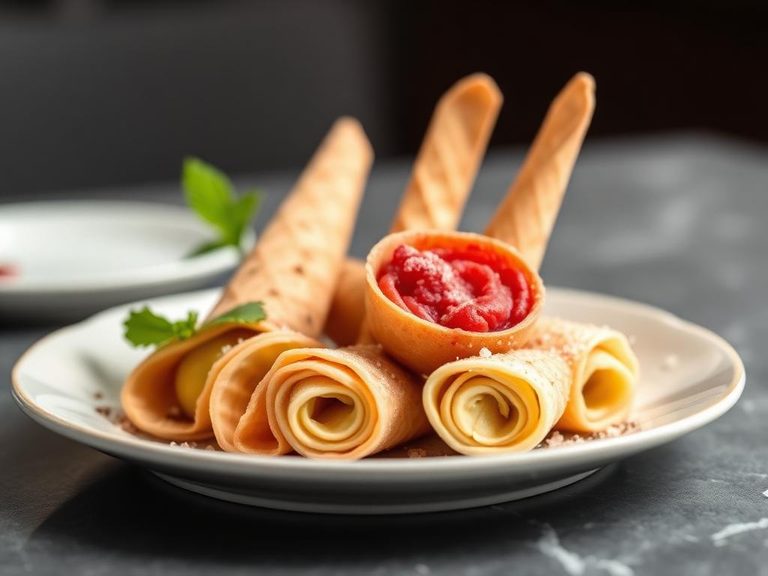
Rolled into cones for gelato refers to the traditional Italian method of serving gelato in a crispy, cone-shaped pastry shell, typically made from flour, sugar, and butter. This iconic presentation originated in Italy and has become a global symbol of artisanal ice cream culture.
🍽️ Nutrition at a glance
Gelato cones are generally high in carbohydrates and fats, with the gelato itself providing a mix of sugars, dairy fats, and some protein from milk. A typical serving with a scoop of gelato and a cone contains roughly 250-350 calories, depending on the flavor and cone size.
Nutrition breakdown
| Calories | 250 kcal |
| Protein | 4 g |
| Carbs | 35 g |
| Fat | 11 g |
| Fiber | 1 g |
| Sugar | 22 g |
| Sodium | 100 mg |
| Calcium | 120 mg |
| Iron | 1.5 mg |
| Potassium | 150 mg |
| Vitamin A | 100 IU |
| Vitamin D | 1.0 mcg |
| Phosphorus | 80 mg |
| Magnesium | 15 mg |
| Zinc | 0.5 mg |
Per 1 cone (approx. 100 g) · estimated, varies by recipe
💡 What's interesting
The cone serving method is culturally significant in Italy, where gelato shops (gelaterias) are social hubs, and the cone is often seen as a portable, edible vessel that enhances the sensory experience. Nutritionally, gelato is denser and creamier than regular ice cream, offering a more intense flavor with slightly less air whipped in during production.