Garnish for cheese boards and charcuterie
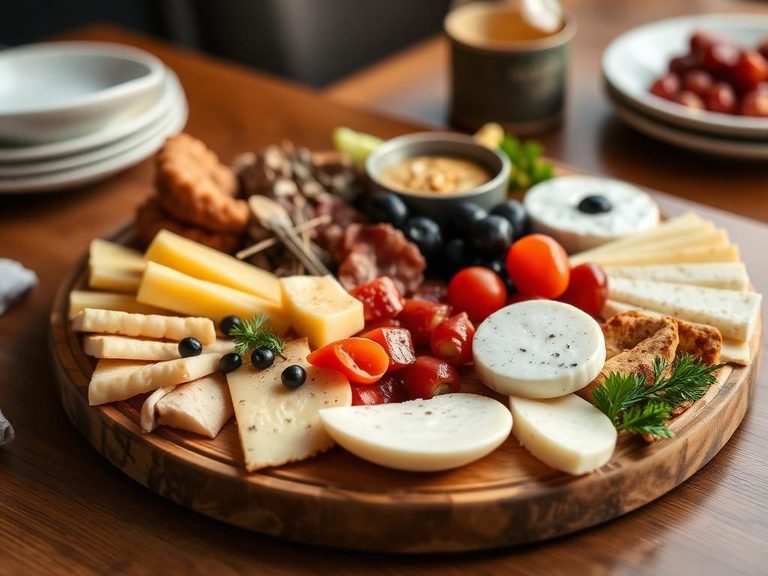
Garnish for cheese boards and charcuterie refers to the decorative and flavorful accompaniments served alongside cheeses and cured meats. These typically include items like fresh or dried fruits, nuts, olives, pickles, honey, and various herbs. This practice is a hallmark of European, particularly French and Italian, culinary traditions, designed to enhance the main offerings.
🍽️ Nutrition at a glance
As a collection of accompaniments, this garnish is generally low in carbohydrates and protein but can be moderate in fat, especially from nuts and olives. It primarily provides essential minerals, healthy fats, and a wide array of vitamins and antioxidants from the plant-based components.
Nutrition breakdown
| Calories | 150 kcal |
| Protein | 2.5 g |
| Carbs | 12 g |
| Fat | 10 g |
| Fiber | 3 g |
| Sugar | 7 g |
| Sodium | 250 mg |
| Vitamin E | 2.5 mg |
| Vitamin K | 15 µg |
| Potassium | 200 mg |
| Magnesium | 25 mg |
| Iron | 1.2 mg |
| Copper | 0.3 mg |
| Manganese | 0.5 mg |
| Phosphorus | 40 mg |
Per 1 typical assortment (approx. 100 g) · estimated, varies by recipe
💡 What's interesting
Culturally, the art of garnishing a cheese board is about creating a balanced sensory experience—contrasting textures, flavors, and colors to complement the richness of the cheese and meat. Nutritionally, the diversity of items offers a broad spectrum of micronutrients, making it a surprisingly nutrient-dense addition to a meal.
🍽️ Related dishes
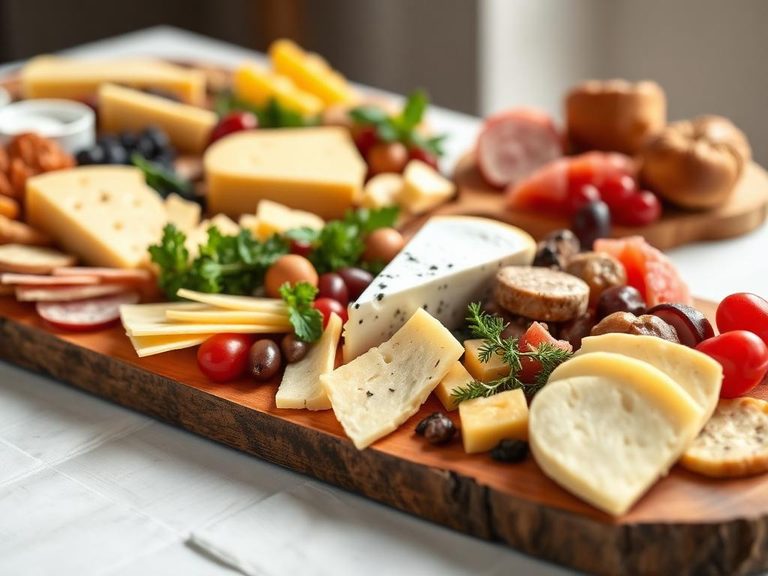 Cheese and charcuterie boards
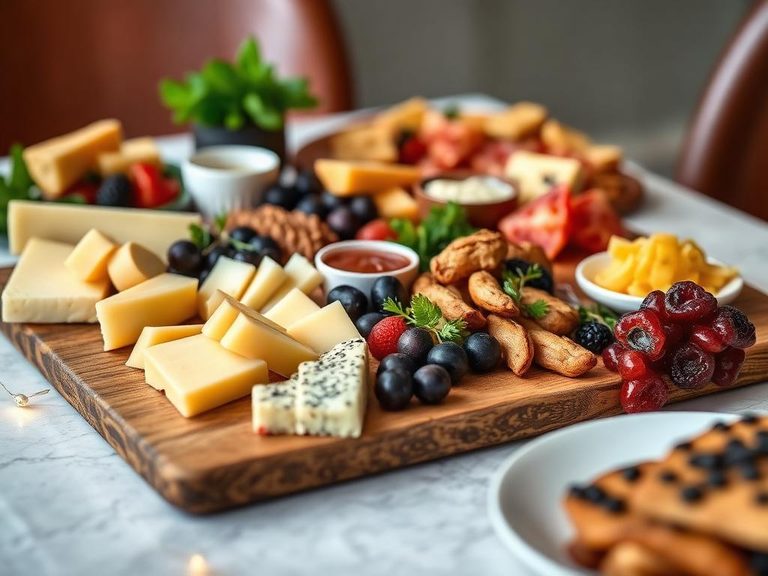 Paired with cheese and charcuterie boards
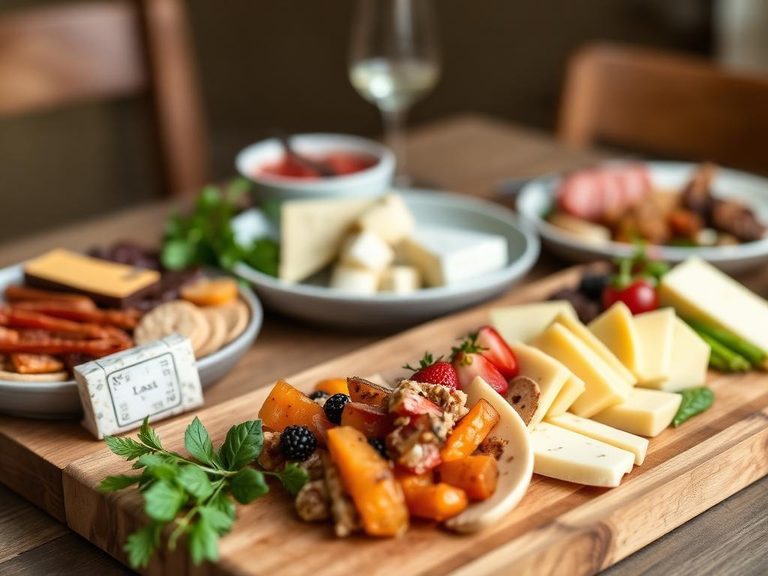 Added to cheese boards or charcuterie plates
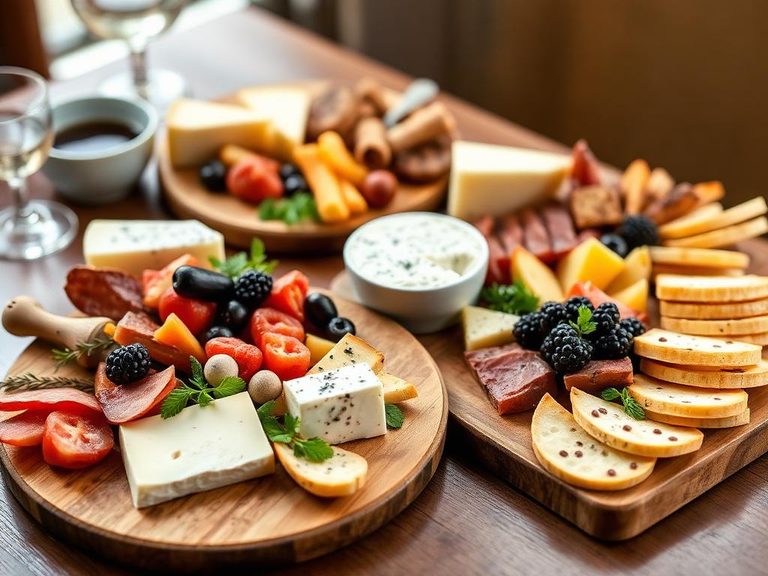 Served with cheese boards and charcuterie
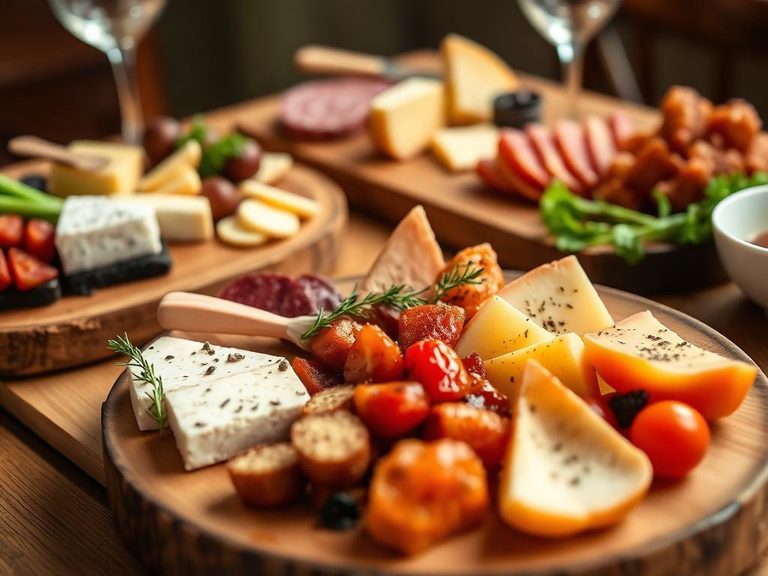 Served alongside cheese boards and charcuterie
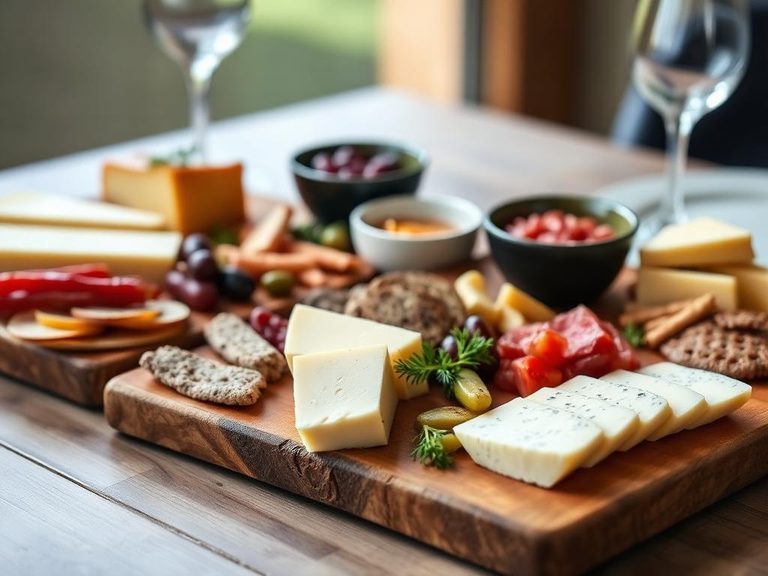 Charcuterie and cheese boards
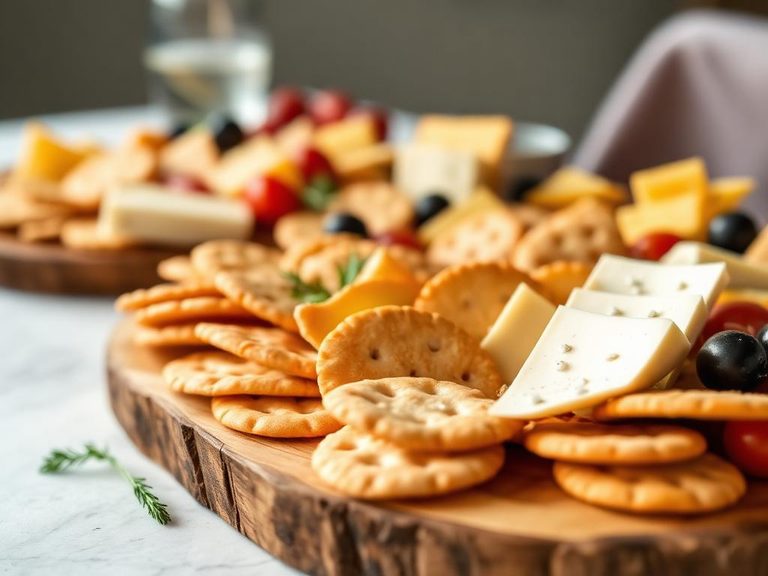 Crackers with cheese and charcuterie boards
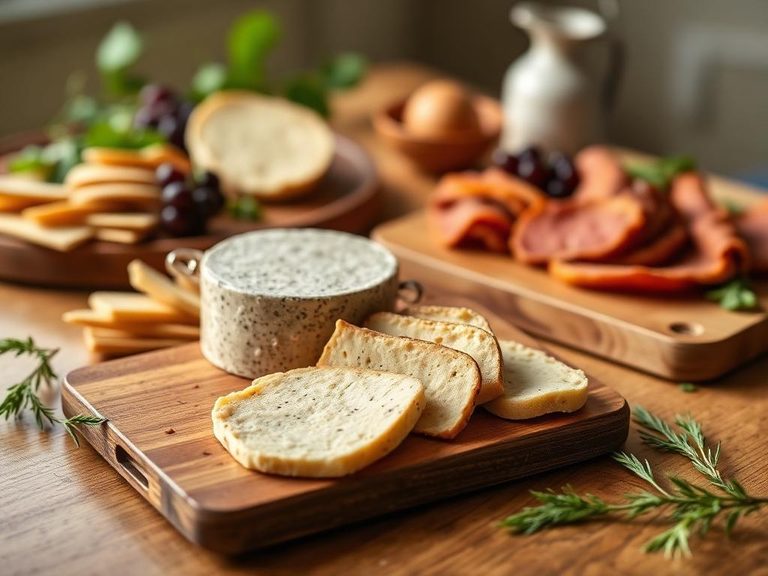 Pâté with charcuterie boards