

Frozen Dessert
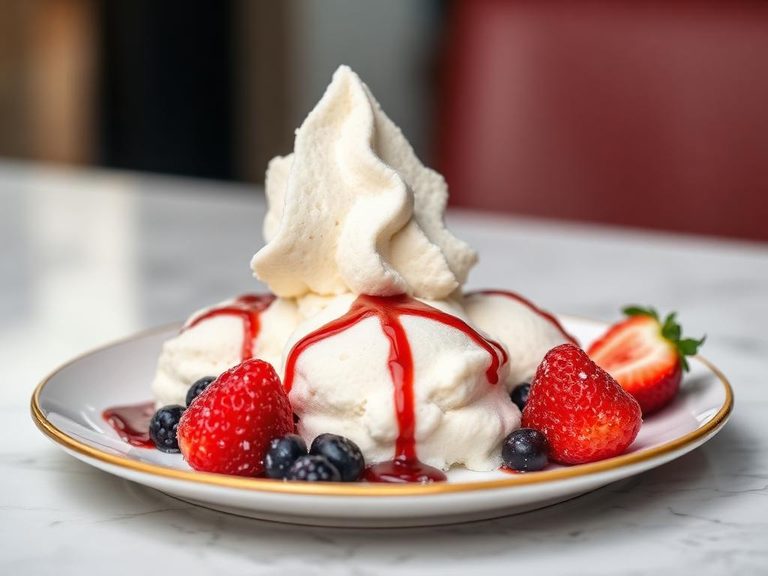
Frozen dessert is a broad category of sweet, chilled treats made from a base of dairy or non-dairy ingredients, sugar, and flavorings. It encompasses a wide variety of textures from creamy to icy, and includes popular forms like ice cream, sorbet, gelato, and frozen yogurt. While originating from various cultures worldwide, its modern forms are deeply rooted in European and American culinary traditions.
🍽️ Nutrition at a glance
Frozen desserts are typically high in carbohydrates from sugar and can be high in fat if made with cream or whole milk. They provide quick energy and can be a source of calcium and some vitamins if dairy-based, with a typical serving ranging from 150 to 300 calories.
Nutrition breakdown
| Calories | 200 kcal |
| Protein | 3 g |
| Carbs | 28 g |
| Fat | 9 g |
| Fiber | 0 g |
| Sugar | 24 g |
| Sodium | 50 mg |
| Calcium | 80 mg |
| Vitamin A | 100 IU |
| Phosphorus | 70 mg |
| Potassium | 120 mg |
| Vitamin D | 0.5 mcg |
| Riboflavin (B2) | 0.05 mg |
| Vitamin B12 | 0.1 mcg |
Per 1/2 cup (100 g) · estimated, varies by recipe
💡 What's interesting
The cultural history of frozen desserts is fascinating, with early versions involving snow and fruit juices in ancient China and Persia, evolving into the complex, churned products we know today. Nutritionally, the high sugar and fat content can make them a dense source of energy, but they also offer moments of enjoyment and psychological satisfaction.
🍽️ Related dishes

AI estimate may be inaccurate · Terms